
Watercolor has a reputation for being the hardest medium to master. It isn’t because it lacks beauty—it is actually stunning! But it does demand patience. Unlike oil or acrylic paints where you can easily cover up a mistake, watercolor captures every single brushstroke.
Many beginners give up because they think they simply ‘lack talent.’ But honestly, that is rarely the case. Usually, they are just missing a few key basics—like understanding how water moves on paper or knowing exactly when to add the next layer.
These struggles happen to everyone, whether you are brand new or have been painting for years. Please don’t look at them as failures. Think of them as part of the learning process—little clues showing you exactly what to practice next.
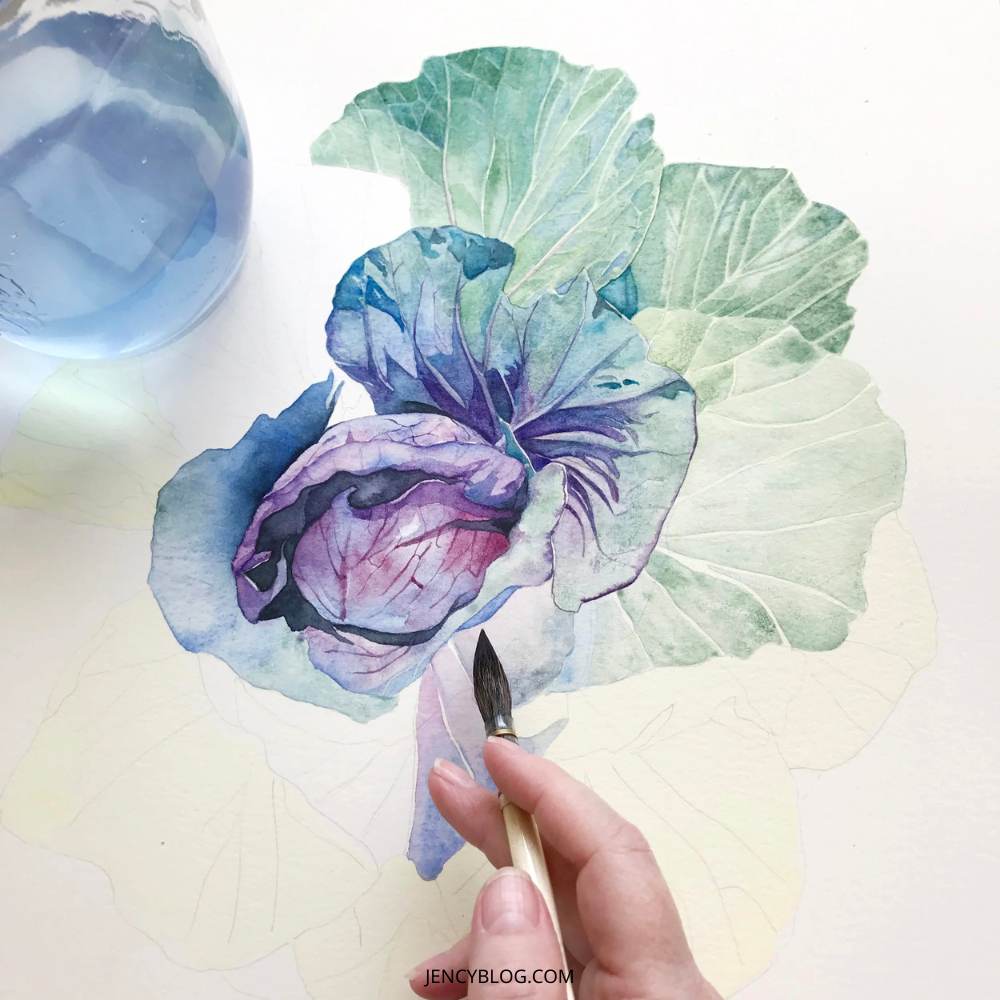
Who Is This For?
This post is for anyone who loves watercolor but sometimes feels a little stuck. Whether you are a total beginner or have been painting for years, these tips will help you paint with more confidence.
Need a fresh start? Check out my beginner watercolor tutorials where we walk through these basics step-by-step.
Mistake #1: Using the Wrong Brush Size
Your brush choice matters more than you might think. It doesn’t just put paint on paper—it controls how much water you use and how smooth your shapes look.
The Problem with Small Brushes: Beginners often reach for small brushes because they feel ‘safer’ and easier to control. However, using a tiny brush for a big area actually makes things harder:
- Constant Reloading: You have to stop to dip your brush constantly.
- Streaks: The paint dries too fast while you are working, leaving unwanted lines.
- Stiffness: Your painting can end up looking tight and overworked.
The Fix: Be brave and grab a bigger brush! A larger brush holds more water and paint, allowing you to cover areas smoothly and keep that beautiful, natural flow.
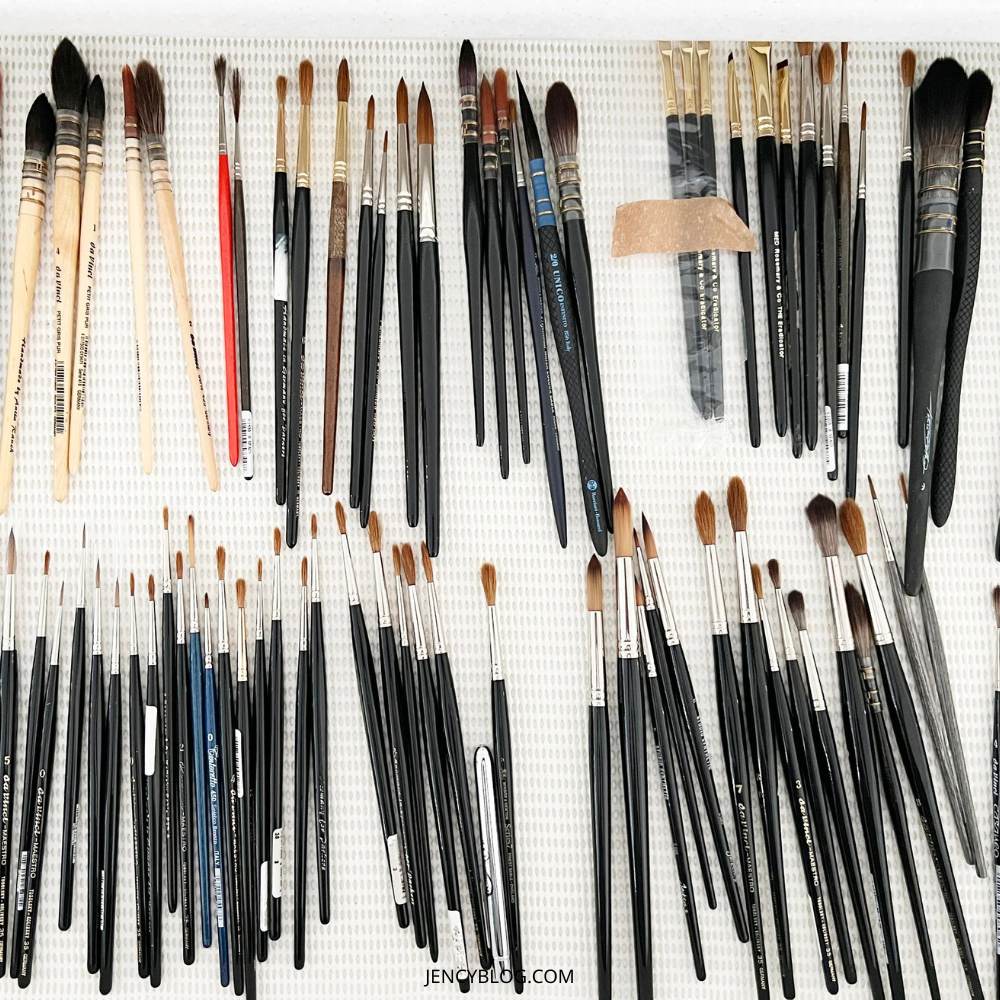
A Better Approach: Match your brush size to the job.
Think Big: If you are painting a large sky or background, use a big brush that holds plenty of water.
Less is More: Try to use as few strokes as possible. This makes your painting look cleaner and more confident.
Switch It Up: Only switch to your tiny brushes when you are ready to paint the final details. Let the tools do the work for you!
Mistake #2: Water Control (Too Much or Too Little)
In watercolor painting, water is actually the boss—the paint just follows where the water goes! Managing this balance is the key to getting the results you want.
Too Wet? If you use too much water, you might get puddles or those accidental ‘blooms’ (where water pushes the pigment away and creates a cauliflower shape).
Too Dry? If you use too little water, the paint will look scratchy and stiff, and it won’t blend smoothly.
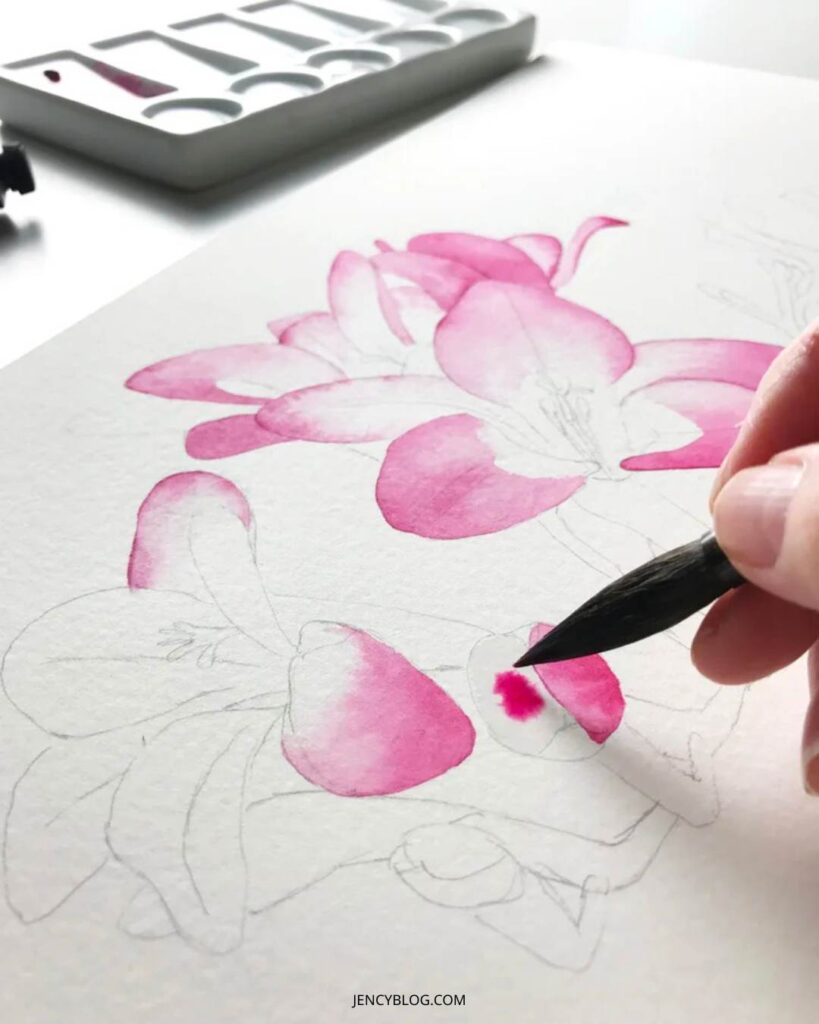
We often focus so much on getting the right color that we forget to check the moisture. But once the paint dries, it reveals the truth! It shows exactly how wet your paper was and how you loaded your brush.
A Better Approach:
If water control feels tricky, don’t worry. I wrote a specific guide that explains exactly how paper moisture changes your strokes.
Practical Tips:
Test First: Always test your mix on a scrap piece of paper before touching your real painting.
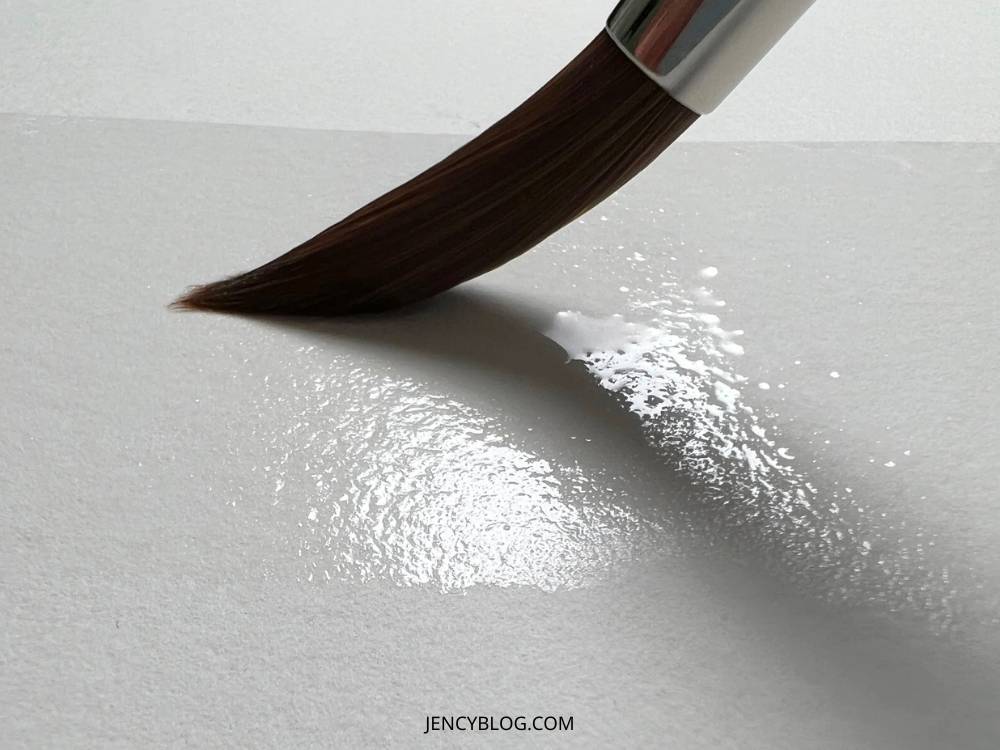
Check the Shine: Pay attention to the sheen on the surface. Glossy (wet) paper behaves very differently than damp or dry paper.
Take Your Time: With practice, you will start to ‘read’ the paper and understand how the water moves. This is one of the most important skills you will ever learn in watercolor!
Mistake #3: Overworking the Painting
Watercolor loves simplicity. It is very tempting to keep fussing with your work—adding more paint, scrubbing out mistakes, or trying to blend endlessly.
Why it hurts: Watercolor paper is delicate. If you mess with it too much, you damage the surface, the colors turn muddy, and you lose that beautiful, transparent glow. Usually, we overwork a painting because we feel unsure, not because we lack skill. We try to ‘fix’ tiny things and end up killing the freshness of the piece.
A Better Approach:
Less is More: Try to say more with fewer brushstrokes.
Hands Off: Once you put the paint down, let it be. Step back and look at it from a distance.
Let it Dry: If something looks wrong, wait! Let it dry completely. It is much safer to add a clean layer on top of dry paper (‘wet on dry’) than to scrub at wet paint.
Just Stop: Sometimes the best decision is simply to put the brush down.
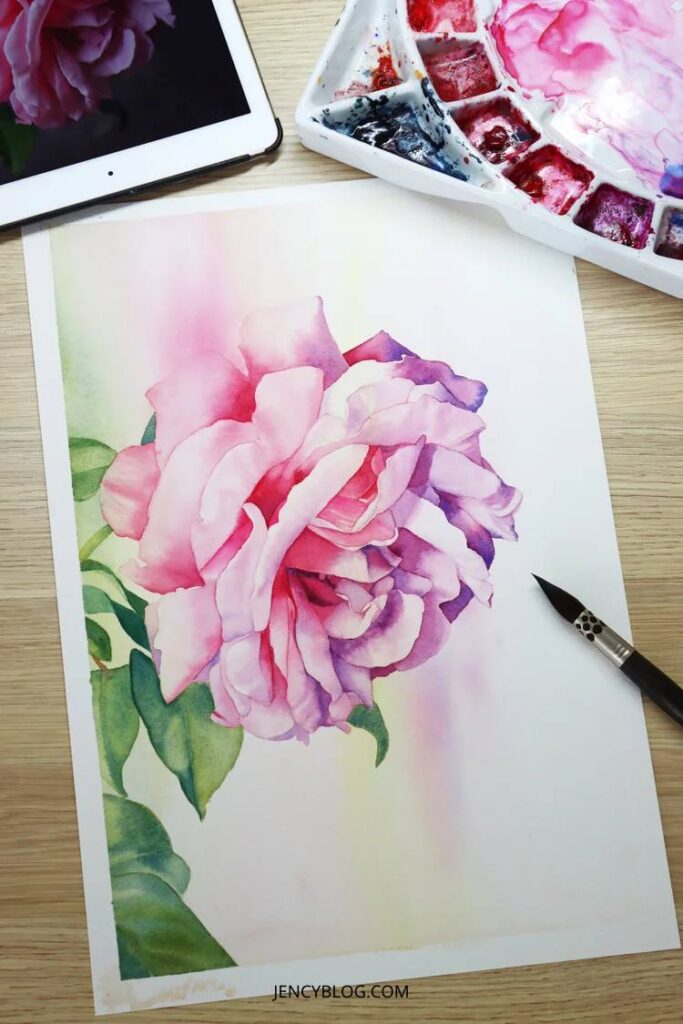
Mistake #4: Not Letting Layers Dry
Timing is everything in watercolor. Painting into wet areas can create beautiful, soft effects—but only if you plan to do it!
The Risk: If you add a new layer before the previous one is 100% dry, the colors will bleed into each other. This creates muddy edges and ruins the crisp details you were trying to paint. This usually happens when we get excited to finish and stop waiting.
A Better Approach:
Respect the Drying Time: Think of drying time as part of the rhythm of painting.
Take a Break: Use the waiting time to step back and look at your progress.
Dry = Control: When you paint on fully dry paper, your brushstrokes stay exactly where you put them. Your layers stay distinct, and your colors stay bright.
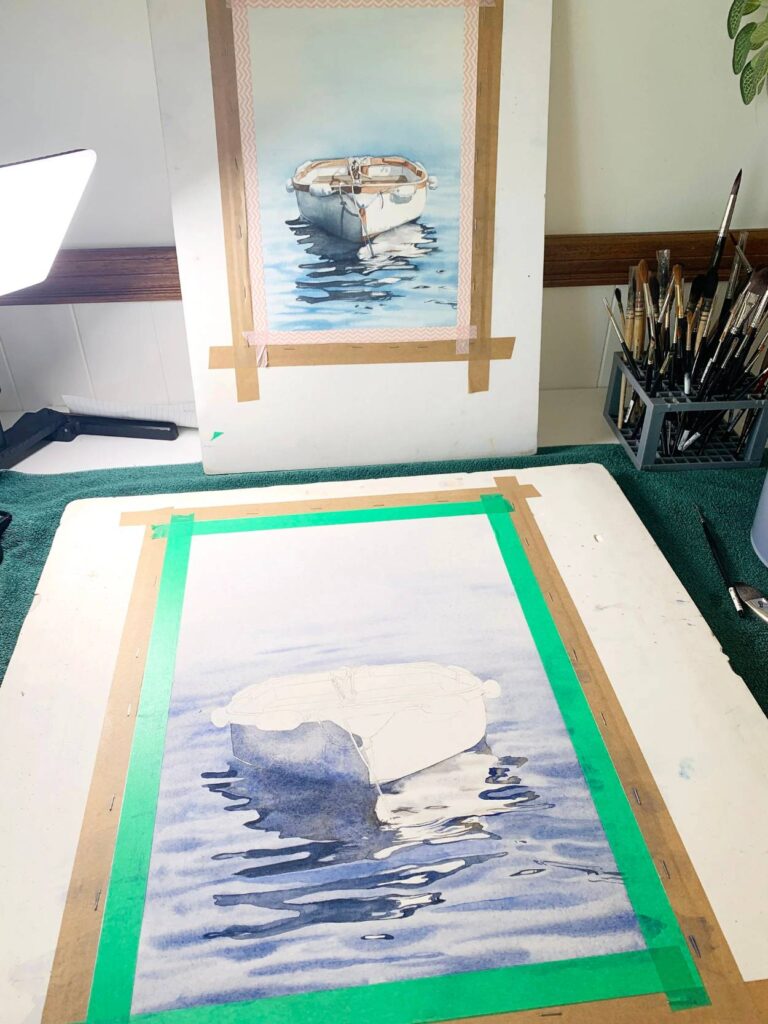
Mistake #5: Using Too Many Colors
A giant palette full of colors looks exciting, but using too many at once can actually make your painting feel messy. When you mix too many different pigments together, you often end up with ‘mud’—colors that look gray, dull, or flat.
The Benefit of Limits: Limiting yourself to just a few colors might feel like a restriction, but it’s actually a superpower! It helps you learn exactly how your paints interact and keeps the whole painting looking like it belongs together.
A Better Approach:
Keep it Small: Pick just three to six colors for your entire project. This is more than enough to create depth and variety.
Repeat Yourself: Using the same few colors in different parts of the painting creates a sense of harmony and balance.
Focus on Basics: Stick to a few staples—like a warm tone, a cool tone, and an earth tone (like Burnt Sienna).
A Word of Encouragement
In watercolor, mistakes aren’t interruptions—they are how we learn! Whether you are a seasoned artist or just starting to explore basic techniques, these challenges are a normal part of the journey. Every experienced painter has dealt with these same issues time and time again.
Progress doesn’t come from forcing the paint; it comes from slowing down and trusting the process. Watercolor is like a conversation between the water, the pigment, the paper, and your own patience. Once you learn to listen, you’ll find that the painting often knows exactly where it wants to go.
If this post helped you, I’d love for you to paint along with me! I share full-length tutorials, progress photos, and gentle tips to help you build your confidence.
