
It’s one of the most common questions beginners ask—and for good reason. Watercolor has a mind of its own, and once that pigment hits the paper, there is often no going back. Knowing exactly where to start can save you a lot of heartache (and a lot of expensive paper!).
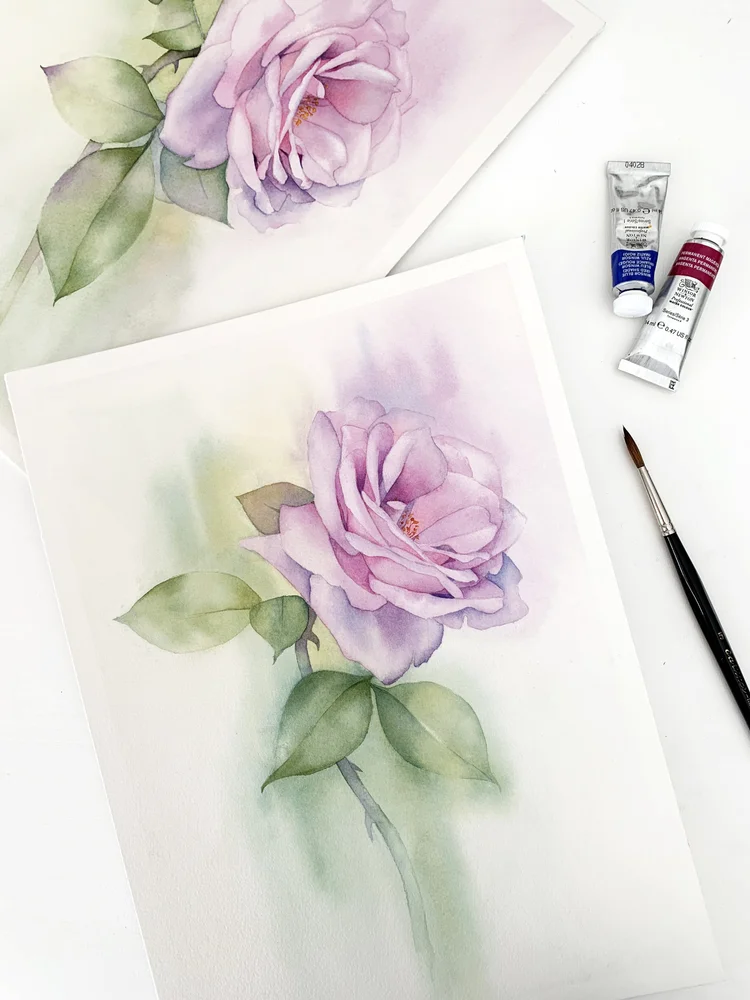
A soft rose painted on cold pressed watercolour paper.
Where Do I Start? A Beginner’s Guide to Planning Your Watercolor Layers
In this post, I’ll walk you through how I decide what to paint first, why the order of work matters, and how a little bit of planning can make your entire creative process feel much smoother.
The Golden Rule: Start Light to Dark
When you are learning watercolor, remember that the most important “golden rule” is to work from light to dark.
Because watercolor is a transparent medium, your lightest colors must go down first. Unlike acrylics or oils, you can’t simply paint a light color over a dark one later. If you jump in too early with your dark values, you risk losing the subtle highlights and that inner “glow” that makes watercolor so special.
- Look for the Light: Start by identifying the lightest tonal values in your subject and paint those in first.
- Build the Depth: Once your light washes are down, you can begin building depth with successive layers.
- Save the Shadows: Always save your darkest areas for the very end.
One practical reason for this is that dark pigments can easily “lift” or smudge on the paper, even the staining varieties. If you add your deepest shadows too early, you risk disturbing them as you continue to layer and refine the rest of your painting.
Watercolor is truly all about the light. It is the transparency and the way the white paper shines through the paint that gives the medium its life. If you find yourself reaching for moody, heavy tones right away, a medium like acrylic might be a better fit—but for that ethereal watercolor magic, light must always come first.
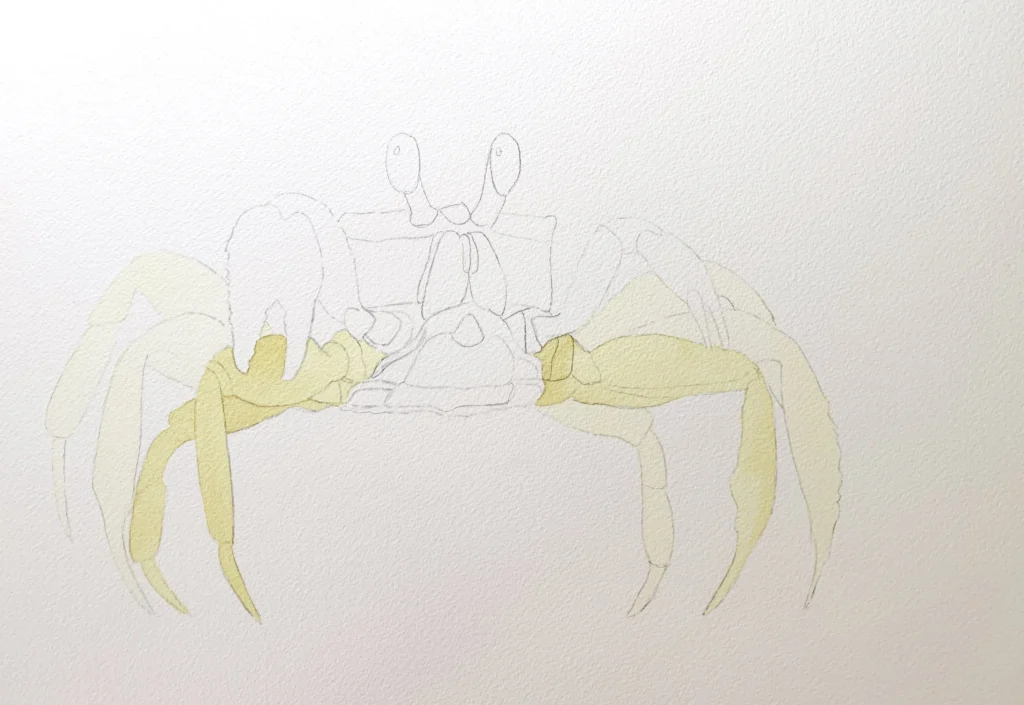
Work light to dark when you paint in watercolour. (Cold pressed paper)
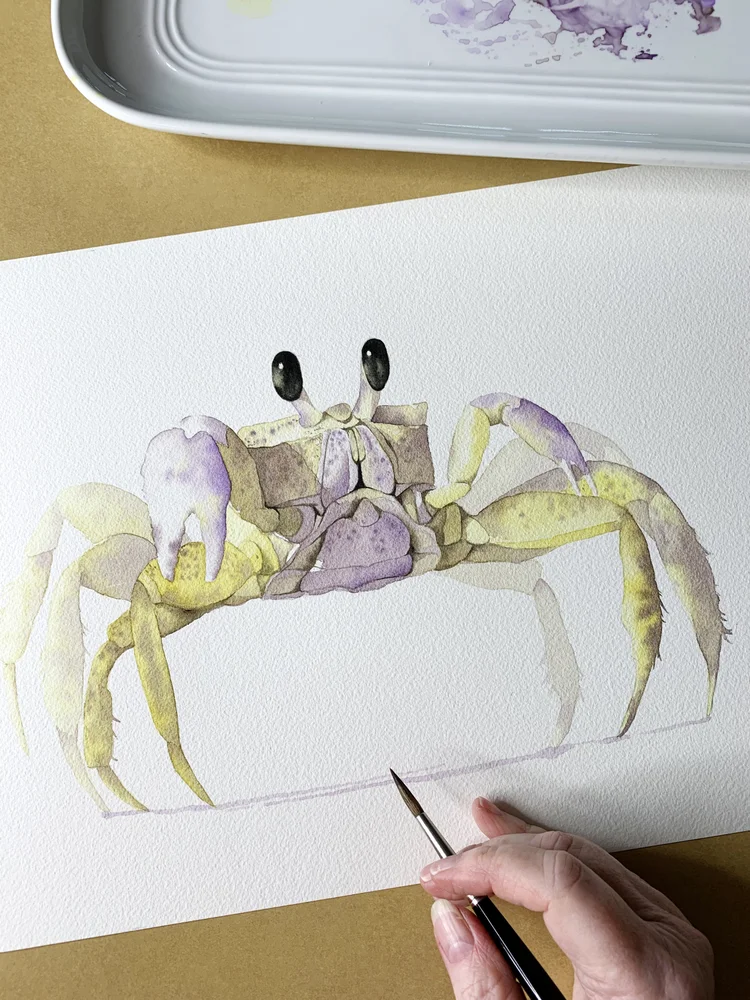
My finished crab painting.
Should You Paint the Background or the Subject First?
Every artist’s process is unique, and honestly, there is no one-size-fits-all answer. Some artists swear by starting with the background because it covers the largest area and instantly sets the tonal mood for the entire piece. Others prefer to lock in the main subject first to establish the focal point, then paint the background around it.
Ultimately, the “correct” order depends on the specific needs of your painting and your own personal workflow.
When to Start with the Background
If you are aiming for a looser style with soft, dreamy transitions—like a moody sky or a variegated wash—it makes sense to start with the background.
The Benefit of Fresh Paper: Working on the background while the paper is still fresh and wet allows the paint to flow freely. This “wet-on-wet” technique creates effortless blends and soft edges that are perfect for establishing an atmospheric mood.
Managing the Subject: If your background is very wet, you can always use masking fluid to protect your subject or carefully paint around it once the initial wash has dried.
Starting with the background is often the best choice when you want the environment to feel cohesive and unified with the light source of your subject.
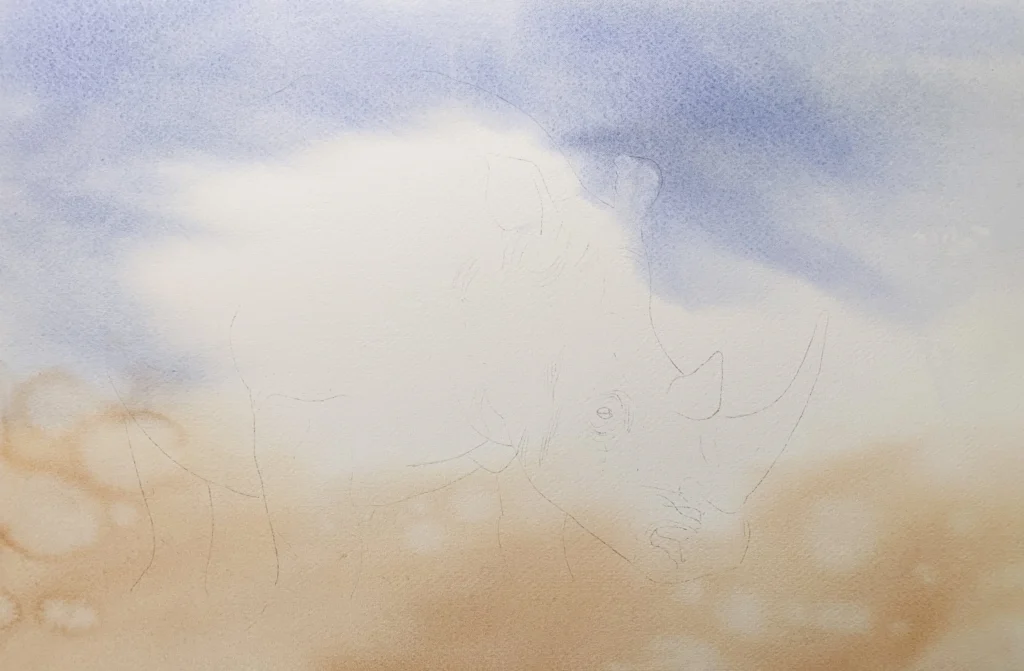
I recently worked on a painting of a rhinoceros, and for this piece, I chose to paint the sky and foreground first. It simply made the most sense for the composition.
Because the rhino has such specific, rugged textures and heavy tones, I didn’t want to risk disturbing the “finished” subject by trying to scrub in a background around those complex edges later. As a watercolor artist, you have a lot of planning to do and many decisions to make before your brush ever touches the paper.
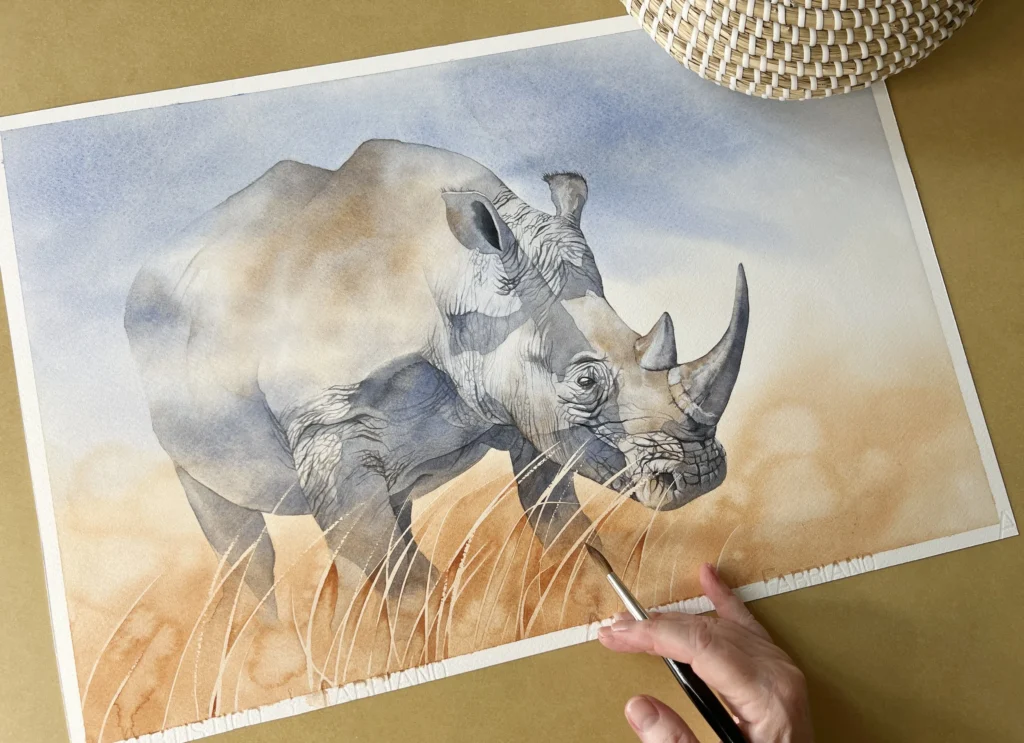
The finished Rhino painting.
On the other hand, if your subject requires sharp edges, crisp details, or very precise boundaries, you might find it easier to paint the subject first on dry paper. Once that is established and dry, you can work the background around it.
This approach gives you significantly more control. It is the best method when you want to avoid colors bleeding into one another or prevent “muddying” those areas where wet paint might accidentally overlap. By securing your subject on dry paper, you lock in the shapes exactly where you want them.
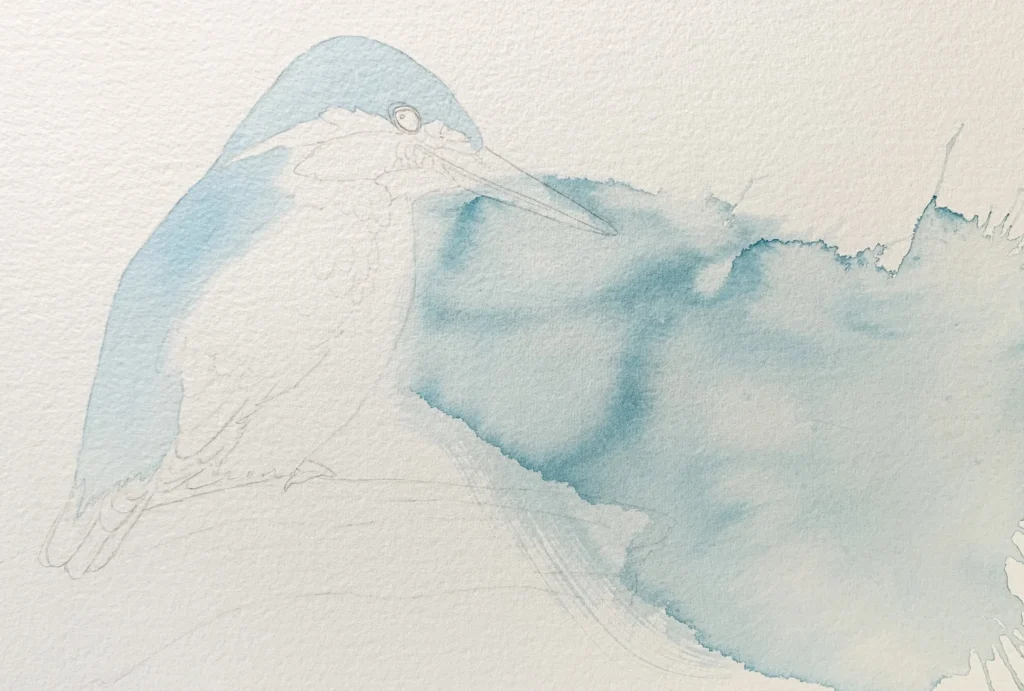
I painted the simple background splash in first on this Kingfisher watercolor painting.
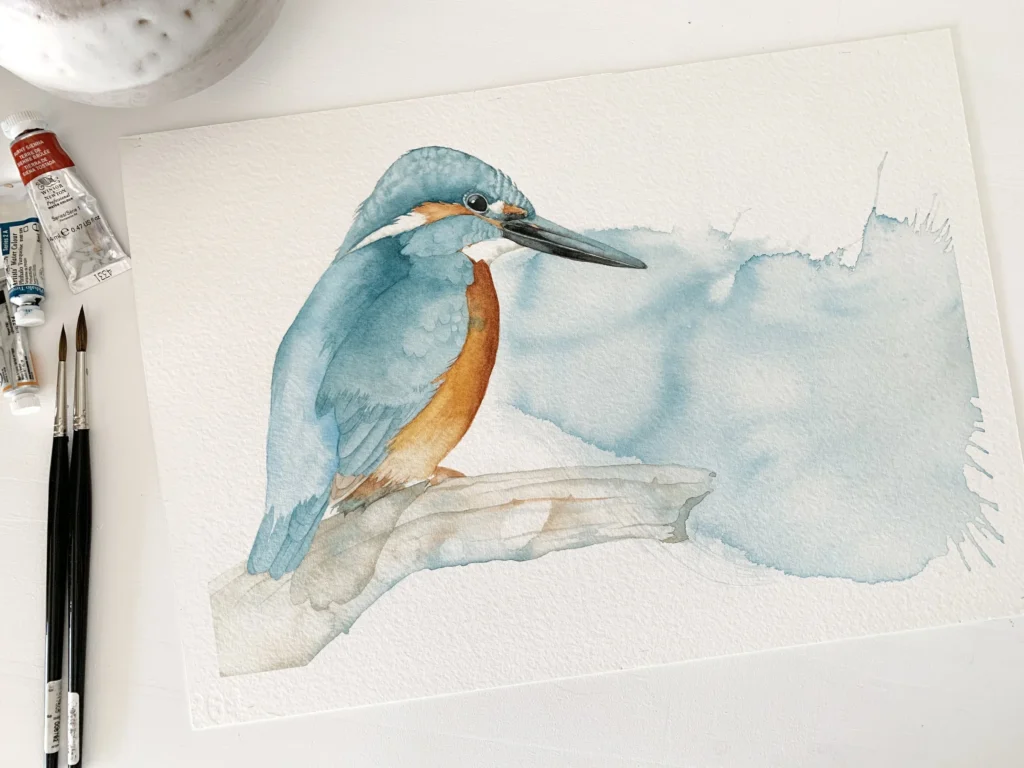
The completed Kingfisher painting.
Painting Watercolor: Big Shapes Before Details
A great habit to build in your watercolor practice is to focus on big shapes before you ever worry about the details. If you are a beginner, train yourself to look past the tiny features—the whiskers, the veins in a leaf, or the texture of a stone— and focus on the broad forms first.
If you’re finding it hard to see the big shapes, try squinting at your reference photo. Squinting naturally blurs the “noise” and tiny details, revealing the key tonal shapes you need to lay down early.
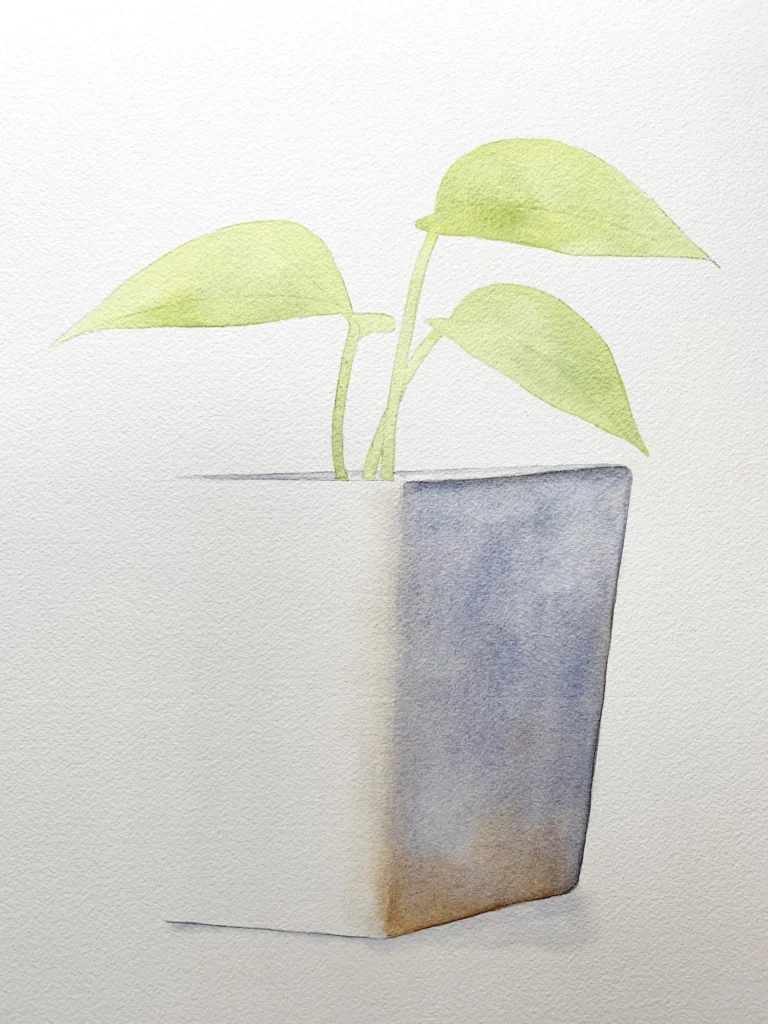
Block in the large key shapes at the beginning.
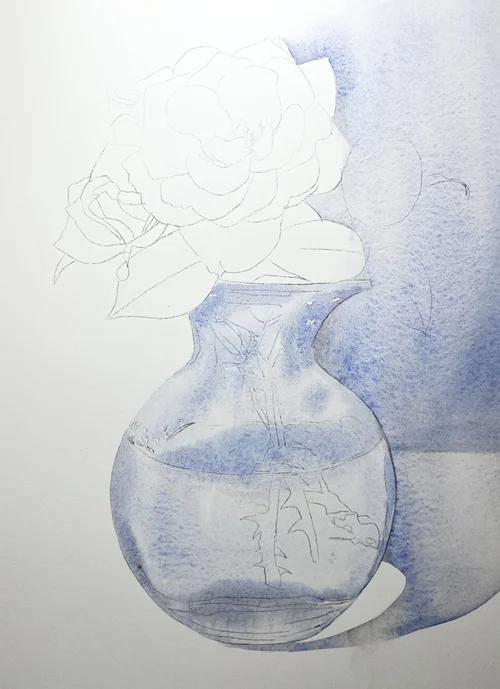
Watercolor basics: Paint broad to specific.
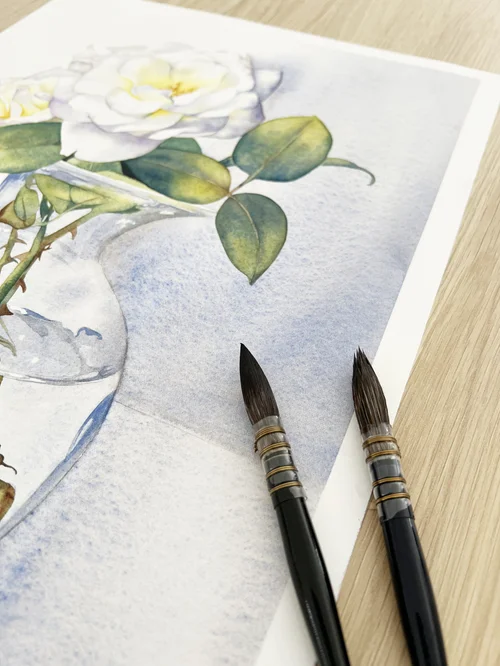
Use large watercolour brushes at the start of the painting.
Paint the Wet-on-Wet Areas First
Wet-on-wet is an ideal way to start a watercolor painting because it allows you to establish soft edges while the surface is still damp. There is no need to rush; if the paper begins to dry, you can always add more water to re-wet the area.
Establish Atmosphere: Laying down a wet wash early helps you set the mood and general shapes before committing to any fine details.
Natural Blending: This technique is especially useful for backgrounds where you want colors to flow and merge naturally.
From Soft to Sharp: Once these soft-edged areas are dry, you can return with less water and more control to refine the hard edges and specific details.
By working from loose to tight, you set the overall mood of the piece first and then bring the subject into focus.
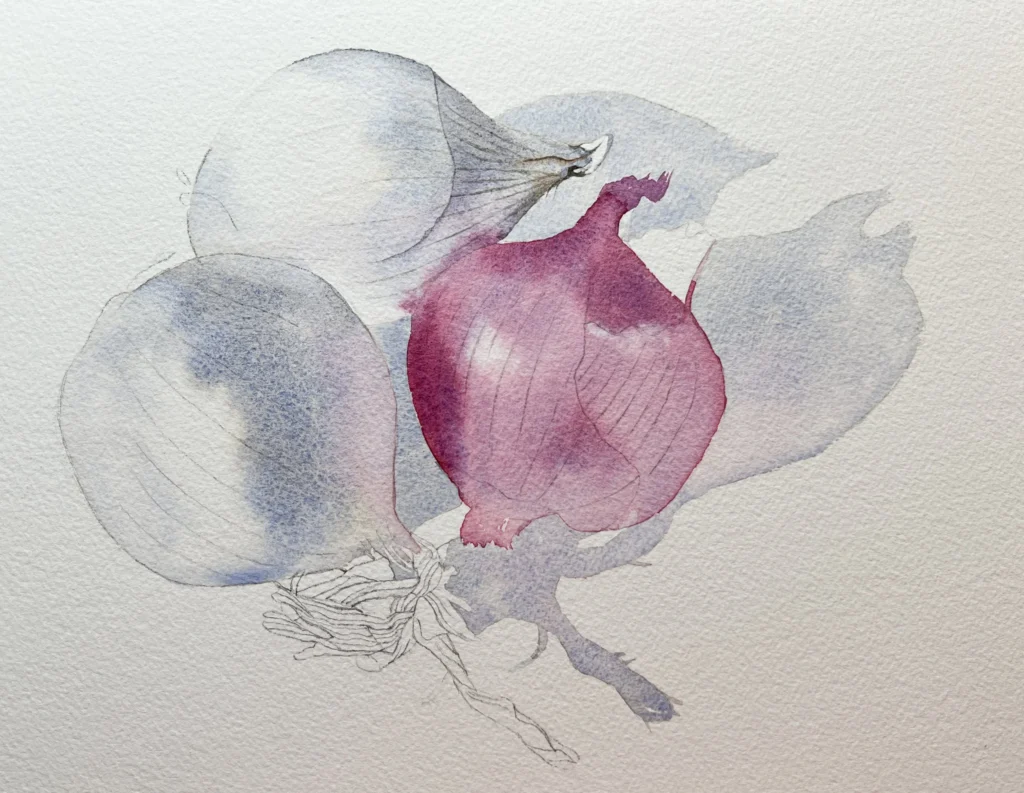
Start with wet on wet painting before committing to detail.
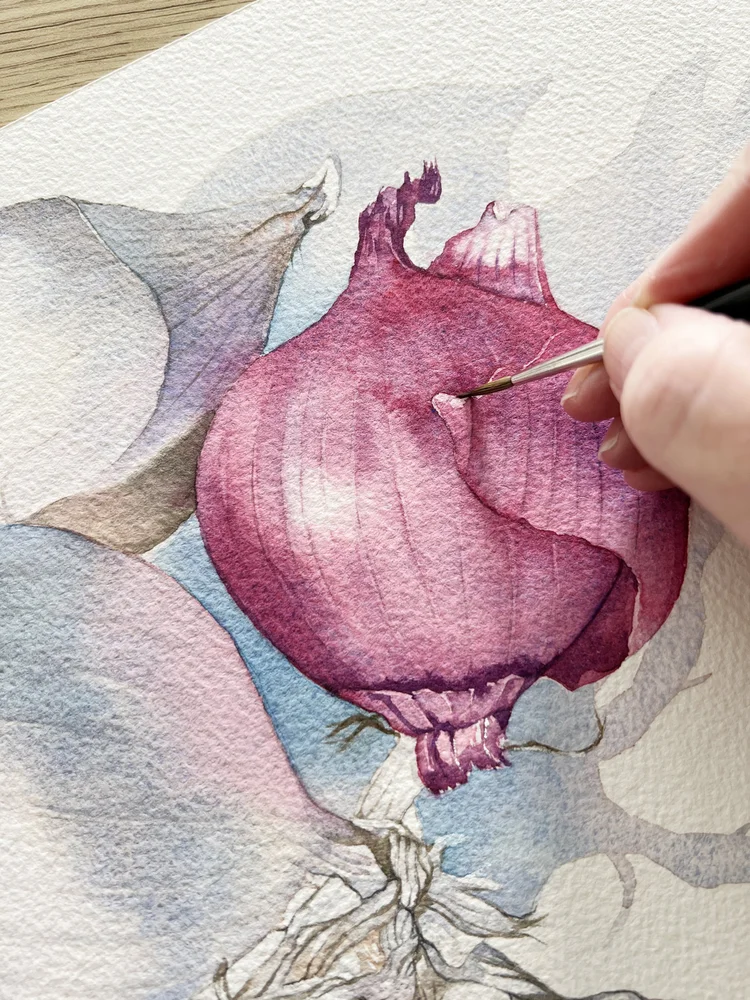
Details come later.
Wet-on-Dry: Adding Definition
Once your initial washes have dried and you are ready to add definition, painting wet-on-dry is the next step. This technique provides the crisp, clean edges necessary for fine details and areas requiring maximum control.
Precision: On dry paper, the paint stays exactly where you place it. This makes it ideal for fine lines, adding texture, or layering depth into your subject.
Building Contrast: This is the stage where you begin tightening the composition, shifting from a loose impression to deliberate shapes. By using more pigment and less water over your lighter washes, you start to build the contrast that makes the painting “pop.”
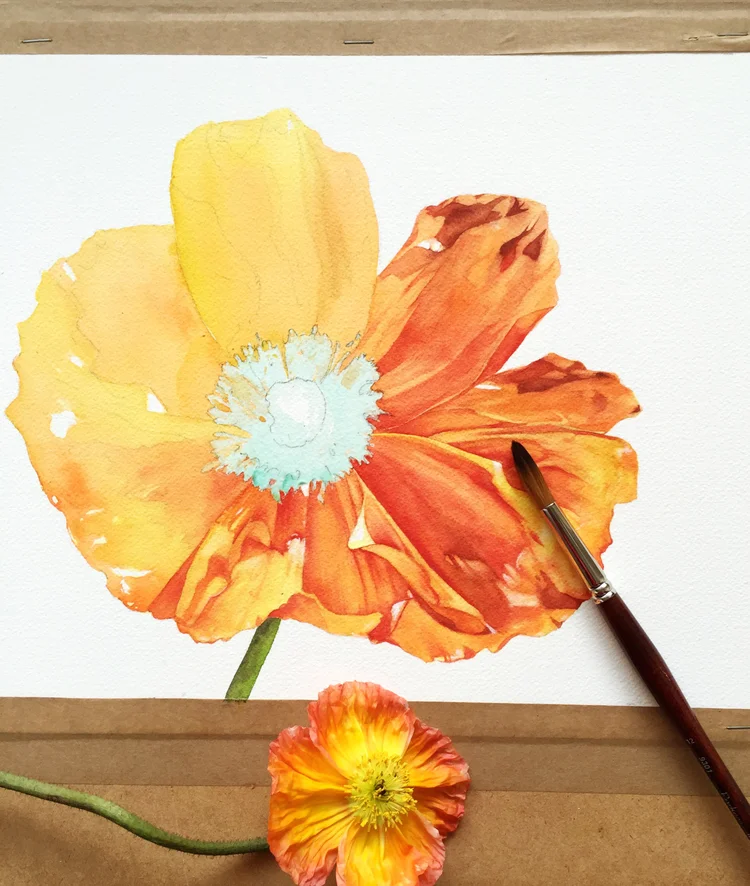
In this poppy watercolor painting I’m starting to build the detail on the petals by adding darker colors on both wet and dry paper.
Planning is Key
Watercolor rewards those who plan ahead. “Winging it” often leads to muddy colors and lost highlights. Before picking up a brush, take a moment to map out your approach:
- Identify the Lights: Determine your lightest areas and leave the paper untouched or use masking fluid to protect them.
- Layering Tones: Plan how many layers you’ll need to reach your darkest tones. It is much easier to darken a color than to lighten it, so build your values slowly.
- The Importance of Drying: Let each layer dry fully before adding the next. There are no shortcuts if you want to maintain clean, vibrant color.
- The First Wash: Treat your first wash as the groundwork. It locks in your light values and gives the rest of the painting a solid foundation to sit on.
With regular practice, this intentional process becomes second nature, saving you time, paper, and frustration.
If You’re Brand New to Watercolor
Start simple. Choose an easy subject, limit your palette to just a few colors, and focus on becoming familiar with how the paint moves on the paper.
Don’t stress about perfection; every time you paint, you are building valuable experience. Watercolor can be unpredictable, but that’s part of the fun. Just pick up your brush and have a go—you will learn something new every single time.
