
When I first picked up a set of watercolor pencils, I wasn’t entirely sure what to expect. Were they just fancy colored pencils? Could they really create the same luminous washes as my traditional tube paints?
It didn’t take long for me to discover just how versatile they truly are. Not only are they fun to use, but they also open up entirely new possibilities for your artwork—especially if you enjoy sketching on the go.
While I don’t reach for them every day, curiosity (and your wonderful requests!) recently pushed me to dust off my set and experiment properly. To see what they were truly capable of, I decided to put them to the test: I painted a Bird of Paradise flower using only watercolor pencils. For comparison, I painted the exact same subject using traditional watercolor paints.
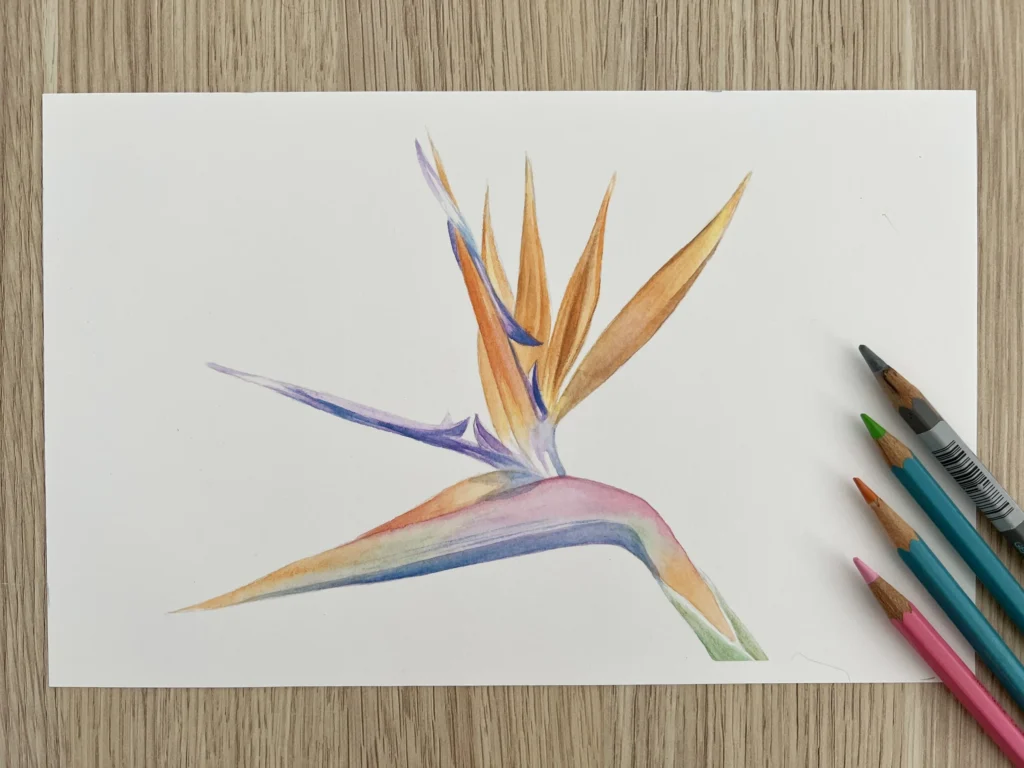
Bird of Paradise painted with watercolour pencils.
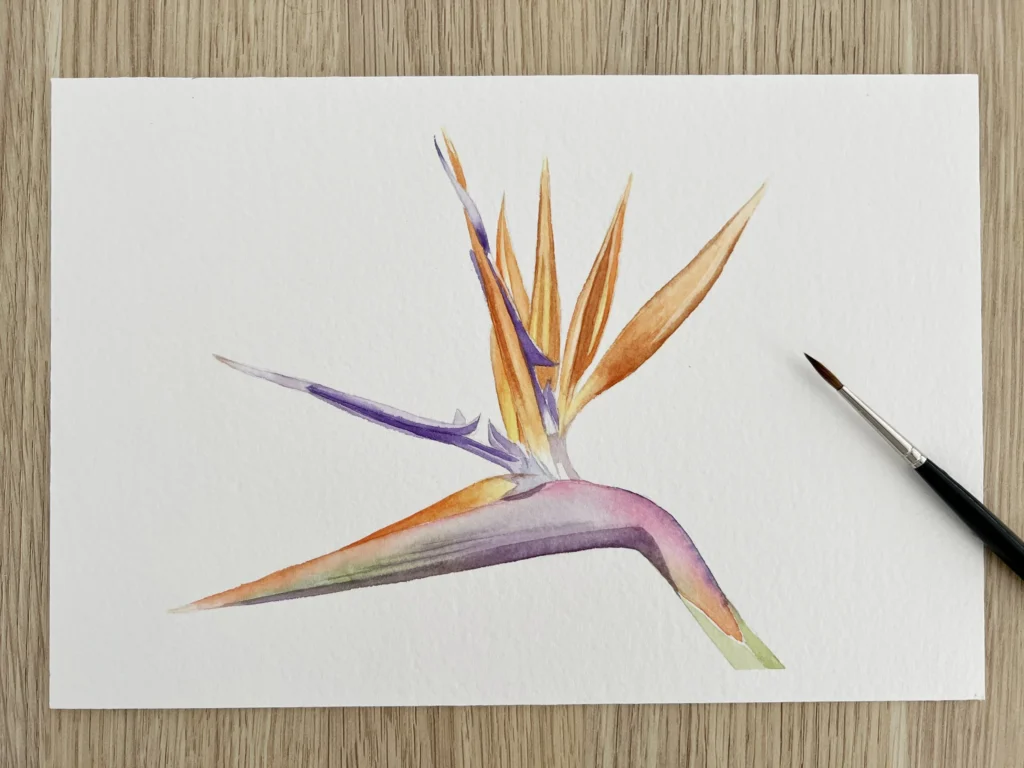
Bird of Paradise painted with watercolour paint.
That project turned out to be both fun and incredibly insightful. Along the way, I discovered several different ways of working with watercolor pencils that I’m excited to share with you.
In this post, I’ll answer the most common questions I receive about watercolor pencils and show you how to make the most of them in your own art practice.
What Are Watercolor Pencils?
At first glance, a watercolor pencil looks exactly like an ordinary colored pencil. The magic, however, happens the moment water touches the pigment. Suddenly, your dry strokes transform into fluid, paint-like washes.
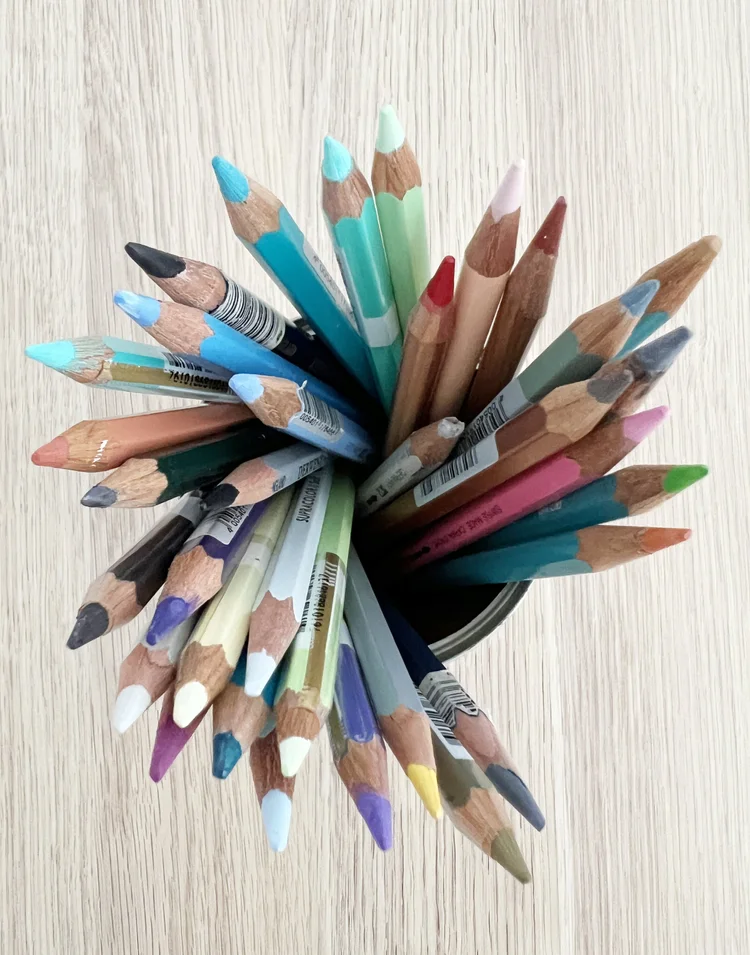
You can use them dry for detailed line work or activate them with a damp brush to create soft, flowing color. They truly serve as a wonderful bridge between the worlds of drawing and painting.
Why They belong in Your Kit:
Versatility: They are portable, clean, and incredibly versatile. This makes them perfect for sketchbooks, travel, or quick studies when you don’t want to set up a full watercolor palette.
Beginner-Friendly: They offer a gentle way for beginners to explore the medium. You can start with the familiar comfort of drawing and add water later at your own pace.
Hybrid Results: You get the control of a pencil with the ethereal beauty of watercolor.
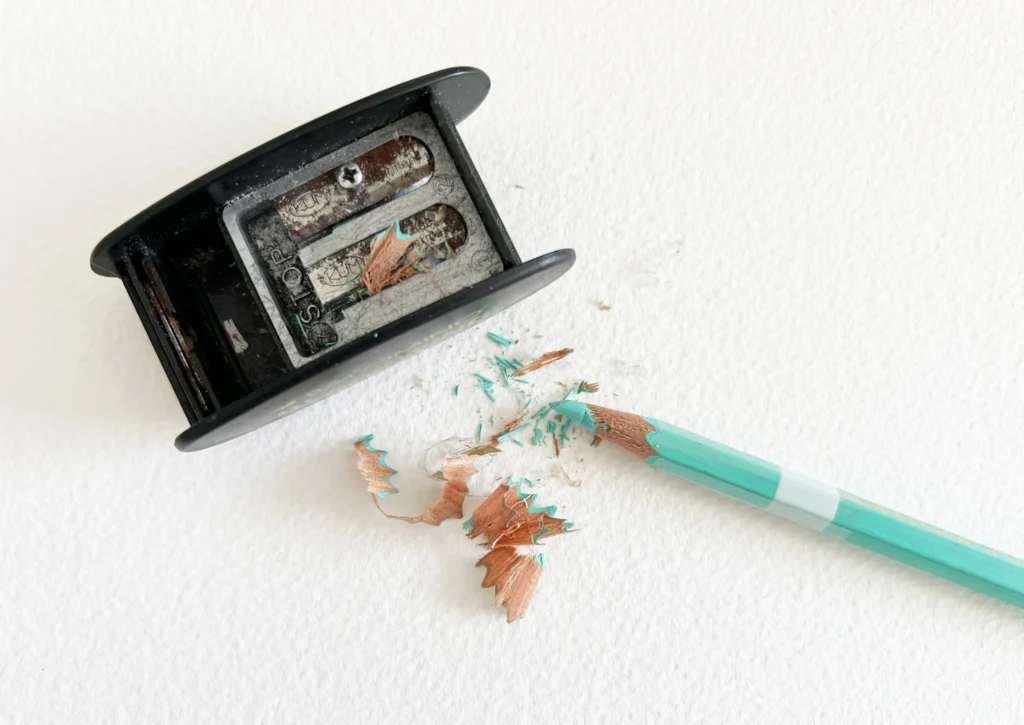
My Top Recommendations: The Best Watercolor Pencils
I’ve experimented with several brands over the years, including Albrecht Dürer, Prismacolor, and Derwent. While all of these are high-quality options, if I had to choose just one brand to keep in my studio, it would be the Caran d’Ache Supracolor Soft watercolor pencils.
The soft, richly pigmented cores of the Supracolors make it incredibly easy to get beautiful color onto the paper. Here is why they are my go-to choice:
Exceptional Versatility: I can use them dry for fine, precise details or add a little water to transform them into luminous, professional-grade washes.
Smooth Dissolution: The pigments dissolve smoothly without leaving harsh pencil lines behind, and the colors stay vibrant even after they dry.
Reliability: They feel consistent and dependable, making them a pleasure to use whether I’m sketching a quick study or adding final touches to a detailed painting alongside my traditional paints.
Investing in a good set of pencils really does make a difference in how the pigment behaves once you add water.
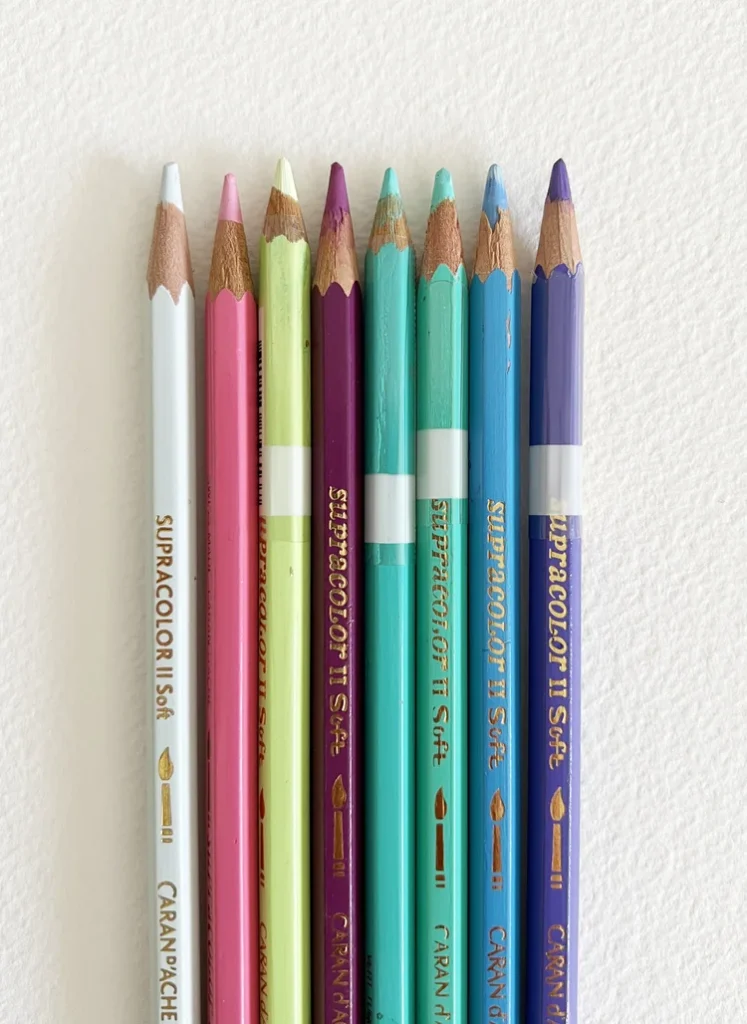
I love the quality of Caran d’Ache Supracolor soft watercolour pencils.
How Do You Use Watercolor Pencils?
There are two primary ways to approach this medium, and both offer unique advantages depending on the look you want to achieve:
Draw First, Paint Later
You sketch directly onto the paper with your pencils and then “activate” the pigment using a wet brush. This method provides incredible precision, making it perfect for intricate details like the veins on a leaf or the delicate feathers of a bird.
Paint with Dissolved Pigment
You can pick up pigment directly from the pencil tip with a wet brush and paint just as you would with traditional watercolors. This technique avoids leaving any pencil marks behind and produces perfectly smooth washes.
In most of my work, I use a combination of both methods to get the best of both worlds—structure and fluidity.
What Paper and Brushes Should You Use?
Even though you are using pencils, your choice of paper and tools will significantly impact the final result.
The Paper: When working with watercolor pencils, I prefer hot-pressed watercolor paper. Because it has a smooth, plate-like surface, it allows for much finer pencil marks and detail than textured papers. For my recent project, I used mostly Derwent pencils, which glided beautifully over this surface.
The Brushes: While many artists reach for water brushes (the ones with the water reservoir in the handle), I find their synthetic bristles can be a bit too stiff for my liking. Instead, I prefer my regular watercolor brushes.
My Go-To: For this specific painting, I used a Da Vinci Maestro round brush (Size 2). It provided the perfect balance of precision and control needed to blend the pigment exactly where I wanted it.
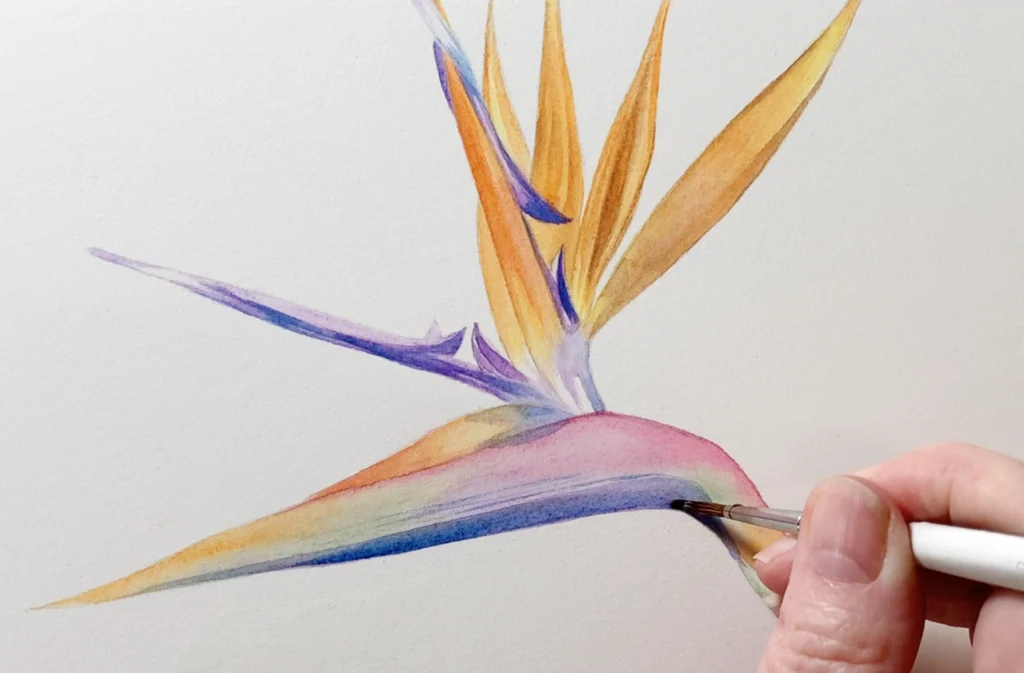
Here I’m using a Number 2 Da Vinci Maestro to activate the coloured pencil. These brushes have a fine point.
How Do You Apply the First Layer of Color?
The easiest way to use watercolor pencils is to draw directly on dry paper. I start with a yellow pencil on the petals, then add orange. Keep your strokes light and move in the same direction as the petal.
The key is using light pressure. You can always make the color darker later, but you can’t make it lighter.
Here’s my golden rule: press lightly. If you press too hard, the pencil lines will still show after you add water. This is the main reason people get harsh marks with watercolor pencils. With a gentle touch, the lines soften and blend once water is added. If you want an even smoother look, you can use a wet brush to pick up color from the pencil instead of drawing on the paper, just like traditional watercolor.
When adding water, I paint over the yellow areas first, then the orange. This keeps the yellow clean and stops the orange from taking over.
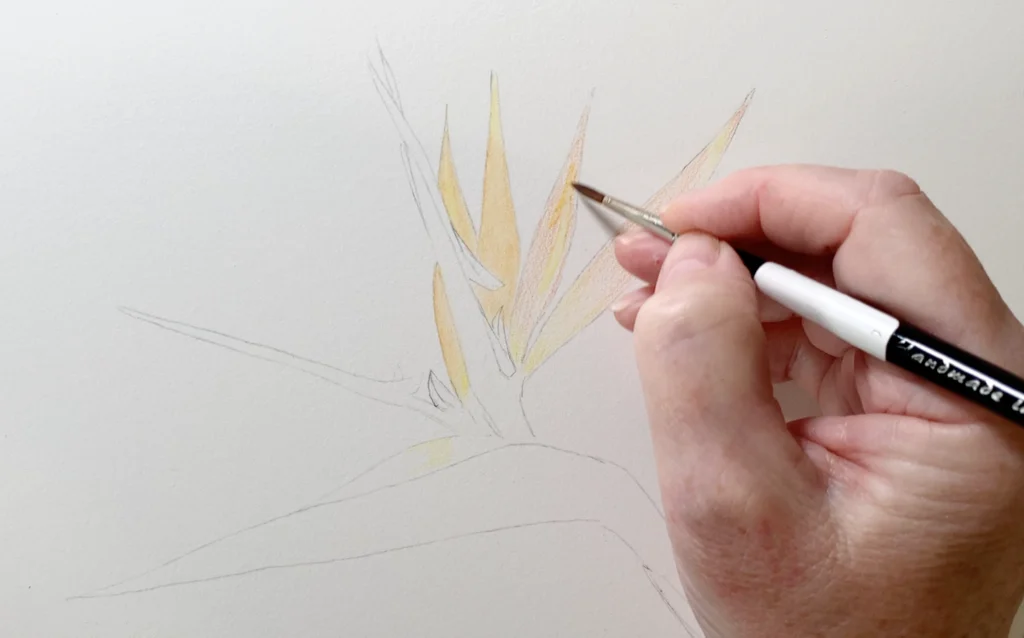
I wet the penciled paper with a watercolour brush.
How Can You Avoid Harsh Watercolor Pencil Lines?
If you don’t like the visible lines that watercolor pencils can leave, there’s an easy solution. Instead of drawing on the paper, use a wet brush to pick up color directly from the pencil. This lets you paint just like regular watercolors, creating smooth, soft areas of color with no hard lines.
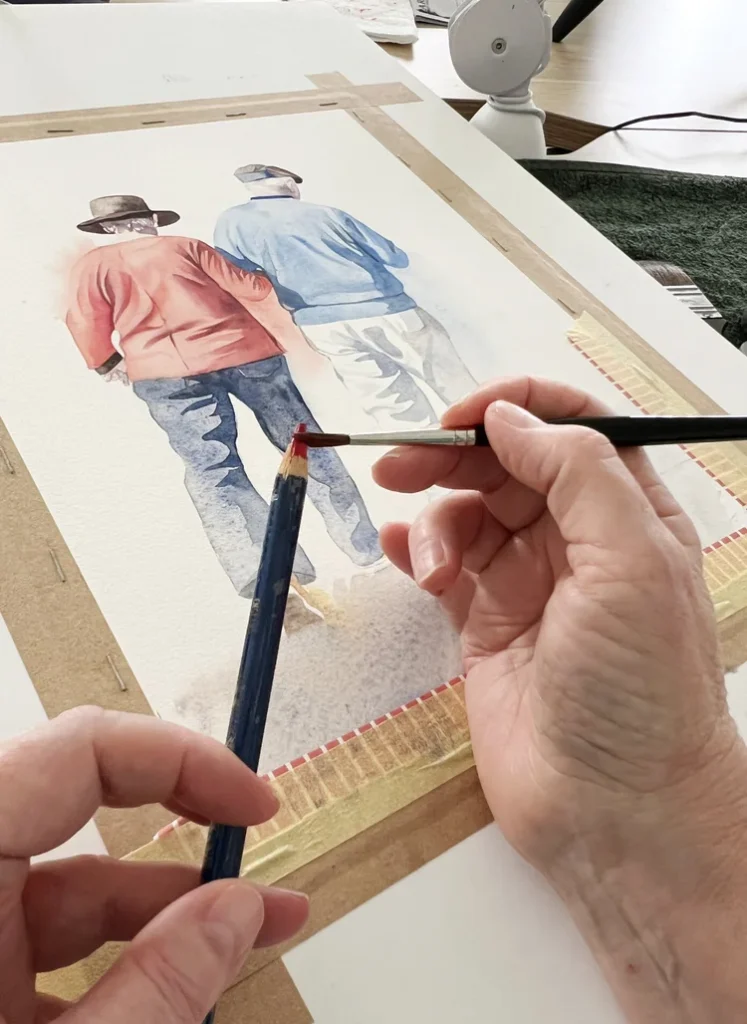
Wiping a wet brush over the pencil allows you to use pigment that is completely dissolved.
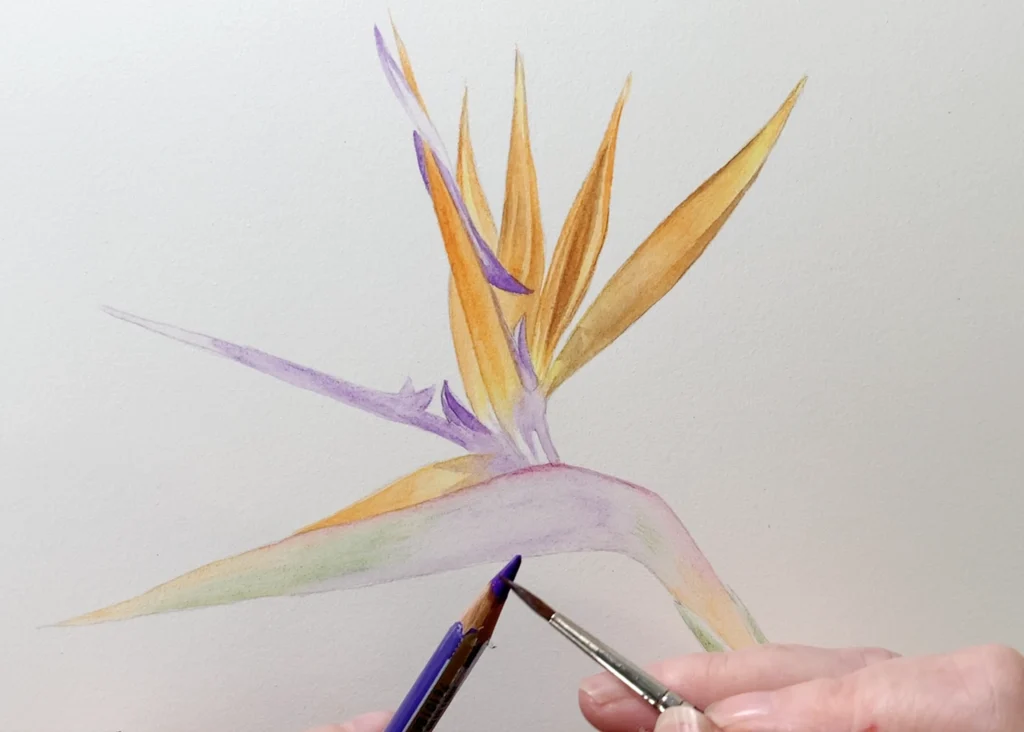
Picking up pigment from a violet watercolour pencil to add details to the flower.
To do this, simply rub your wet brush on the pencil tip, then paint with it as if you were using paint from a palette.
I find this method especially helpful for adding details and building depth in petals, without worrying about harsh pencil lines.
Can You Use Wet-on-Wet with Watercolor Pencils?
Absolutely! Wet-on-wet is one of my favorite watercolor techniques because it creates soft, gentle edges. The good news is that it works just as well with watercolor pencils.
First, I wet the paper with clean water. Then I pick up color from the pencil using my brush and paint onto the damp paper. The result is smooth, blended edges and rich, clean color. When I drop one color into another, the pigments flow and mix beautifully. This is where watercolor pencils really shine, giving you access to a wide range of vibrant colors.
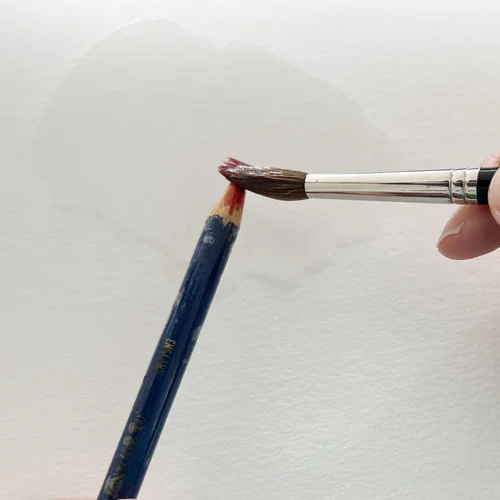
Picking up pink pigment from a watercolour pencil with a wet brush.
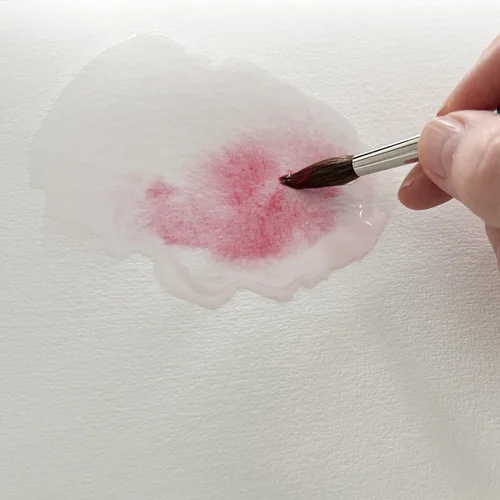
Applying the pink pigment to the wet paper with the brush.
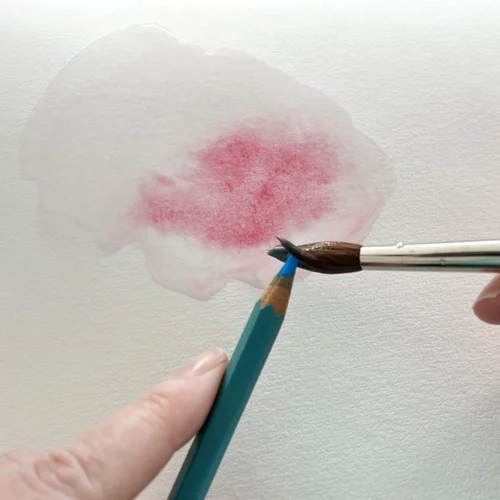
Picking up blue pigment from a watercolour pencil with a wet brush.
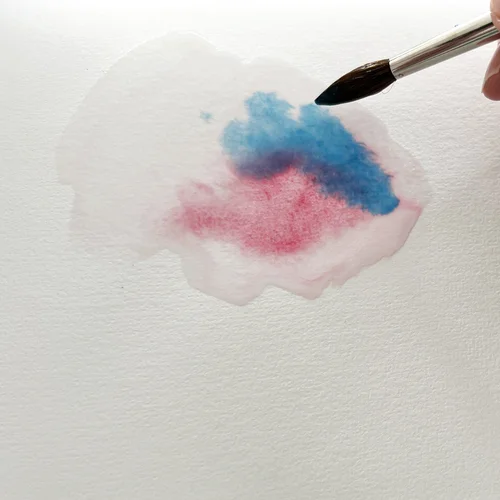
Blending the colours on the paper wet-on-wet.
Is There a Way to Make a Palette from Watercolor Pencils?
Yes, and it’s very useful! You can rub the pencil firmly onto a scrap piece of watercolor paper, then pick up the color with a wet brush. This gives you plenty of paint to work with and better control over how strong the color is, which is great for layering and mixing shades.
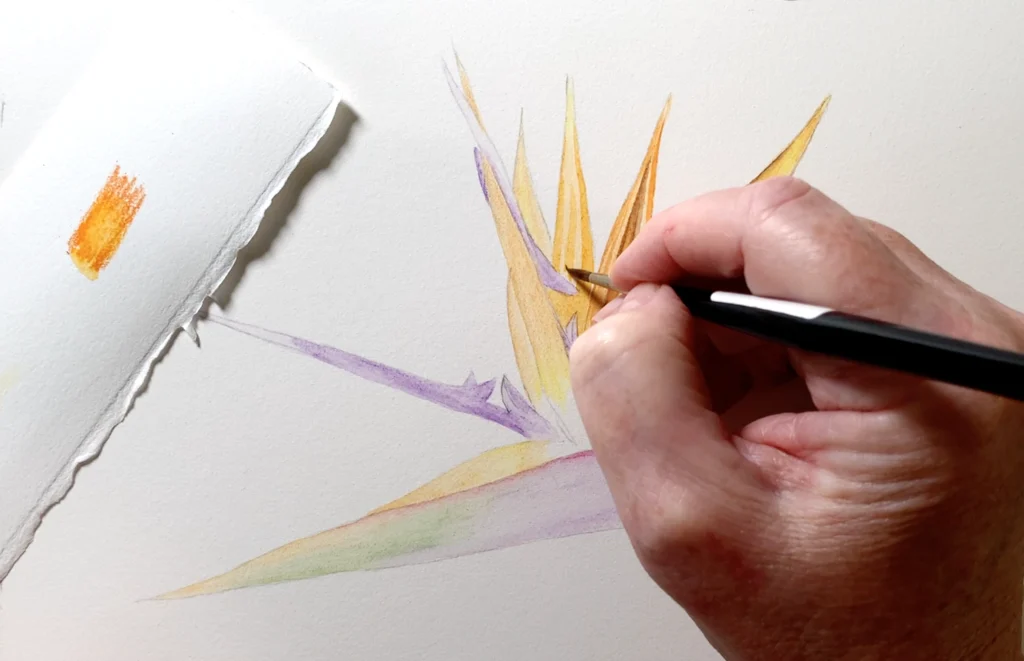
Use a damp brush to lift colour from a pencil swatch on scrap paper, then apply it directly to your painting.
Can You Draw on Wet Paper with Watercolor Pencils?
Yes, you can, and it creates a very different effect. When you draw with a dry watercolor pencil on wet paper, the lines soften right away. I like using this technique for textures, such as water reflections, which I used in a boat painting.
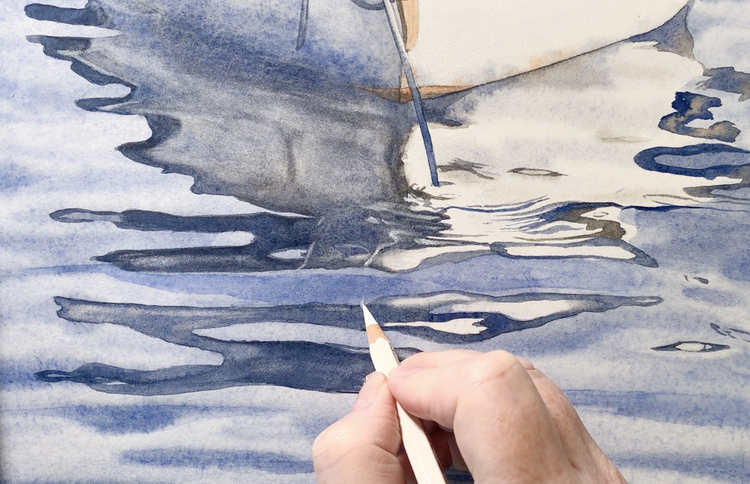
Here I’m using a white watercolour pencil on wet paper to add some lighter areas in the reflections.
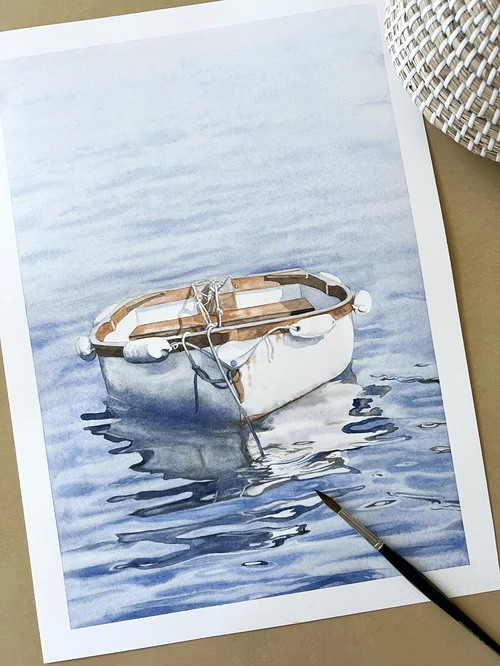
The finished paining of a boat on water.
How Do You Build Depth and Layer Colors with Watercolor Pencils?
Just like with watercolor paint, you build depth by layering. I slowly added more color to my Bird of Paradise painting. Sometimes I drew lightly on dry paper, sometimes I used a wet brush to pick up color from the pencil, and sometimes I worked wet on wet.
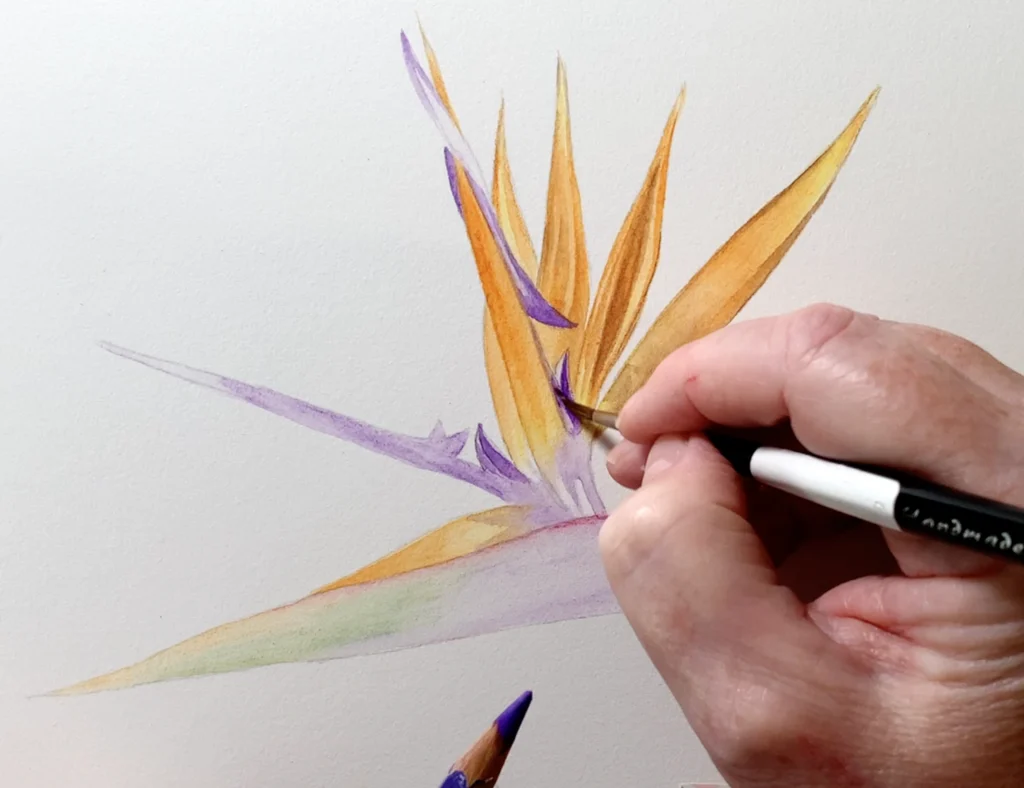
This process is slower and more controlled than using paint, but it’s very satisfying.
What Are Watercolor Pencils Best For?
After experimenting, I finished two paintings—one made with watercolor pencils and the other with traditional paints.
I’ll probably always prefer using paint, but watercolor pencils have a special place in my toolkit. They’re small, clean, and very convenient for travel. If you like sketching outdoors or painting on the go, they’re perfect—no palettes, no paint tubes, and no mess.
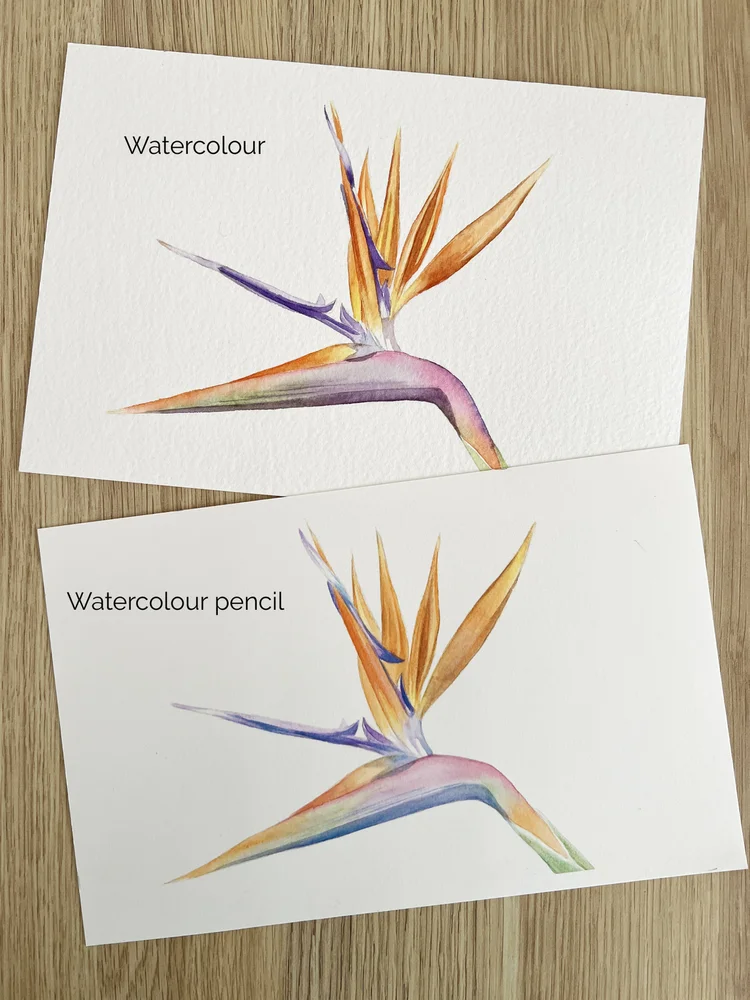
The two paintings.
Here’s a helpful tip: when you use a damp brush to pick up color from a pencil tip, do it away from your painting. It’s very easy to slip and splash color where you don’t want it (trust me, I learned this the hard way!).
Do Watercolor Pencils Replace Watercolor Paints?
Not at all. Think of watercolor pencils as a helpful partner to your paints, not a replacement. Traditional paints are still best for large, loose washes of color. Watercolor pencils are great for adding small details, building layers, or sketching while traveling. Many artists use both and often combine them in the same painting.
Can You Mix Watercolor Pencils with Traditional Watercolors?
Yes, absolutely. They work very well together. You can start with a light watercolor wash and then use pencils to add sharper details. Or you can begin with a pencil sketch and paint over it to soften the lines and add depth. Used together, they give you lots of creative options.
Final Thoughts
Watercolor pencils are flexible, fun, and easy to use. Whether you’re layering color, painting wet on wet, or sketching on a trip, they offer unique effects and plenty of creative freedom.
Why not try them in your next painting? You might be surprised by how useful they are.
I hope this encourages you to pick up your pencils and experiment. Happy painting! 🎨
