
There’s something really beautiful about hydrangeas—their full, delicate blooms, the changing colors, and the soft way they fill a space. I have a few hydrangea bushes in my garden, and when they’re in bloom, they always inspire me to bring some inside and start painting. This watercolor hydrangea painting began when I placed a few freshly cut stems in a glass vase and felt it was the perfect time to paint flowers.
In this post, I’ll take you through the steps I used to paint it, from the first sketch to the final details.
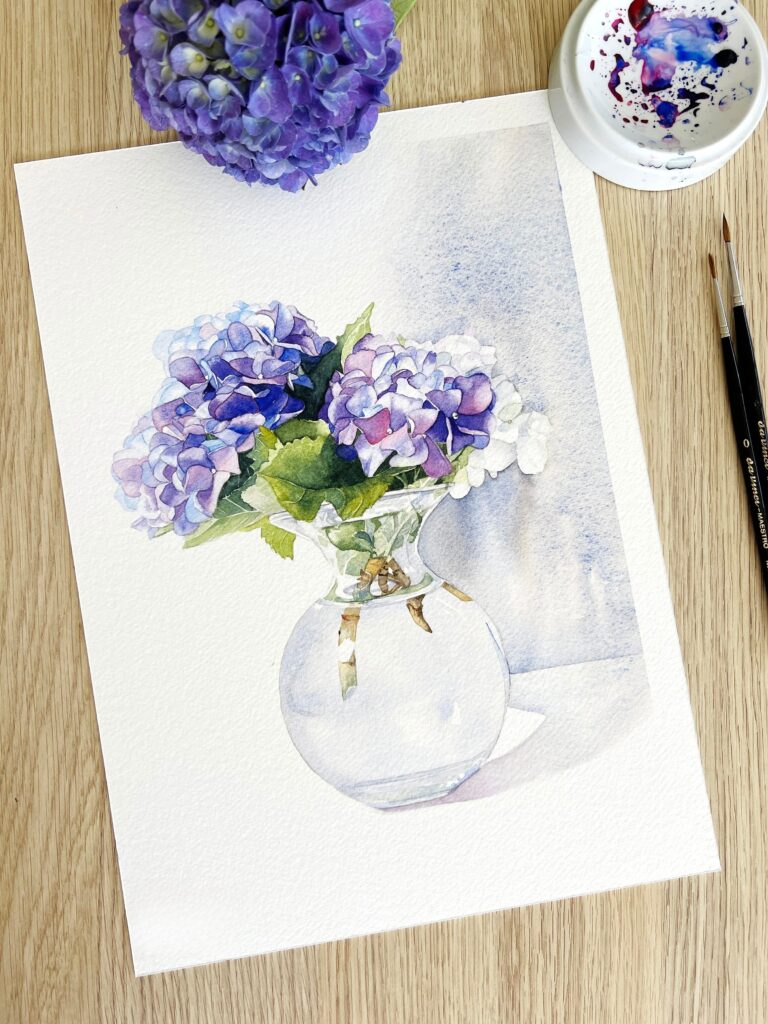
Watercolour Hydrangea painting on Arches cold press watercolour paper.
My Paints and Paper
I painted this piece on Arches cold-pressed watercolor paper, 640gsm. I cut a full sheet into four pieces and used one quarter for this painting.
The colors came from my custom Schmincke watercolor set: French Ultramarine, Ruby Red, Transparent Sienna, Transparent Ochre, and Transparent Yellow. I also added a small amount of Payne’s Grey and Cobalt Blue to my palette.
Painting Hydrangeas in Watercolor
Step 1
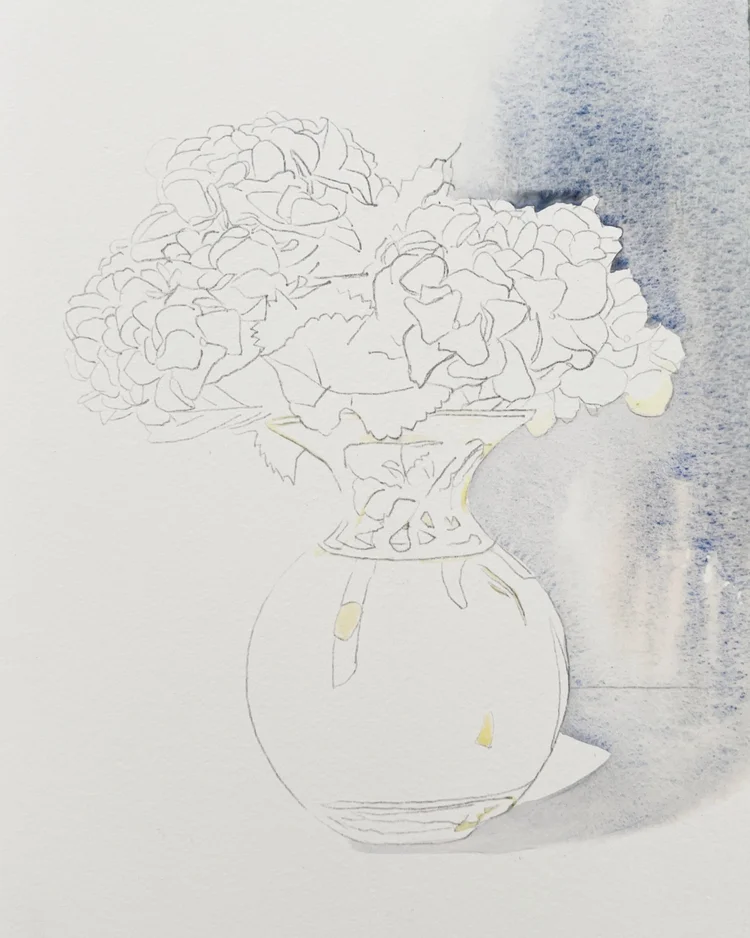
Step 1 – A wash of grey on the background. I painted carefully around the flowers and along the edge of the vase.
I began with a fairly detailed drawing based on my reference photo and transferred it onto the watercolor paper. Next, I applied masking fluid to the white highlights on the vase. This allowed me to paint a full wash over the vase later without having to paint carefully around those small areas.
To make a cool gray, I mixed French Ultramarine with Transparent Sienna. Using my Da Vinci Colineo dagger brush, I painted a wash of this gray into the background. I tilted the board so the paint could flow downward and kept the paper damp to help the wash move smoothly. The dagger brush was perfect for following the curved shape of the glass vase quickly and easily.
I added the background wash to anchor the vase to one side of the painting, which creates a more interesting composition. There were also some white petals on the right side, so adding background color there helped them stand out.
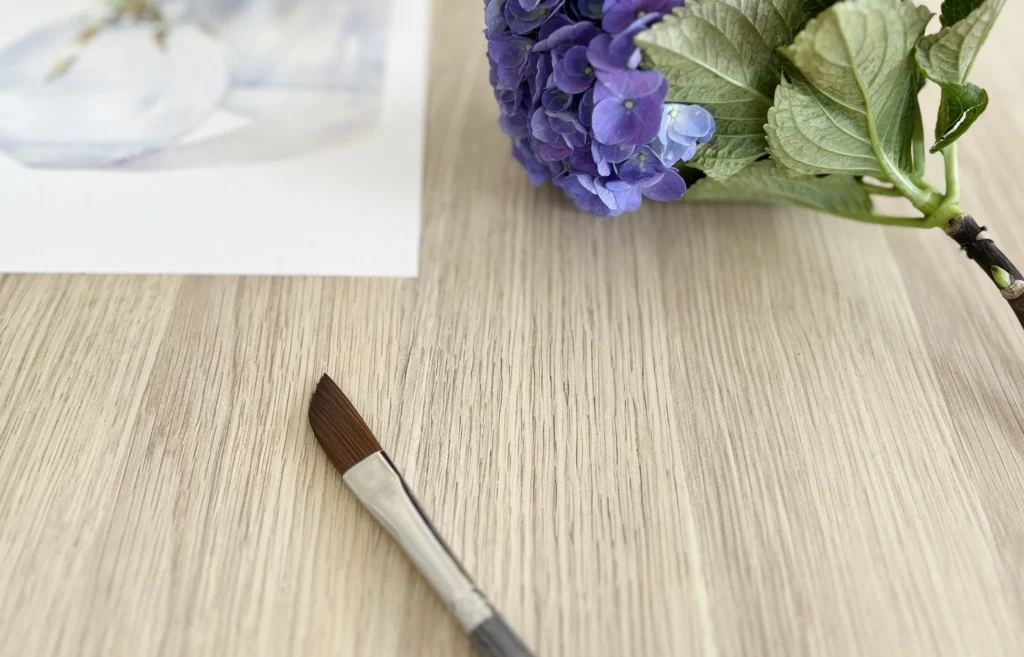
My dagger brush hugged the curves of the vase beautifully.
Step 2
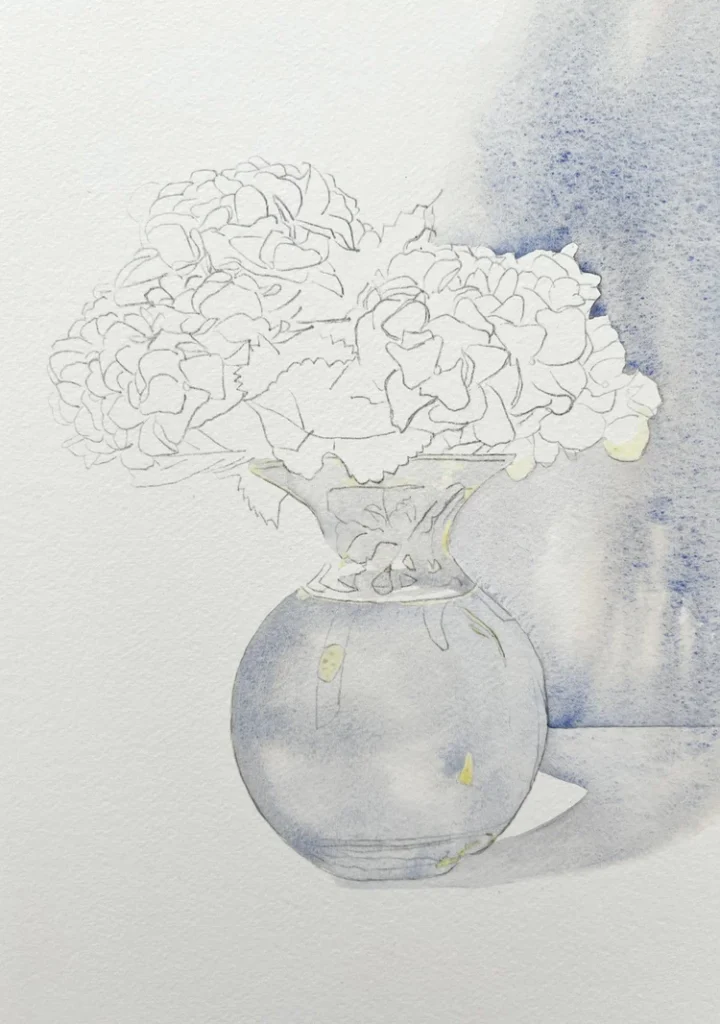
Step 2- A beautiful blue grey was painted on the vase.
Once the background wash was dry, I re-wet the area above the table line and added more of the same gray to define the edge of the tabletop. This time, I tilted the painting in the opposite direction so the paint would flow upward.
Next, I painted the vase using the same gray, again with my dagger brush. I left a few white areas around the neck of the vase to keep the highlights bright.
Step 3
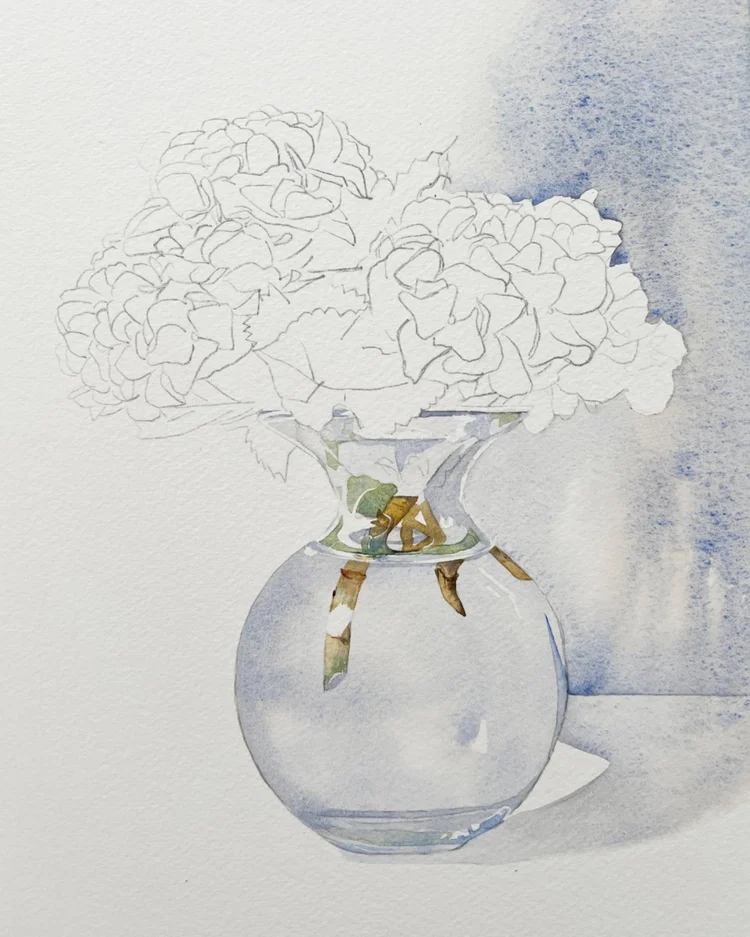
Step 3- I started painting in the shapes that the stems made within the vase.
I removed the masking fluid, then made the gray a little darker and used it to paint the deeper shadow areas on the vase. After that, I started painting the hydrangea stems and leaves inside the glass. Because the glass distorts them, I didn’t overthink it. I simply looked at my reference photo and painted the shapes I could see.
For the stems, I used Transparent Ochre and Transparent Sienna. I mixed a touch of French Ultramarine into the Transparent Sienna to create a darker brown for the shadow areas. For the leaves, I mixed French Ultramarine with Transparent Yellow to create the green.
Step 4
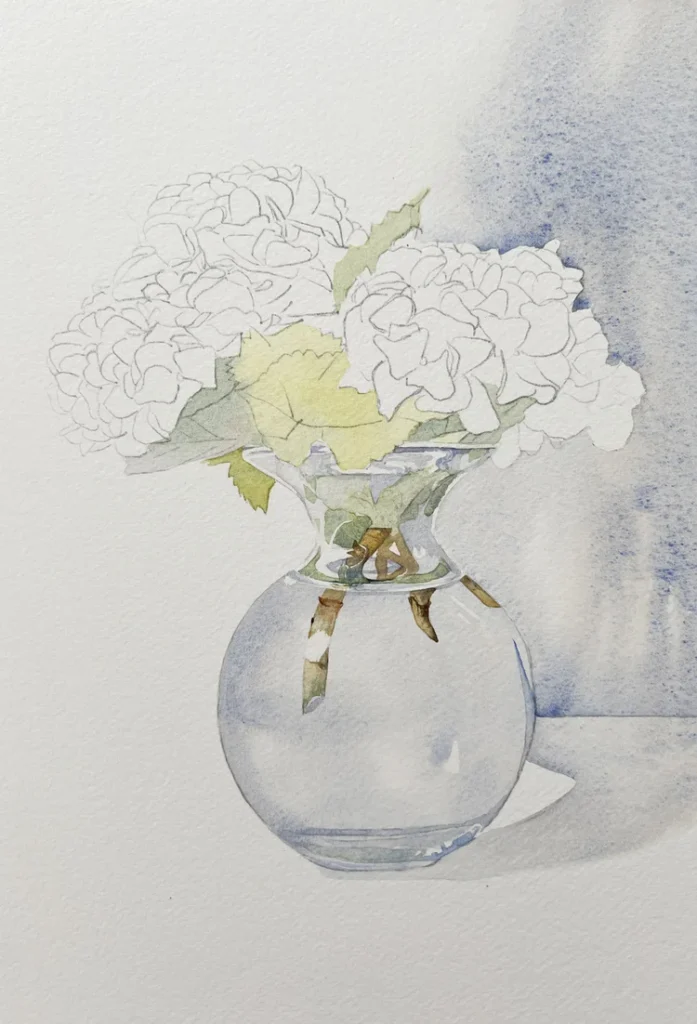
Step 4 – I mixed French Ultramarine with Transparent Yellow, changing the ratio to make lighter or darker greens. I used loose washes to keep the color soft and natural.
Next, I painted the leaves outside the vase using the same mix of French Ultramarine and Transparent Yellow. I adjusted the colors based on the value—more yellow for lighter areas and more blue for darker ones. I kept my washes loose so the color stayed soft and varied.
Step 5
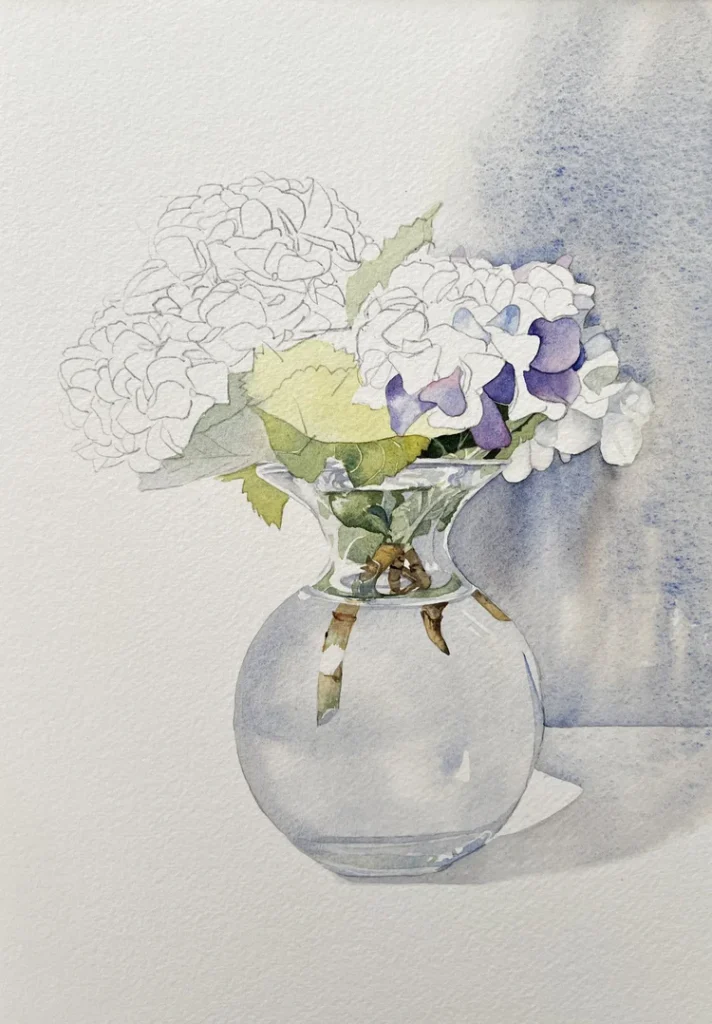
Step 5 – Adding detail to the front leaf and beginning the right-side petals with soft violet tones and varied edges.
I added more detail to the front leaf where it curls over the vase. I used a stronger green mix—more pigment and less water—and painted on dry paper. I left small gaps from the first wash to suggest the leaf veins. For the deeper shadows, I mixed Payne’s Grey with Transparent Yellow to create a rich dark green. I used this to paint the darker area just above the right side of the vase.
Next, I began painting the petals of the hydrangea on the right. I mixed French Ultramarine with Ruby Red to make a soft violet and painted each petal individually to show their subtle differences. While the paint was still wet, I sometimes dropped in a touch of Ruby Red to add variation. The white petals on the far right were painted using the same gray mix I used earlier for the background and the vase.
Step 6
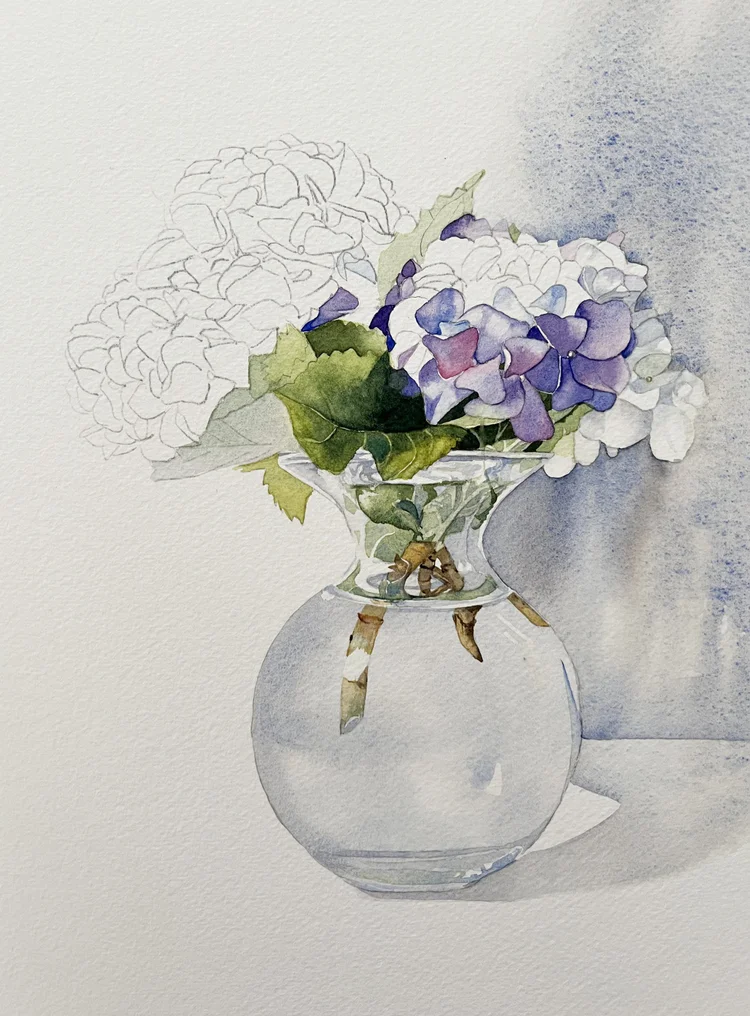
Step 6 – Building up leaf shadows with a dark green mix and adding varied violet tones to the hydrangea petals for depth and interest.
I used the dark green mix of Payne’s Grey and Transparent Yellow to start adding shadows to the leaves. At the same time, I continued painting the hydrangea petals. Sometimes I pre-wet the petals to create soft edges and gentle blends, and other times I painted directly on dry paper for sharper detail.
Because the violet was mixed from French Ultramarine and Ruby Red, it was easy to adjust the color. I leaned more toward blue in some areas and more toward pink in others, which gave the petals a beautiful, natural variation.
Step 7
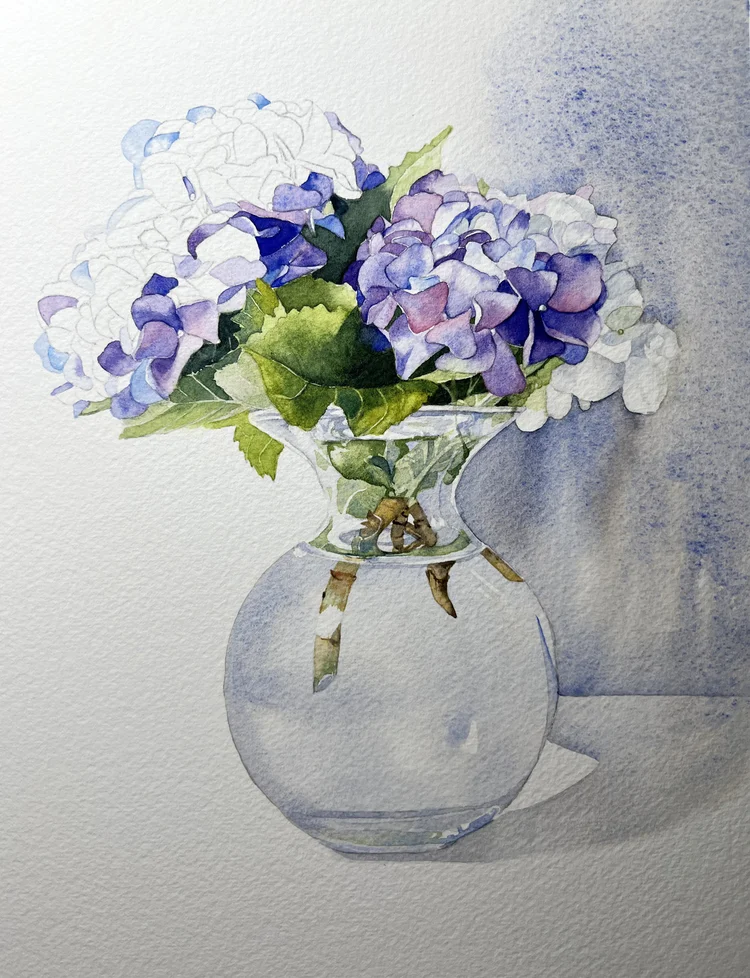
Step 7- Deepening the leaf colour and softening the back petals with pale Cobalt Blue to create a sense of depth.
I added more detail to the leaves using a stronger mix of French Ultramarine and Transparent Yellow with less water for a deeper color. I painted on both wet and dry paper, and as before, I left some of the lighter wash showing through to suggest the leaf veins.
Then I moved on to the other flowers. I continued using the violet mix of Ruby Red and French Ultramarine for the petals in the front. For the flowers in the background, I switched to a very light wash of Cobalt Blue. Keeping these colors softer helped create depth and push those petals back in the painting.
Final Steps
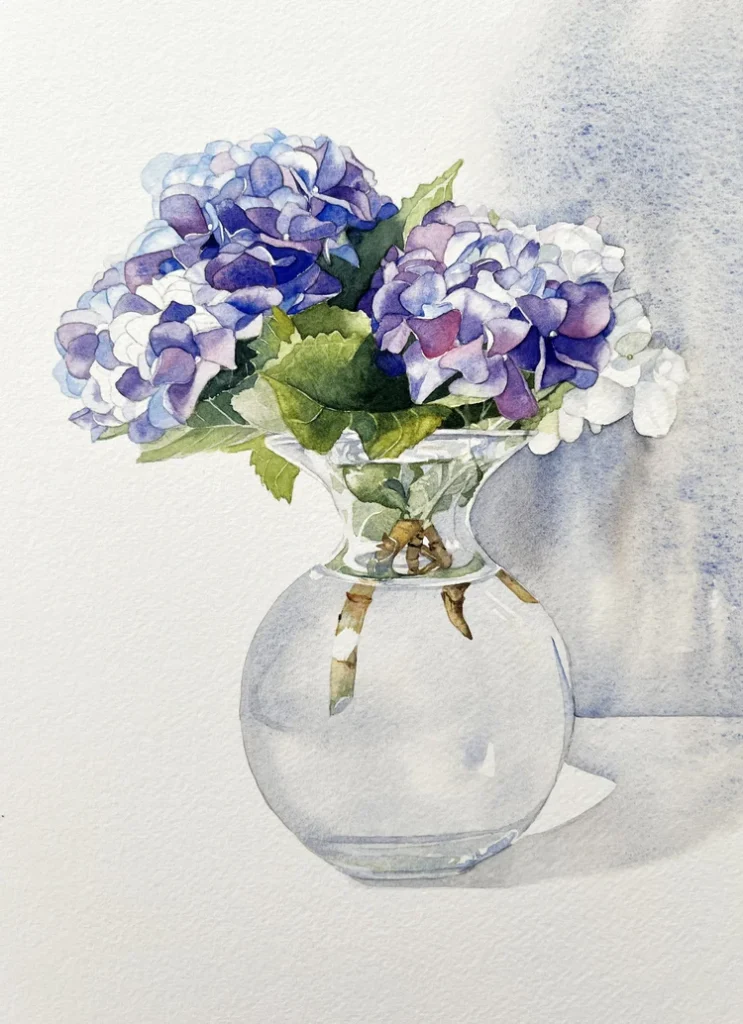
Almost done.
At this stage, the hydrangea blooms were almost complete, so I focused on adjusting the values. I added extra layers of paint to some of the front petals to increase contrast and help them stand out. I also refined a few of the leaves with more detail to bring the whole painting together.
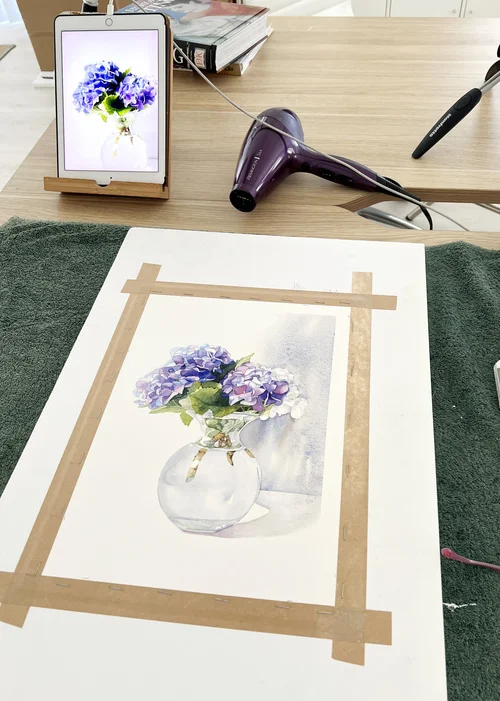
On the petals at the back on the left side, I brushed on clean water and gently dabbed them with a paper towel while the paint was still wet. This softened the edges and lifted some of the color, helping those petals fade further into the background.
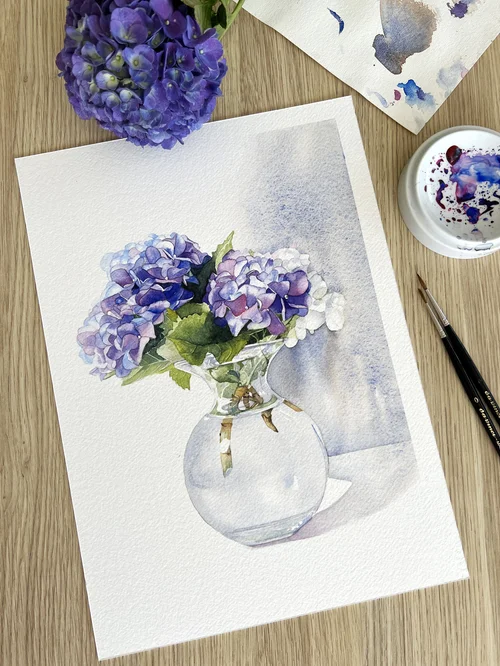
This painting was a real pleasure to work on—from the soft petals to the glass reflections and delicate leaves. Hydrangeas are always a wonderful subject, and I enjoyed the challenge of capturing their subtle colors and structure in watercolor. I hope this step-by-step guide inspires you to try painting hydrangeas yourself.
