
Watercolor painting is a wonderful and expressive medium, but it can also be challenging to learn. It requires patience, good water control, and a willingness to let the paint flow. Along the way, it’s normal to make mistakes that slow your progress—but the good news is that most of them are easy to fix.
Below are 10 common watercolor mistakes and simple ways to correct them, helping you improve your skills and paint with more confidence and freedom.
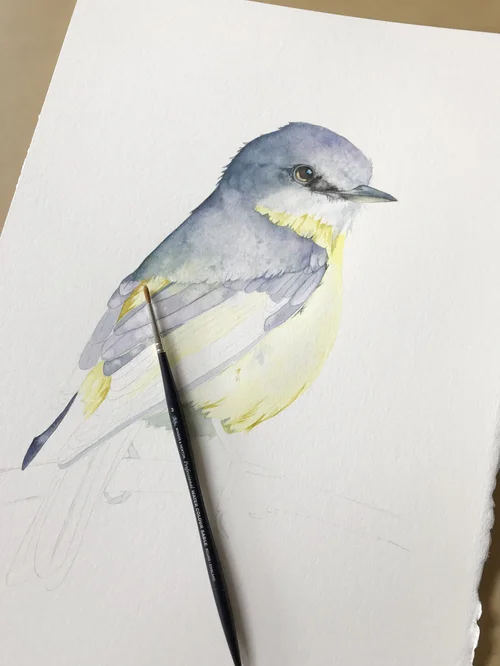
Eastern Yellow Robin watercolour painting.
1. Overworking the Painting
One of the most common watercolor mistakes is not knowing when to stop. It’s tempting to keep adding details or fixing small areas, but overworking quickly leads to muddy colors and dull results. Too much blending or repeated brushing removes the freshness and spontaneity that make watercolor so appealing.
I still catch myself doing this. When it happens, I force myself to step back and look at the painting from a distance. Before touching the paper again, ask yourself if that area truly needs more work. Small finishing touches are fine—just don’t push it too far.
How to Fix It:
Plan your washes before you start. Think about your layers and trust your brushstrokes. If something feels slightly imperfect, pause. Often, less really is more in watercolor. Walk away for a few minutes and come back with fresh eyes. You may find that what you thought was a mistake actually adds character to the painting.
Another helpful tip is to use larger brushes whenever possible. Many beginners choose brushes that are too small because they feel safer, but this often leads to overworking the paint. A larger brush covers more area, keeps your strokes loose, and stops you from fussing over tiny details. Embracing bigger brushes will bring more flow, confidence, and energy into your watercolor work.
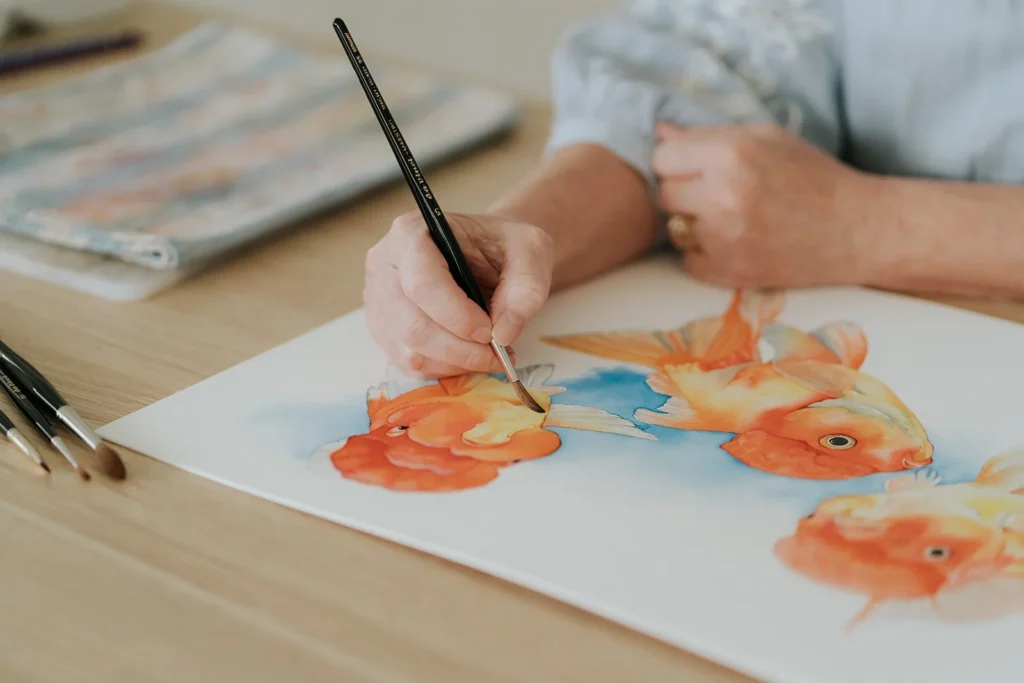
Working on my “Bubble Trouble” watercolour painting.
2. Using Too Much Water
Water control is one of the most important skills in watercolour painting. Using too much water can easily lead to blooms—those unwanted cauliflower-like marks that appear when excess water pushes pigment outward on a damp wash. This usually happens when your brush is overloaded with water or when puddles form on the paper.
To prevent this, always stay aware of how wet your brush and paper are. A simple habit that helps enormously is dabbing your brush on a tissue or paper towel before touching the paper. This removes excess water and gives you far more control. I also pay close attention to the surface of the paper: you want a gentle, glossy sheen—not a dome of water sitting on top. That sheen gives you control without sacrificing softness.
Using less water also results in richer colour and sharper detail, which is especially useful for fine textures like fur, feathers, or small botanical details. The key is learning to adjust the water depending on whether you want soft, flowing blends or crisp, defined edges.
How to Fix It:
Practice finding the right balance between water and pigment. Observe how much moisture is in your brush, how damp the paper is, and how watery your paint mixture feels. If both your brush and paper are wet, switch to a slightly thicker paint mix to avoid blooms and washed-out colour. Remember, you can control the outcome by adjusting just one element—the brush, the paper, or the paint consistency. Small tweaks make a big difference, so keep experimenting until you find what works best for each stage of your painting.
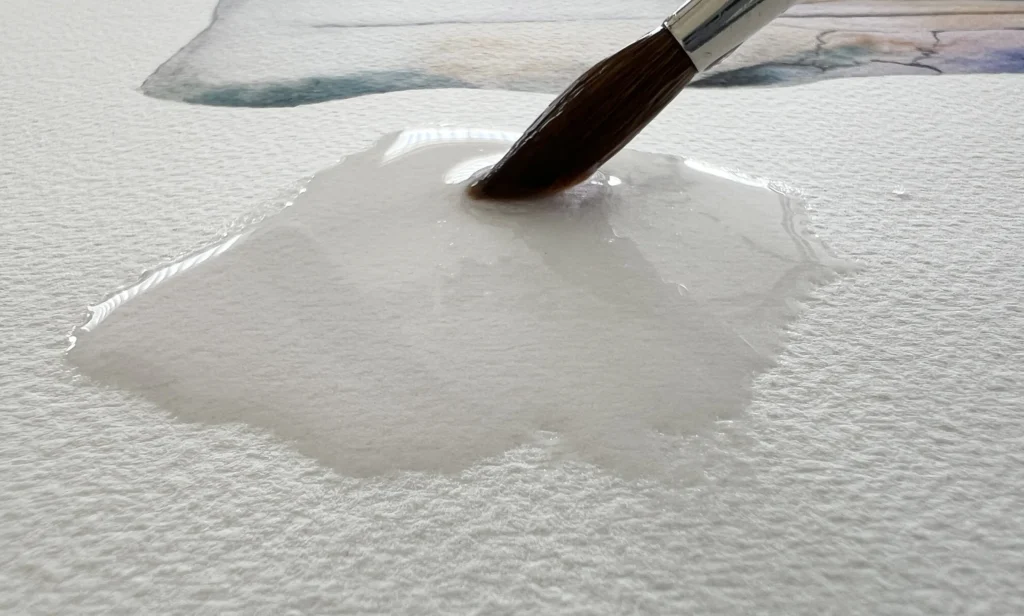
Here there is too much water on the paper. It’s sitting above the surface of the paper and if I was to lift the paper it would flow everywhere.
3. Not Letting Watercolour Layers Dry Completely
One of the most common watercolour mistakes is painting over a layer before it has fully dried. Because watercolour is transparent, adding paint too soon can disturb the underlying wash, causing colours to blend unintentionally. This often results in muddy, dull tones and a loss of clarity and vibrancy in your artwork.
When layers are still damp, pigments easily reactivate and mix together, especially if you’re working with multiple colours. While intentional wet-on-wet techniques have their place, uncontrolled layering can quickly overwhelm your painting. Mixing colours thoughtfully—either on your palette or deliberately on the paper—also plays a key role in keeping colours fresh and clean.
Patience is essential in watercolour painting. Allowing each layer to dry fully preserves the luminous quality that makes watercolour so appealing. This step is especially important when using glazing techniques, where transparent layers are built up gradually to create depth and richness.
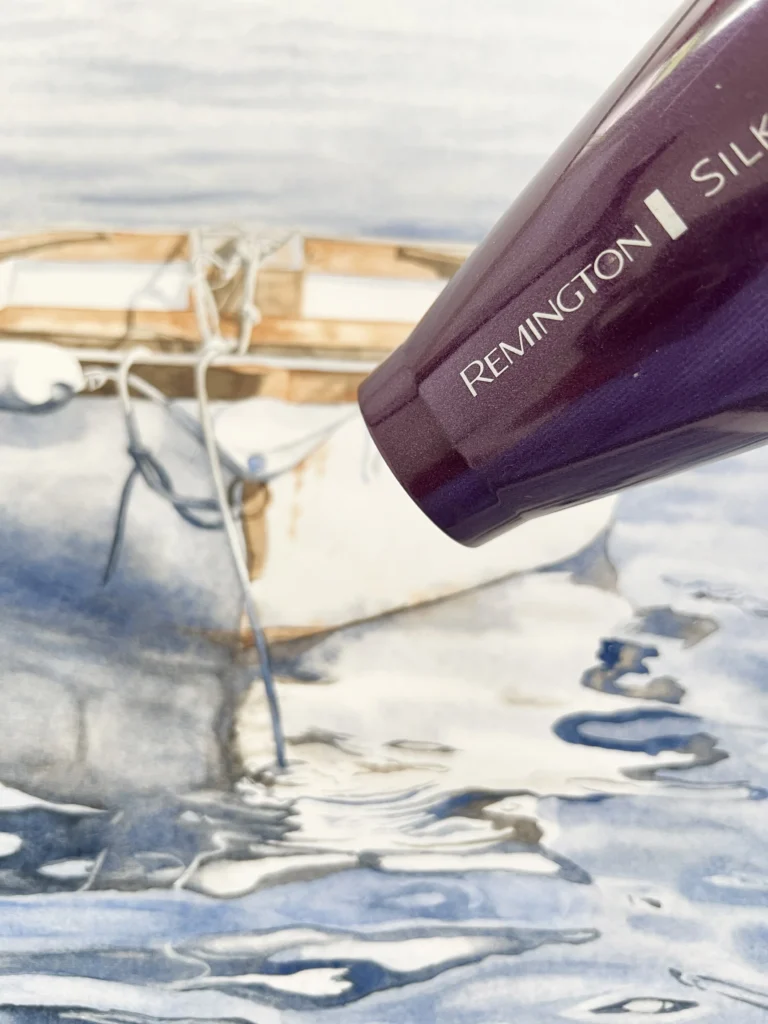
Sometimes I’ll use a hair dryer to make sure each layer is dry before I start the next but I make sure the paint is starting to dry by itself before I turn the hair dryer on.
How to Fix It:
Always let each wash dry completely before adding another layer. If you’re short on time, use a hairdryer on a low, cool setting, keeping it at a distance to avoid pushing wet paint around. By working on fully dry layers, you’ll maintain colour clarity, prevent muddy mixes, and achieve more controlled, professional-looking results.
4. Skipping Quality Watercolour Paper
One of the most overlooked watercolour mistakes is using low-quality paper. Many beginners focus on brushes and paints, but the paper you choose has a huge impact on how your watercolours behave. Cheaper paper often absorbs water unevenly, dries too quickly, and struggles to handle multiple layers. This can lead to patchy washes, harsh edges, and a lack of control that makes painting unnecessarily frustrating.
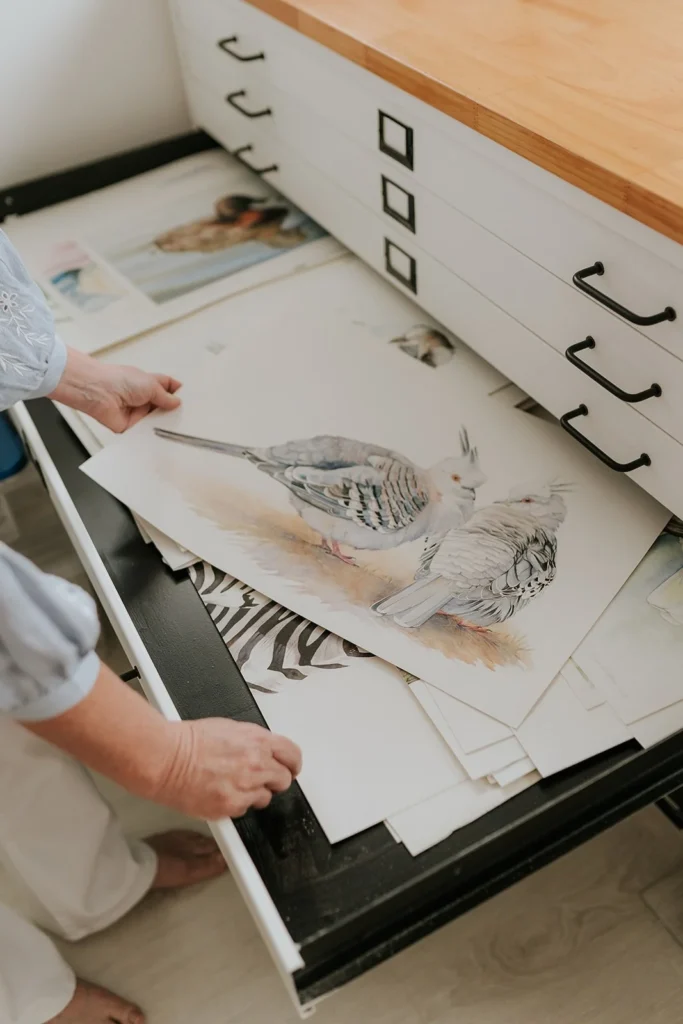
Good quality, 100% cotton watercolour paper is essential for success in watercolour painting.
High-quality watercolour paper is designed to manage moisture properly, allowing paint to flow smoothly and settle evenly. When the paper performs well, techniques like wet-on-wet, glazing, and lifting become far easier to control, and your colours appear more vibrant and refined.
I always recommend investing in professional-grade watercolour paper such as Fabriano Artistico or Arches. These papers hold water beautifully, giving you consistent washes and more time to work. If you’re looking for a more affordable option that still offers excellent quality, Saunders Waterford is another reliable choice.
How to Fix It:
Choose thick, professional-grade watercolour paper whenever possible. Papers like Fabriano Artistico, Arches, or Saunders Waterford handle water evenly, resist buckling, and allow your washes to dry smoothly. Good paper also tolerates lifting and corrections much better, giving you greater flexibility and more confidence as you paint.
5. Lack of Value Contrast
A lack of value contrast is one of the most common reasons watercolour paintings feel flat or unfinished. Because watercolour is transparent, depth doesn’t happen automatically—it has to be built intentionally through a clear range of light, mid, and dark values. When everything sits in a similar tonal range, the subject can lose impact and visual interest.
Don’t be afraid to push your darks. Strong contrast is what gives a painting structure, mood, and energy. Starting with light washes and slowly layering darker values helps create form and dimension, allowing your focal point to stand out. It’s often the deeper shadows that make the lighter areas glow, giving your painting a more confident and dynamic finish.
How to Fix It:
Begin by identifying the lightest highlights and the darkest shadows before you paint. Creating a quick value study in graphite can help clarify the tonal structure of your composition. Start with pale washes, then gradually build mid-tones and deepen the shadows. Be bold with your darks—strong value contrast adds depth and drama. Remember, it’s always easier to darken an area than to lighten it once it’s been painted.
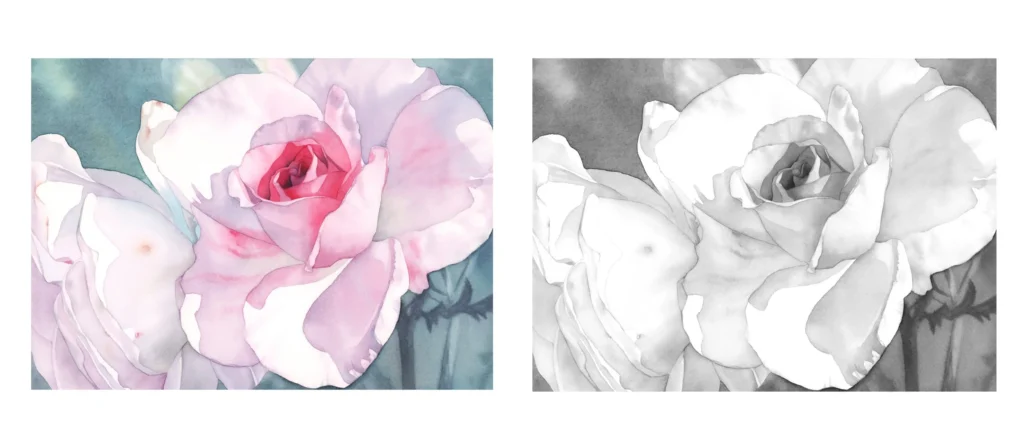
Check your values by taking a photo of your painting and converting it to black and white. This makes it easier to see contrasting areas. If the contrast looks weak, deepen some areas around the focal point.
6. Using the Wrong Brushes
Using the wrong brushes can seriously limit your control in watercolour painting. Brushes that don’t hold enough water, lose their point, or are poorly suited to the size of the area you’re painting can make even simple techniques feel frustrating. A good watercolour brush should hold plenty of water and pigment, release it smoothly, and still come back to a fine point for detail. This balance allows you to create crisp edges when needed, while also achieving soft, expressive washes.
High-quality brushes truly make a difference. I personally love Da Vinci Maestro brushes for their excellent water-holding capacity and precision, but Jackson’s brushes are a great, more affordable alternative. When your tools work with you instead of against you, painting feels easier, more fluid, and far more enjoyable.
How to Fix It:
Invest in brushes that suit your painting style and choose the right size for each area. Using a brush that’s too small often leads to overworking, uneven washes, and paint drying too quickly. Larger brushes help you cover areas smoothly and keep your strokes loose, while a good point still allows for detail. Da Vinci Maestro brushes are excellent for control and durability, and Jackson’s Studio Synthetic brushes offer great performance on a budget. The right brush will hold the correct amount of water, maintain its shape, and give you consistent, confident results.
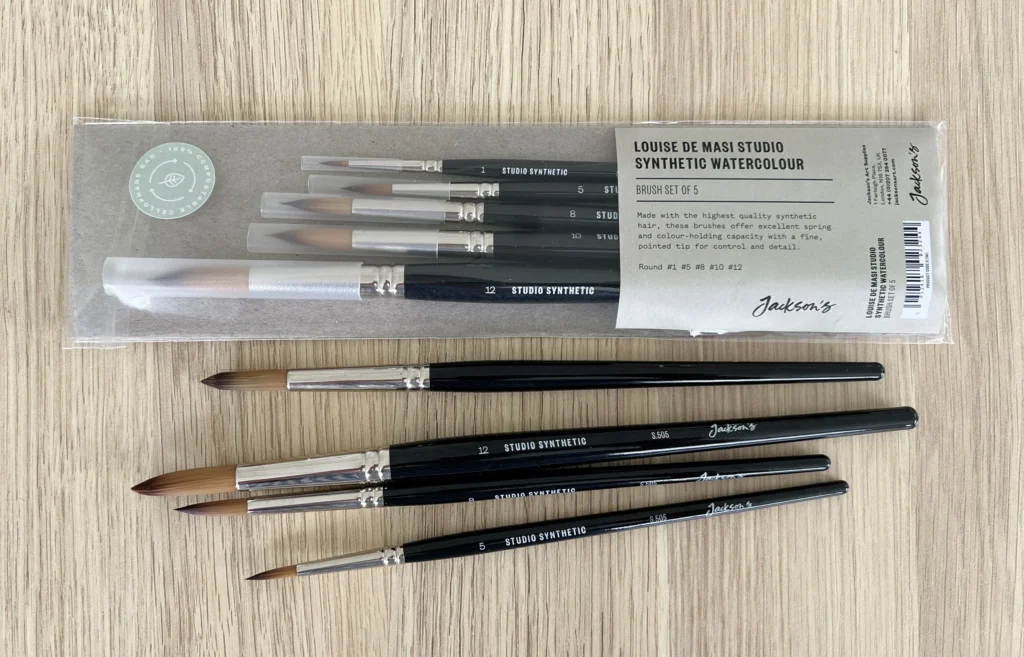
This is my branded set of Jackson’s “Studio Synthetic” watercolour brushes in my favourite sizes.
7. Being Afraid of “Happy Accidents”
One of the most beautiful (and challenging) aspects of watercolour is its unpredictability. Blooms, back-runs, and unexpected textures can feel like mistakes at first, especially if you’re trying to control every detail. But these surprises are often what give watercolour its life, energy, and sense of movement.
Instead of resisting these effects, try leaning into them. A bloom can suggest texture in petals, foliage, or skies, while a soft back-run can add atmosphere and depth. Watercolour thrives on a balance between intention and surrender, and learning to let go of rigid control allows your paintings to feel more natural, expressive, and unique.
How to Fix It:
Don’t fight the water—learn to work with it. When a bloom or back-run appears, pause and observe how it interacts with the surrounding areas. Ask yourself whether it adds interest, texture, or movement before trying to “fix” it. Let go of perfectionism and trust the process. Embracing these happy accidents will help your work feel fresher, more dynamic, and unmistakably watercolour.
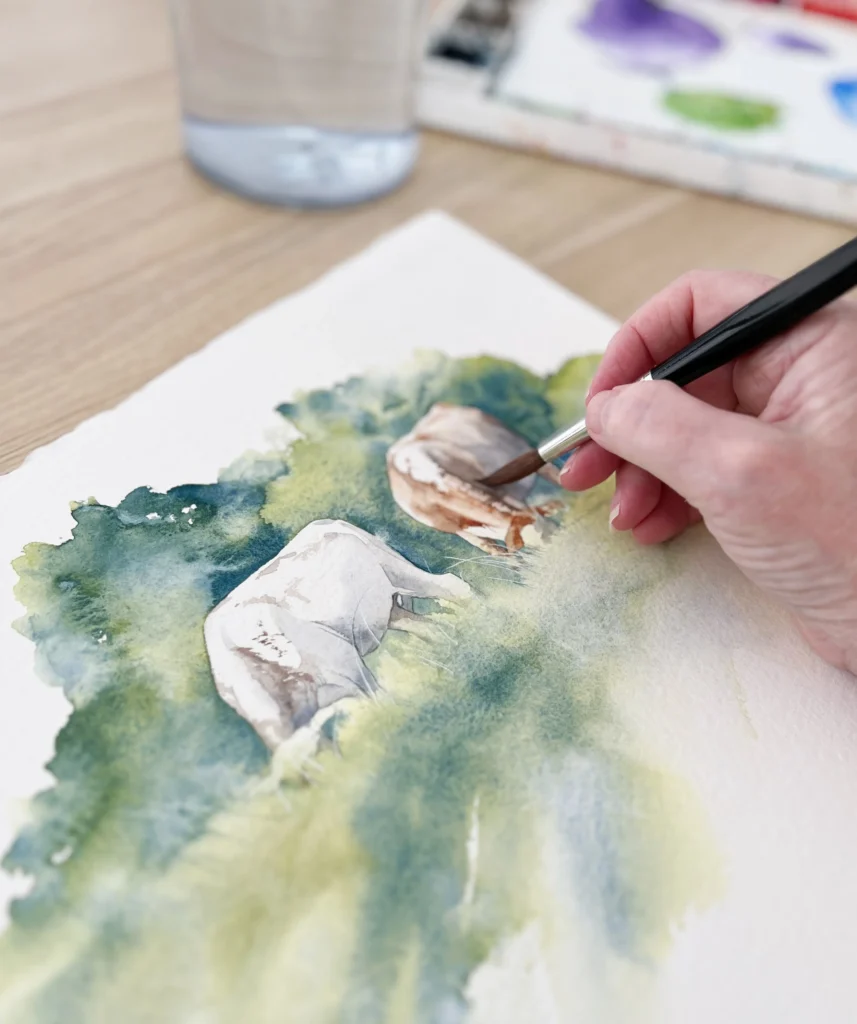
My “Dorrigo Cows” vignette.
8. Neglecting to Plan
Jumping straight into a watercolour painting without a plan can feel exciting, but it often leads to avoidable issues with composition, colour harmony, or weak focal points. Without a clear direction, colours may clash, important areas can get lost, and the painting may feel unbalanced or unfinished.
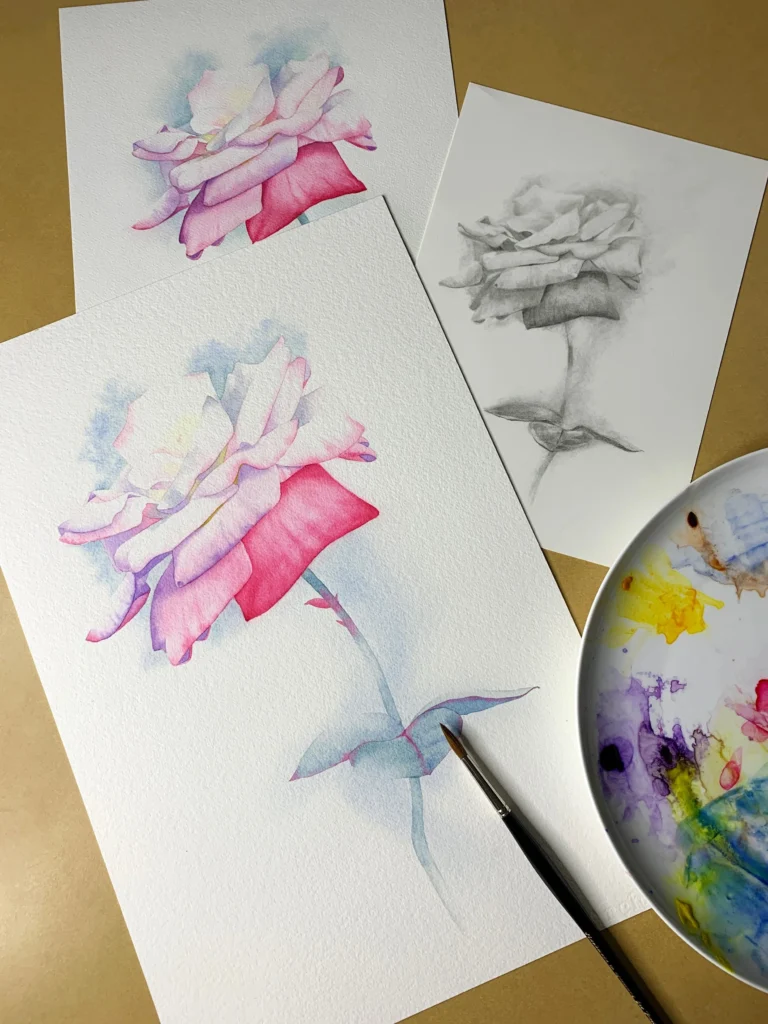
Taking a few minutes to plan before you begin can make a huge difference. A simple pencil sketch helps you establish strong composition, while thinking through your colour palette ensures harmony and cohesion. Testing colours in advance also removes guesswork, allowing you to paint with more confidence and flow.
How to Fix It:
Before painting, lightly sketch your composition and decide on your colour scheme. Test your colours on scrap paper to see how they mix and dry. Consider where you want soft blends, hard edges, and your main focal point. This small amount of preparation gives you a clear roadmap, making the painting process smoother, more enjoyable, and far more successful.
9. Using Too Many Colours
It’s easy to get carried away and use every colour on your palette, but too many pigments can quickly overwhelm a watercolour painting. When lots of unrelated colours compete for attention, the result can feel busy, chaotic, and lacking harmony. A simpler palette creates a stronger sense of unity and helps your subject feel more intentional and refined.
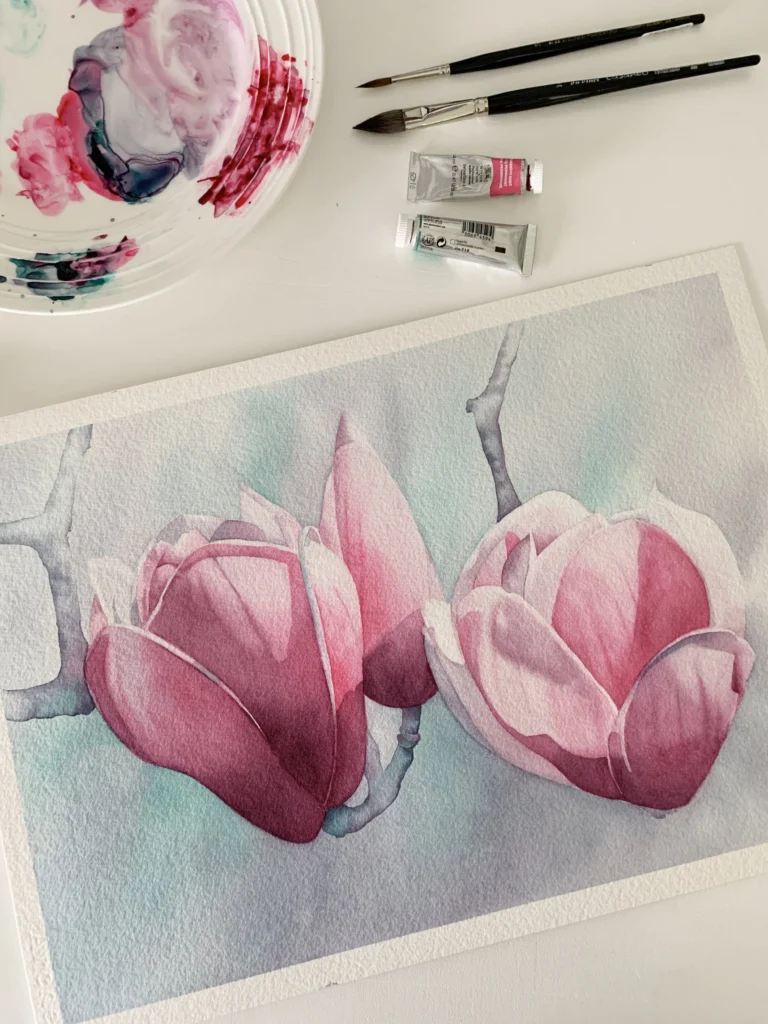
I used just two colours on this Magnolia watercolour painting.
Working with fewer colours also improves your colour mixing skills. You’ll discover that a limited palette can produce a surprising range of subtle, beautiful hues while keeping everything visually connected. In watercolour, restraint often leads to more elegant and professional-looking results.
How to Fix It:
Limit your palette to a small group of colours that work well together. Choose pigments that can mix a wide range of values and temperatures. A restrained palette brings balance and cohesion to your painting, helping all elements feel connected while still allowing plenty of colour variation.
10. Ignoring the Importance of Patience
Watercolour painting rewards those who slow down and trust the process. Rushing through a piece often leads to muddy washes, uncontrolled blends, and colours that lose their clarity. When layers are added too quickly, the paint underneath can lift or mix unintentionally, breaking the harmony of the painting.
Watercolour isn’t about speed or forcing results. It’s about allowing each layer to dry, observing how the paint settles, and building depth gradually. Taking your time helps preserve the transparency and freshness that make watercolour so distinctive, resulting in a more balanced and professional-looking artwork.
How to Fix It:
Slow down and work deliberately. Let each wash dry completely before applying the next layer, and approach every brushstroke with intention. Practising patience — both with the paint and with yourself — gives you greater control, cleaner colours, and a more polished final result.
Final Thoughts
By understanding and correcting these common watercolour mistakes, you’ll notice a real improvement in your paintings. Every artist makes mistakes — they’re an essential part of learning and growing with this beautiful medium. Each challenge teaches you something new and brings you one step closer to confidence and mastery.
Keep practising, stay patient with yourself, and enjoy the process. Watercolour rewards curiosity, persistence, and creativity — so trust the journey and let your artistic voice shine.
