
Sometimes, it’s the tiniest details that truly bring a painting to life. A little glisten here, a soft shadow there, and suddenly your flower looks as though it’s fresh from the garden. That is exactly what happened when I was painting this rose.
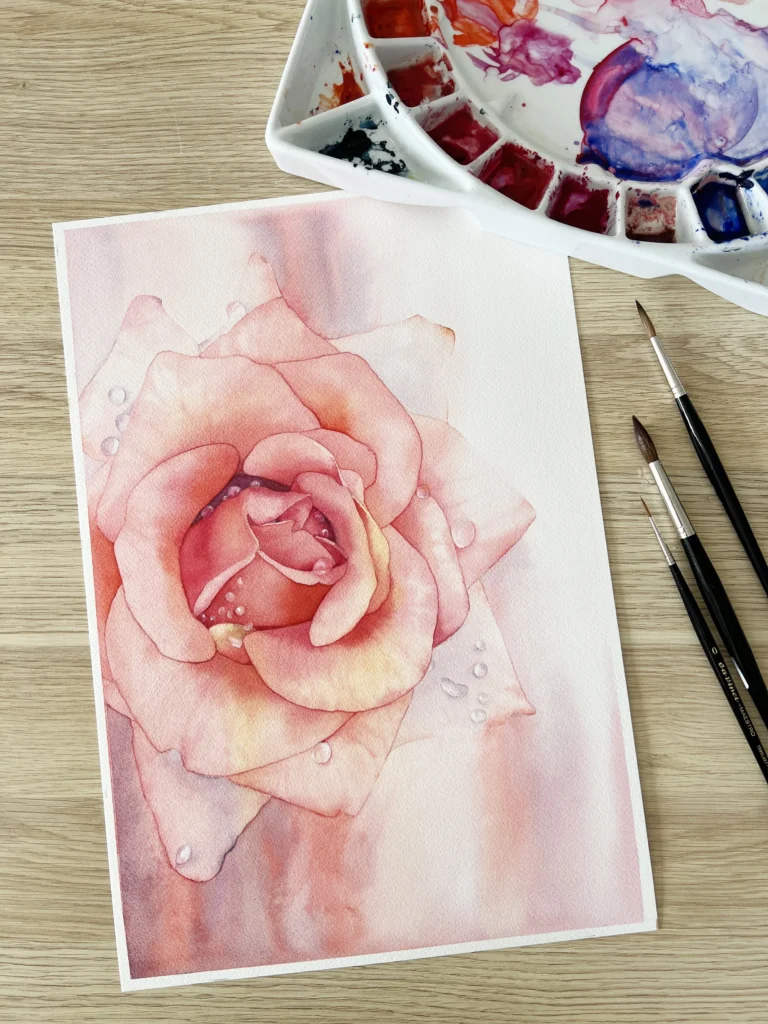
At first, I thought I’d leave the water droplets out. But as the painting progressed, I decided to add them in—and I’m so glad I did! They gave the flower a sense of sparkle, depth, and freshness, as though it had just been kissed by the morning dew. I am always looking for new and exciting watercolor ideas, and I love sharing these techniques with you through these tutorials.
Today, I’m going to show you how to paint realistic droplets in watercolor. Yes, they are small, a little fiddly, and they definitely test your patience—but they are also incredibly fun to create. Follow this step-by-step tutorial to learn how to paint sparkling droplets without the headache!
What You’ll Need
For this specific rose and its droplets, I used:
Paper: Arches Cold Press watercolor paper.
Paints: I primarily used Ruby Red mixed with Pure Yellow, with touches of French Ultramarine Blue and Quinacridone Magenta. (Of course, you can use any colors currently on your palette!)
Brushes: A small round brush (Size 0), a liner brush, and my trusty Eradicator brush.
Final Touch: White gouache for the crispest highlights.
A watercolour painting tutorial with a step-by-step guide
Step 1: Observe Before You Paint
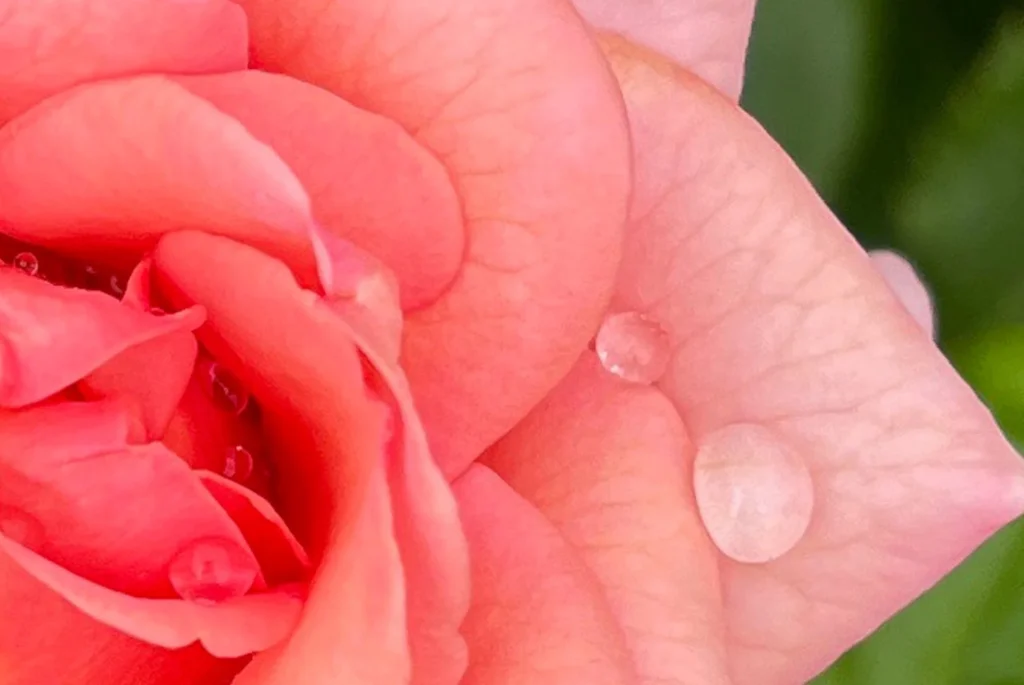
Before you even touch your brush to the paper, it is essential to look closely. Not every water droplet is a perfect circle, and they certainly don’t all look the same. Study your reference photo and pay attention to:
The Light Source: Where exactly is the light hitting each droplet?
The Cast Shadow: Where does the droplet block the light and cast a shadow onto the petal?
Variety: Notice the differences in size, shape, and how they “sit” on the surface.
Careful observation is the true secret to realism. Take a moment to really “see” the droplets before you begin.
Step 2: Start with the Shadows
This is where the magic begins! To make a droplet look like it is sitting on top of the petal rather than flat against it, you have to define the space beneath it.
Mapping the Shapes: Start by lightly sketching your droplet shapes onto the petals. Keep these lines very faint so they don’t show through your paint later.
The Cast Shadow: On a real rose petal, the droplet blocks a bit of light and casts a tiny shadow on the surface beneath it. Using damp paper, paint a soft cast shadow around the edge of each droplet using your petal mixture. For this rose, I used my mix of Ruby Red and Pure Yellow.
Tips for Success:
Keep it Subtle: The color should be very pale and delicate. If it’s too dark, the droplet will look heavy or “dirty.”
Soft Transitions: Let the paint bleed gently into the damp surface to create a soft, natural transition.
Placement Matters: Remember, the shadow doesn’t always go all the way around the circle. It usually sits on the side opposite your light source.
This subtle shading is the foundation of the 3D effect—it’s what makes the droplet feel like it’s lifted above the petal.
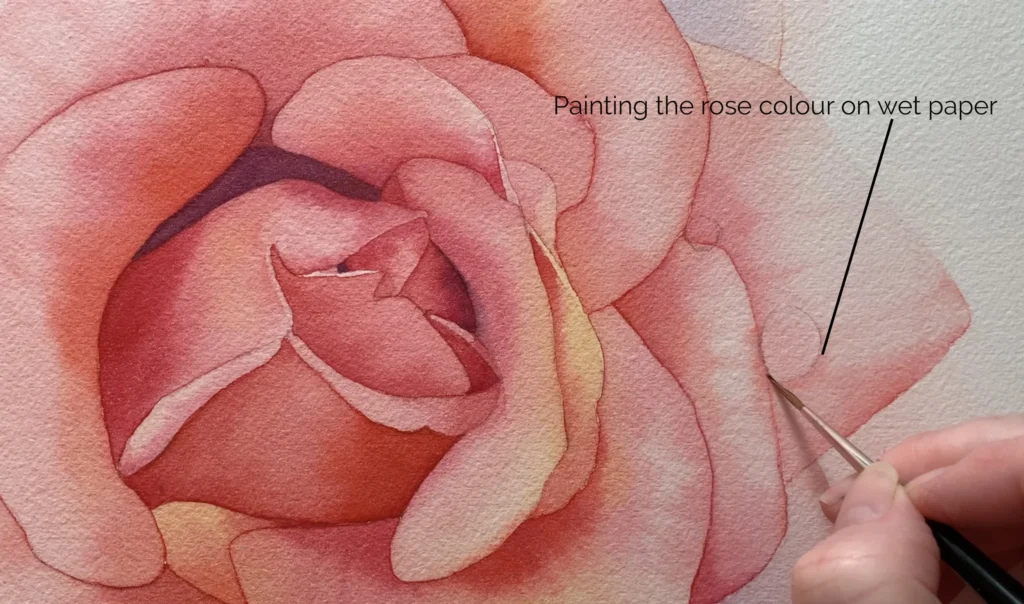
Here I’m painting the cast shadow around the outside edge of the droplet using the same colour I used for the rose petal.
Step 3: Painting the Droplet’s Interior
Now we move inside the droplet itself. A droplet isn’t just a blank bubble; it actually acts like a tiny lens, refracting the world behind it. In this case, that means the rose petal’s color is concentrated inside. This is the moment where your “blob” of paint suddenly starts to look like liquid.
Refracting the Color: Once your initial shadows are dry, lightly moisten the inside of the droplet with clean water. Load your brush with a slightly stronger version of your rose mixture (Ruby Red + Pure Yellow) and drop it into the droplet shape.
Blending for Depth: Gently blend the color toward the edges, being careful to leave a small area untouched—this will become your highlight later.
Adding Contrast: For added realism on some of the larger droplets, try dropping in a hint of a cooler gray (mixed from French Ultramarine + Ruby Red) near the top. This extra bit of depth makes the water look truly transparent and dimensional.
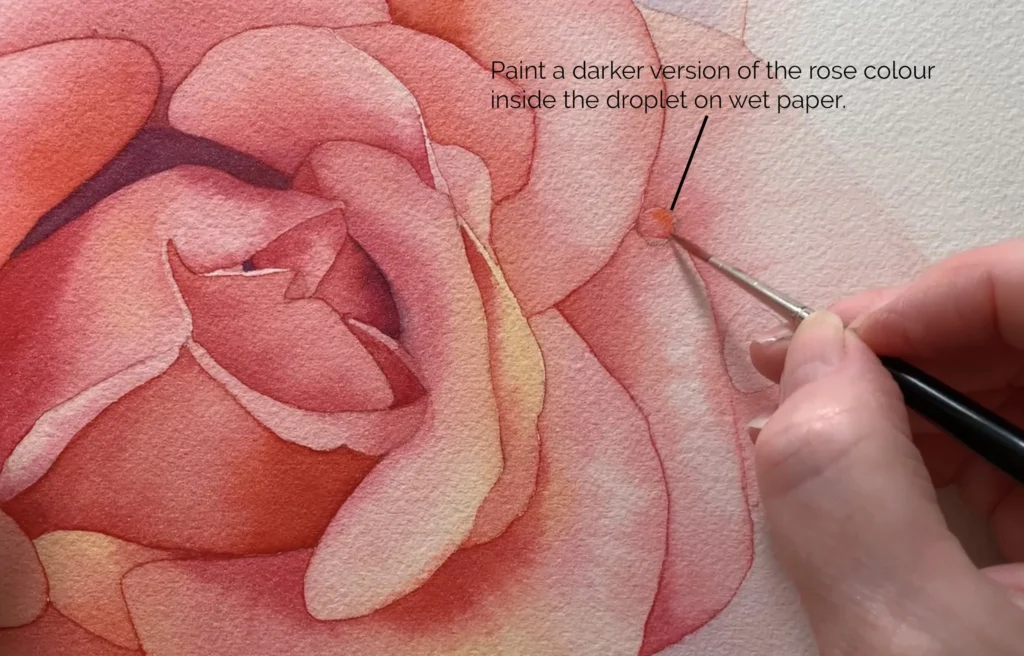
A small brush adds a darker version of the rose colour inside a droplet shape on wet paper, enhancing depth and realism.
Key Reminders:
Soft Spreading: Let the paint spread naturally so the original petal color still peeks through in some areas.
Stay Patient: This is delicate, detailed work. Take your time with each one; that patience will pay off when you see the finished “sparkle.”
Step 4: The Finishing Sparkle
Water is only convincing if it has that characteristic “ping” of light. This final step is what creates the illusion of a wet, glistening surface.
Using White Gouache: While some artists prefer to leave the white of the paper, using White Gouache gives you much more control and a brighter, punchier highlight.
The “Soft Bleed” Technique: I like to apply the gouache while the interior of the droplet is still slightly damp. This allows the white to bleed softly into the rose color, mimicking the way light diffuses through water.
Consistency is Key: Keep your gouache creamy—think the consistency of heavy cream—rather than watery. This ensures the highlight stays opaque and vibrant instead of fading into a pale pink.
Follow the Light: Remember your observation from Step 1! Each highlight must be placed consistently according to your light source. Usually, this is a tiny, crisp dot or sliver on the side opposite your cast shadow.
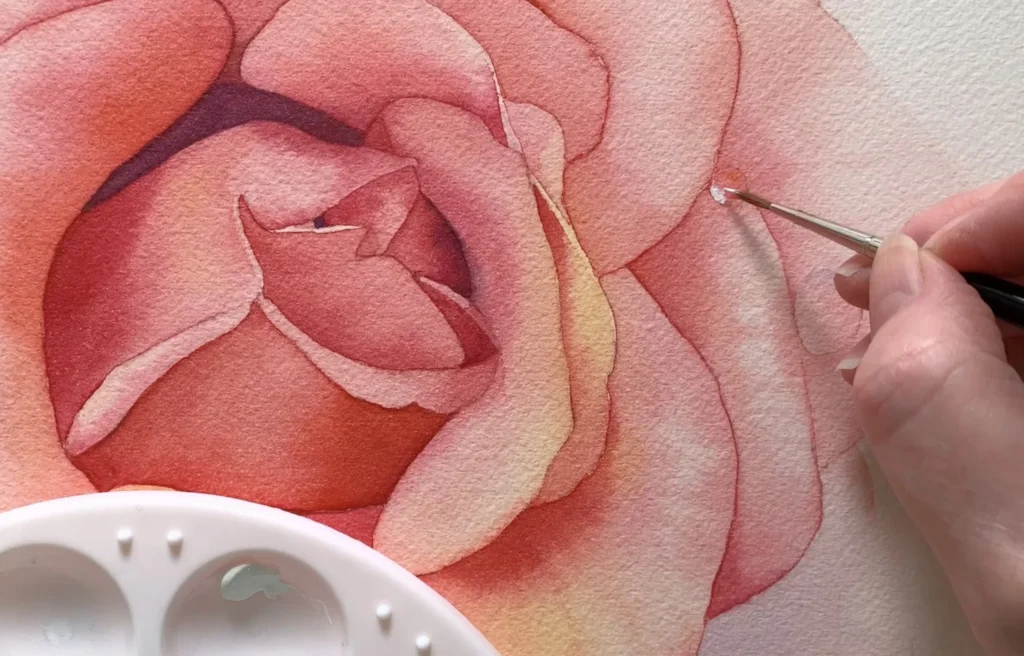
Painting white gouache on wet paper.
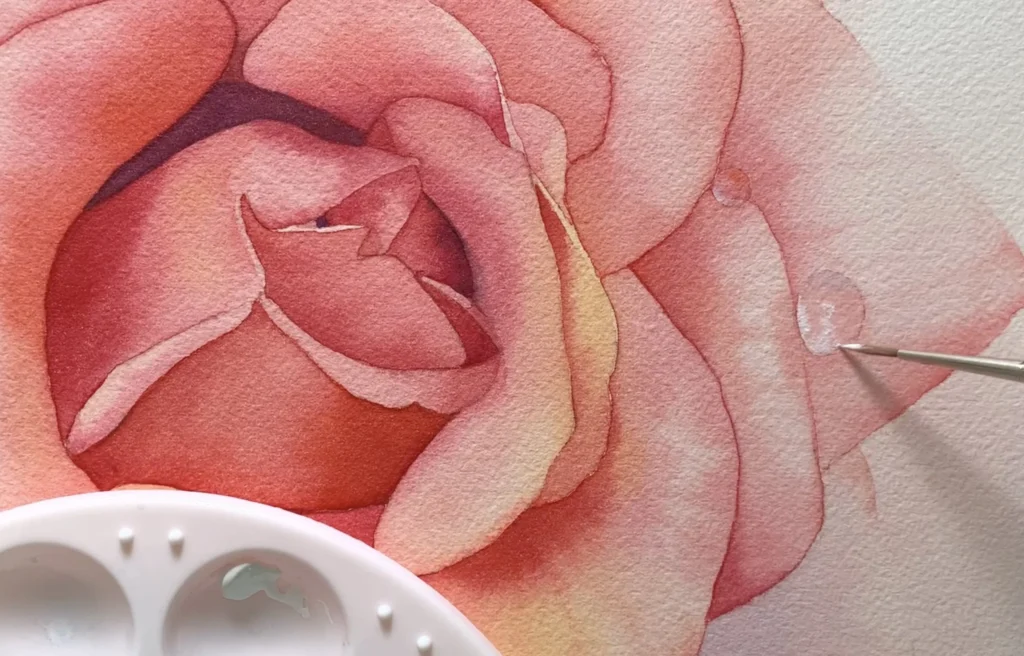
And on the larger droplet.
Step 5: Adding Depth and Variation
Water droplets aren’t uniform—their appearance changes constantly depending on how the light hits them. To make your painting feel organic, you need to create variation in their weight and roundness.
“Tucking in” the Droplet: To give the droplet a three-dimensional feel, deepen the color specifically along the lower edge or one side. I like to think of this as “tucking in” the droplet so it feels nestled comfortably against the petal rather than floating above it.
Suggesting Transparency: For a more realistic look, try softening one edge of the droplet into the petal color beneath it. This subtle blend suggests that the water is clear and the petal is showing through.
When droplets sit on the darker parts of the flower, like the deep magenta folds or the rose cup, they require a slightly different touch:
- The Eradicator Brush: Instead of painting “on top,” use your Eradicator brush to gently lift pigment and shape the droplets from the existing color.
- Deepen the Surrounding Tones: Use the same surrounding color (in this case, Quinacridone Magenta) to deepen specific parts of the droplet’s interior, giving it that necessary depth.
- Dry-Paper Highlights: Wait until the paper is completely dry before adding your tiny gouache highlights. This ensures the “spark” stays sharp and bright against the darker background.
- Size Matters: Always vary the sizes of your droplets. A mix of tiny “mist” dots and larger, heavy drops will look much more natural and garden-fresh.
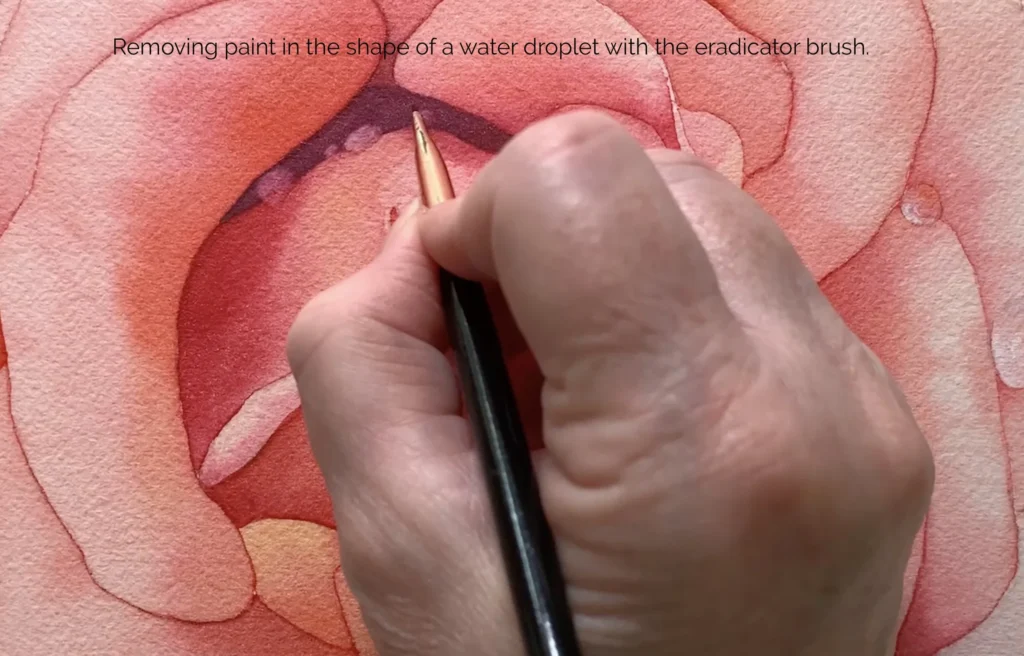
Using the eradicator brush to remove paint for a droplet.
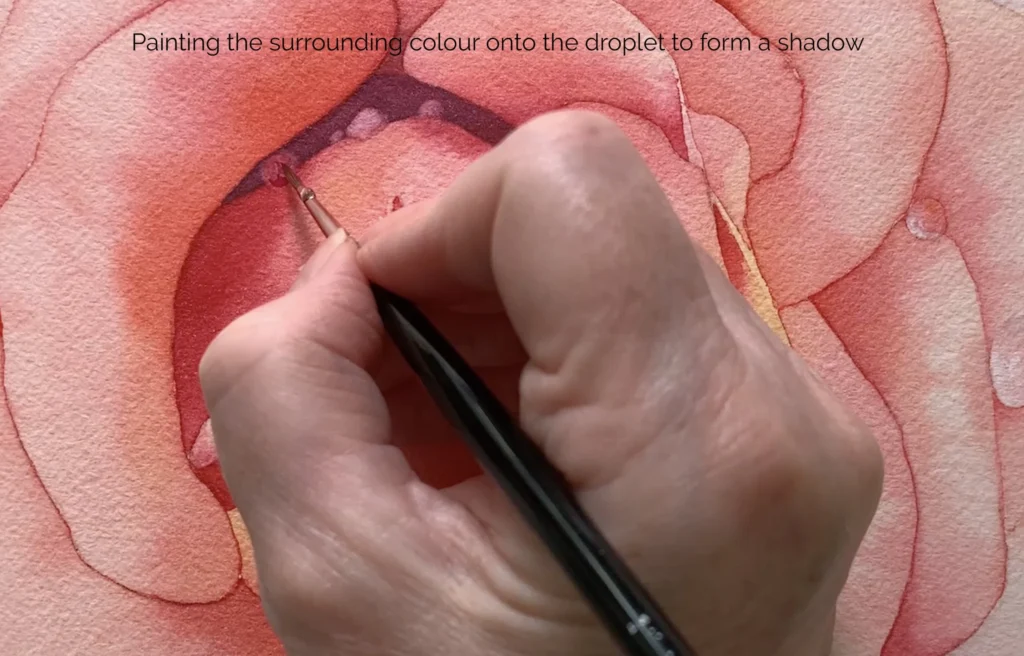
Painting on some of the colour that surrounds the droplet onto the droplet itself.
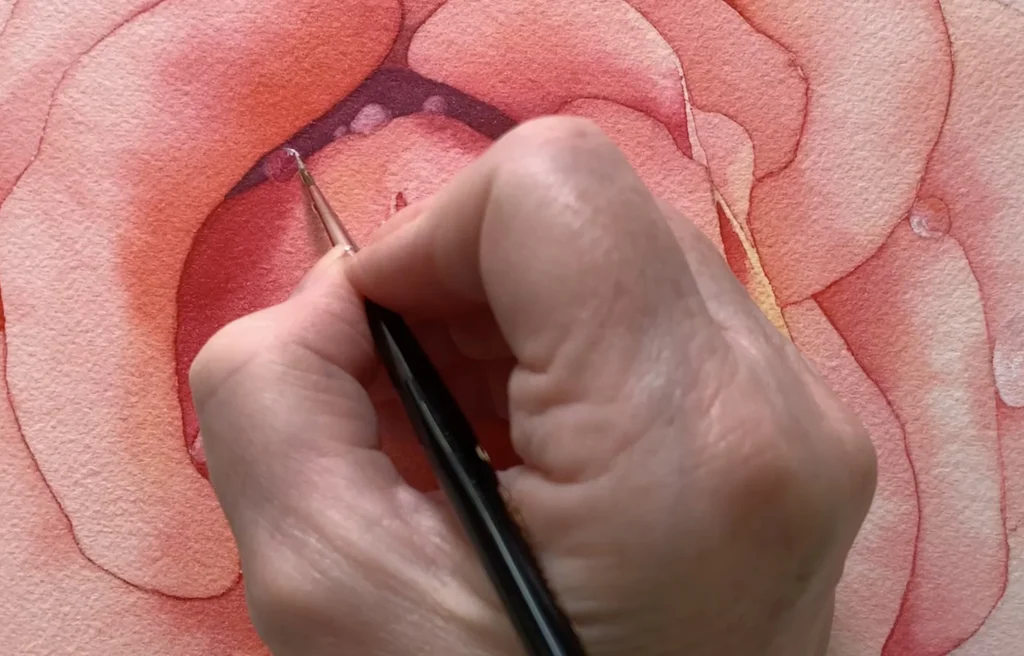
Painting some white gouache for a highlight – this time on dry paper.
Step 6: Finishing Touches
The final step is all about refining the illusion and, most importantly, knowing when to put the brush down.
The “Squint Test”: Step back from your easel and squint your eyes. Does the droplet look like it’s reflecting light? If it feels a bit flat, you can gently strengthen the shadow or darken the base to give it more “heavier” roundness. If it looks blurry, sharpen the edge opposite your highlight to make it pop.
Avoid Overworking: Then, stop! Overworking is the quickest way to turn a delicate droplet into a muddy smudge. Trust your initial brushstrokes and let the texture of the Arches paper do its job.
Creating Clusters and “The Dangle”
On the lighter petals, try adding groups of droplets rather than just one. I sketched several small, varying shapes and repeated the core process:
- Cast shadow on the outside.
- Soft interior wash to show the petal color.
- Sharp gouache highlight once the paper is dry.
For an extra touch of realism, I painted one droplet “dangling” right off the very edge of a petal. It’s a tiny, interesting detail that makes the viewer feel as if that drop is about to fall, giving the whole painting a sense of life and movement.
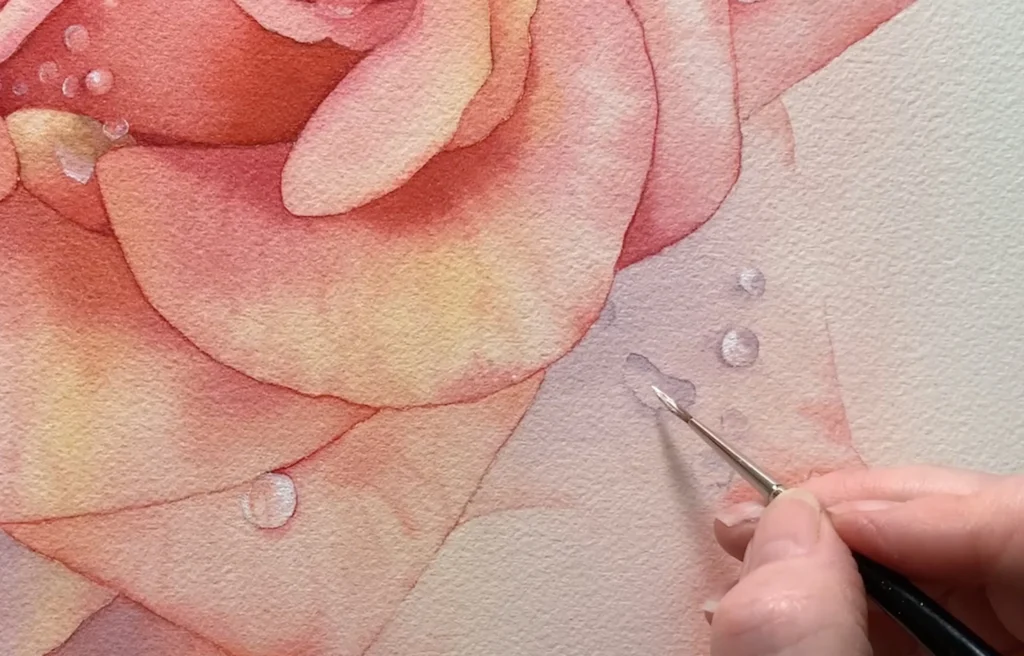
Touching up the last droplet.
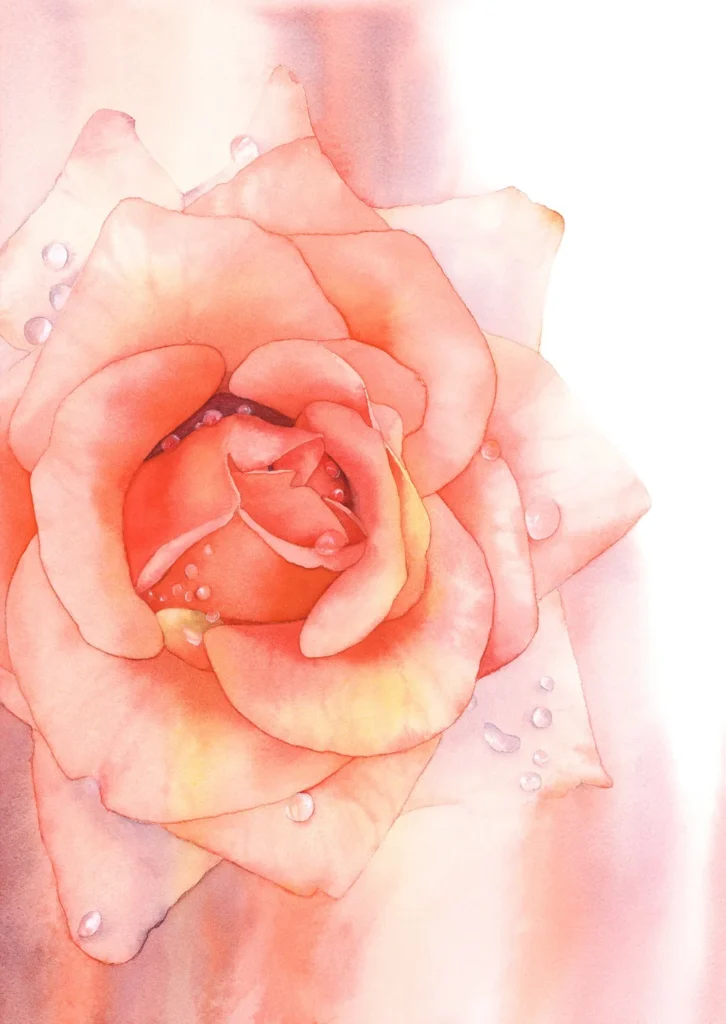
The Finished Rose
After scattering a few more droplets across the petals, I decided to step away. It’s always tempting to keep going, but too many droplets can overwhelm a painting. A thoughtful selection adds freshness and interest without distracting from the beauty of the rose itself.
When I finally removed the masking tape and held up the finished piece, I loved the way those tiny details made the entire flower sparkle. They truly felt like the “final touch” that brought the whole garden onto the paper.
Try Painting a Water Droplet Yourself
If you are feeling inspired, why not try this simple exercise? It’s the best way to get a feel for how the paint moves on the paper.
Step 1: The Foundation
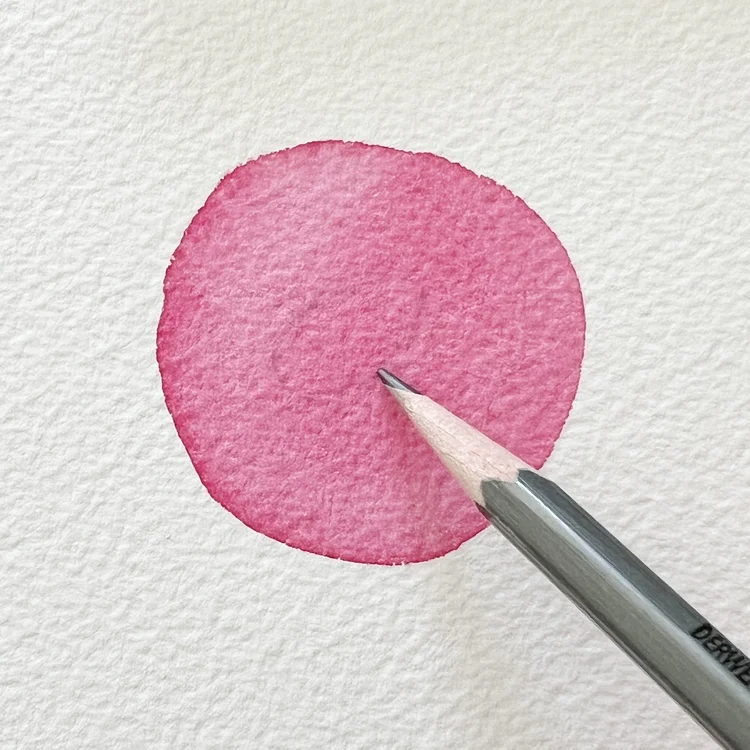
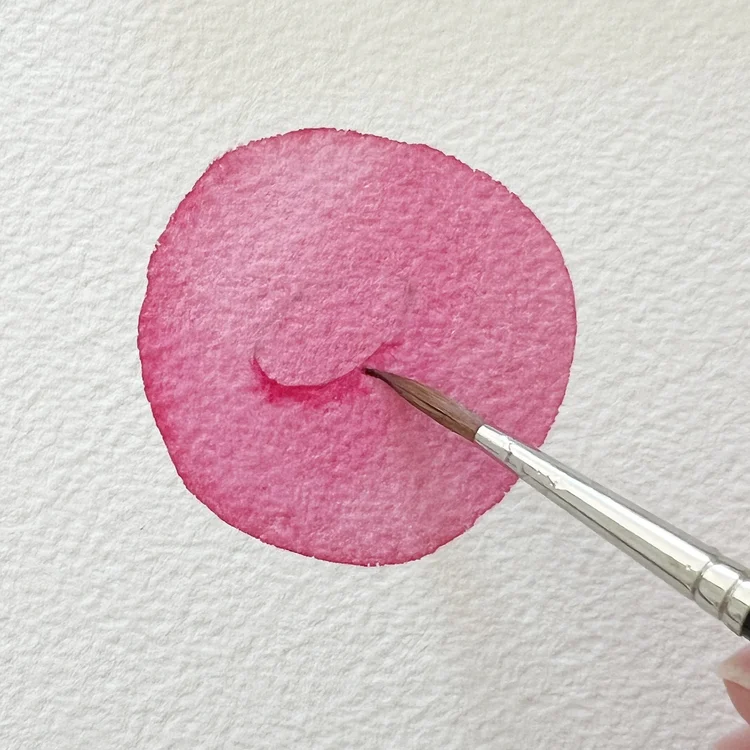
Paint a simple shape in watercolor and let it dry completely (I used Ruby Red – PV19). Once it’s dry, lightly draw a single water droplet shape onto the colored area.
Step 2: The Cast Shadow
Wet the paper just outside one side of your droplet. Load your brush with the same color you used for the base, touch it along the edge, and let it softly bleed. This creates that gentle, feathered shadow that gives the drop its height. Let this dry.
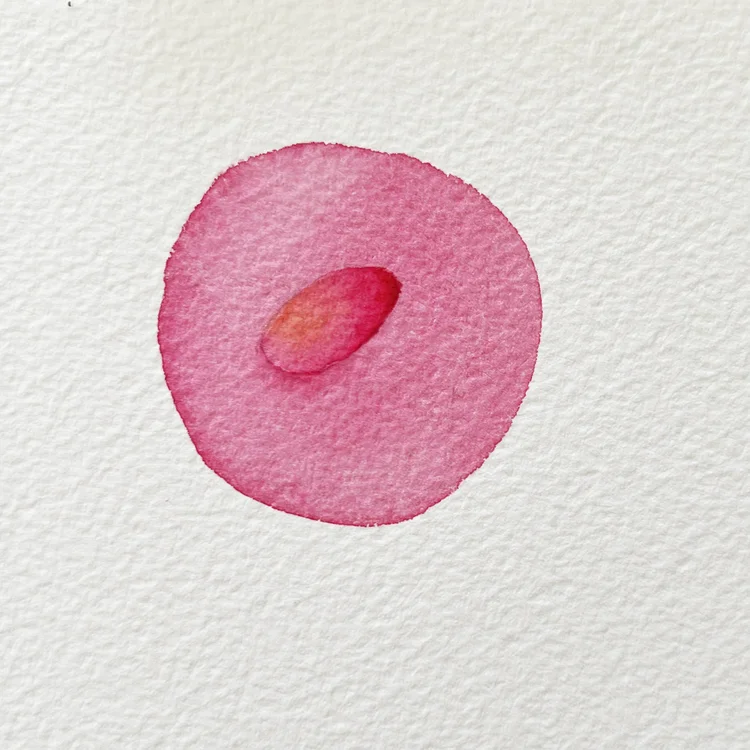
Step 3: The Interior Glow
Once the shadow is dry, wet the inside of the droplet. Apply a touch of your original color along the opposite edge (away from your shadow) and let it drift inward. While it’s still wet, “charge in” a little Winsor Yellow to create a warm, luminous orange glow.
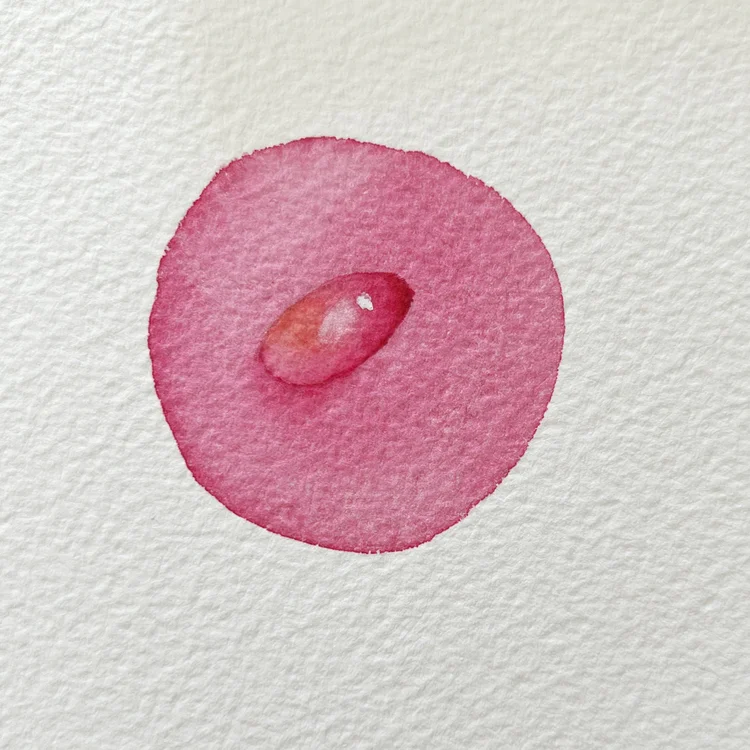
Step 4: Lifting and Highlighting
Use your Eradicator brush (a damp, clean brush) to lift a large highlight from the center of the drop. Then, once the paper is dry, add a tiny, crisp highlight with a touch of white gouache.
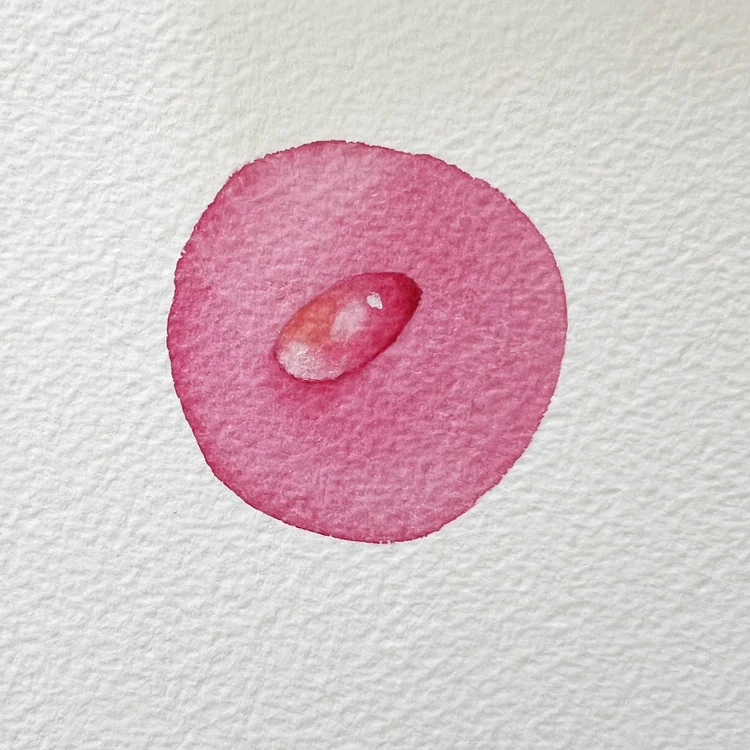
Final Step: The Soft Glow
To finish, wet the lower section of the droplet and apply a tiny bit of white gouache onto the wet surface. This creates that beautiful, soft glow that often appears near the cast shadow.
Final Thoughts
Painting water droplets takes patience and a careful eye, but the results are worth every “fiddly” brushstroke. Each tiny drop is its own little world of shadows and highlights, and mastering them will take your floral paintings to a whole new level. Remember: the more you practice, the more natural your droplets will become.
Happy painting! 🌸
