
There’s something special about standing in front of a large watercolor painting. The details feel richer, the brushstrokes more expressive, and the colors seem to glow. A big painting pulls you in and tells a bigger story. But honestly, when I first started painting larger, it wasn’t all smooth and magical. I had puddles where I didn’t want them, hard streaks instead of soft blends, and a bit of panic when the paper dried much faster than I expected.
Painting on a large scale is exciting, but it’s also very different from working small. If you’ve ever thought, “I’d love to paint bigger, but I don’t know where to begin,” this post is for you. I’ll share the common challenges, what helped me most, and how you can approach large watercolor paintings with more confidence and enjoyment.
Why Paint Large?
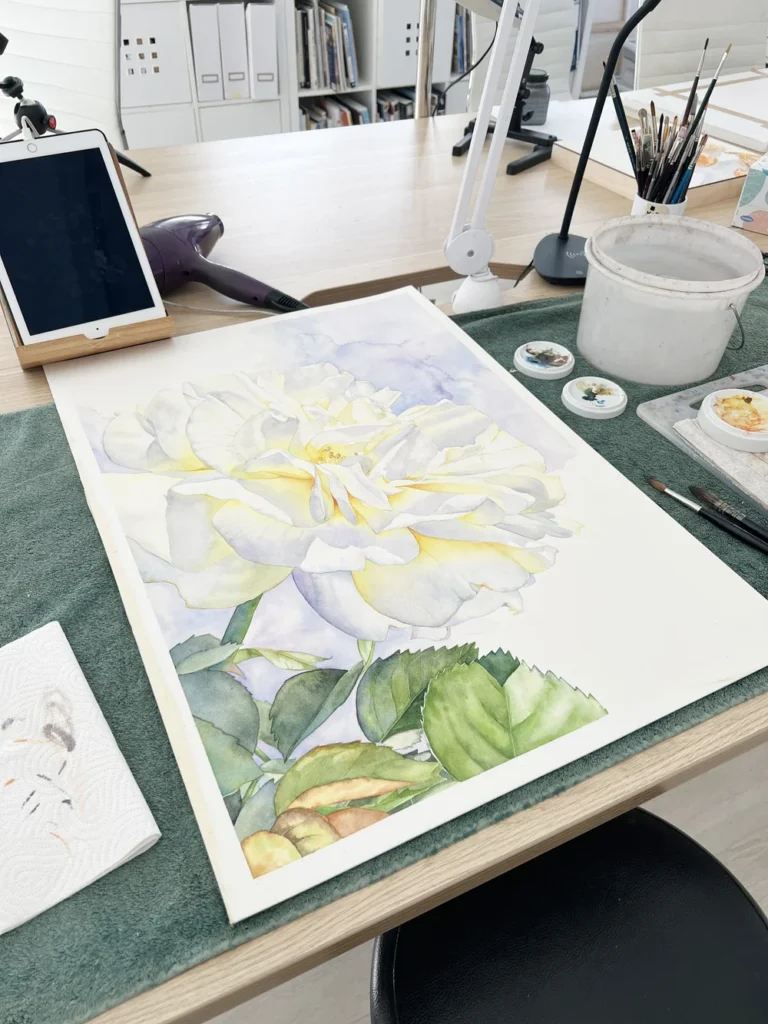
Inspired by a rose from my garden – this is a full sheet of watercolour paper.
Before we talk about how to paint large, it’s worth asking why. Why move up in size when painting small feels familiar, comfortable, and safe? Why cover a full sheet of paper when a postcard-sized painting feels quicker and less intimidating?
The answer is simple: painting large opens up new possibilities. A large watercolor has a strong presence. It naturally draws the viewer in. You have more space to breathe, to use bigger brushstrokes, to explore textures, or to let one wash stretch across a whole sky or landscape. The size alone can make even a simple subject feel more powerful and immersive.
Creatively, working large gives you freedom. You can add fine details while still enjoying loose, expressive areas. You don’t have to choose between control and spontaneity because a larger surface allows both.
And beyond all that, painting large is a great teacher.
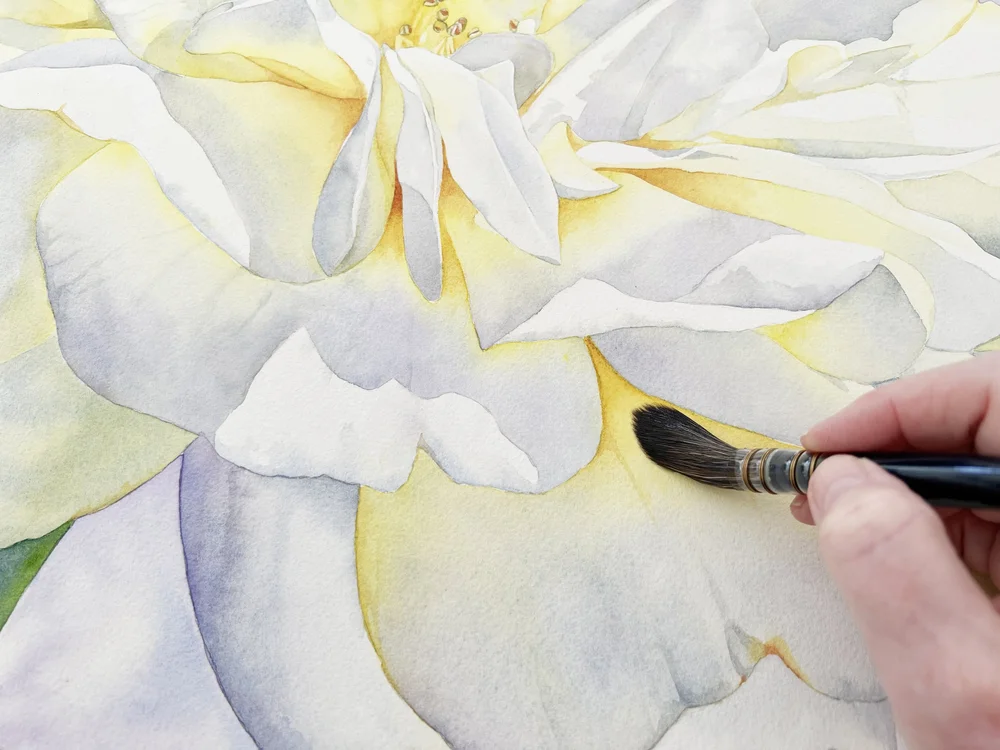
The beauty of painting large!
It pushes you to plan more carefully, because with a sheet this large, you can’t just guess and hope it works. It challenges your timing, your control of water, and your patience. You’re forced to slow down, really look at what you’re doing, and trust the process. Along the way, you often discover better control, clearer decisions, and more confidence in your painting.
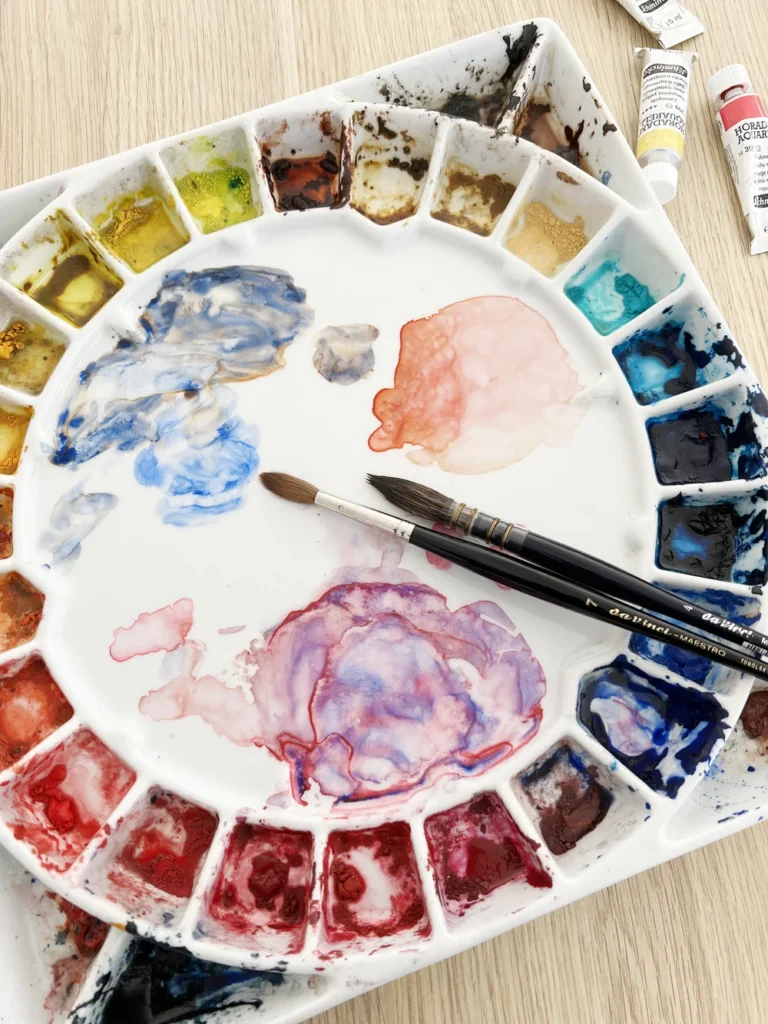
My favourite watercolour palette that I use to create all of my art.
Even if you usually work small, painting large from time to time can improve your skills in unexpected ways. When you go back to your normal size, you bring those lessons with you. Your compositions feel stronger, your timing improves, and your hand feels more confident.
So if you’ve ever stared at a big blank sheet of watercolor paper feeling both excited and nervous, you’re not alone. That mix of emotions is often where real growth begins. Take a deep breath, roll up your sleeves, and let yourself go big. You might surprise yourself.
The Challenges of Going Big
Painting larger comes with its own challenges. Here are a few I’ve run into, and you might recognize them too.
Timing can be tricky. On a big sheet of paper, water doesn’t dry evenly, especially if you’re painting in a warm or dry room.
Your brushes can suddenly feel too small. If your tools don’t match the size of the painting, you may end up scrubbing the paper instead of making smooth, flowing strokes.
Planning becomes very important. More space means more chances for things to go wrong. A clear, well-planned composition makes a huge difference.
Then there’s warping. Bigger paper plus more water can cause serious buckling. If the paper isn’t heavy enough or properly stretched, it can really disrupt your painting.
If this sounds familiar, don’t worry. All of these problems can be managed, and none of them should stop you from creating something beautiful.
5 Tips for Success with Larger Watercolor Paintings
1. Start with the Right Materials
Your materials matter even more when you’re working large. The right setup can make the whole process smoother and far more enjoyable.
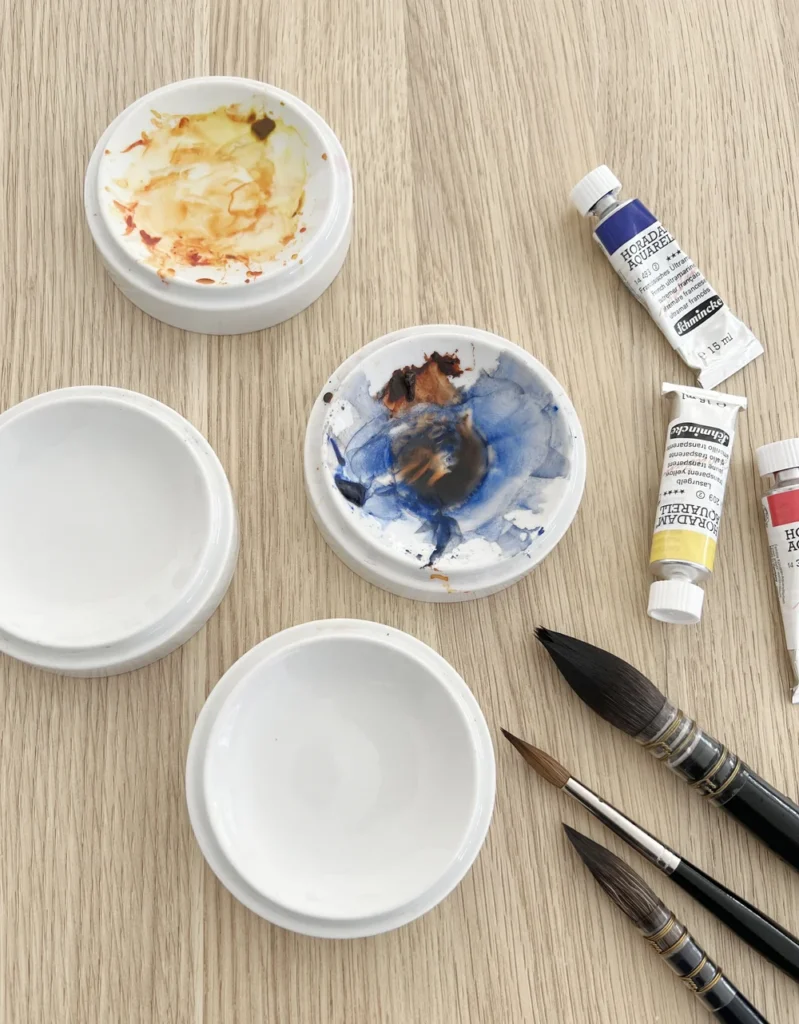
I love these little dish palettes for mixing paint colours.
Watercolor Paper:
Choose a heavyweight, 100% cotton paper. I recommend at least 300gsm, but heavier paper is even better for large paintings. Good options include Fabriano Artistico and Arches. Stretching your paper is also important to prevent warping. If you’re not sure how to do that, I’ve shared a simple guide to help.
Brushes:
Bigger paintings need bigger brushes. Mop brushes, flat brushes, or large round brushes work best. I often use Da Vinci Maestro brushes, and Jackson’s has some great alternatives too. The goal is to move water and paint easily without overworking the paper.
Paint & Palette:
You’ll use more paint than usual, so plan ahead. Pre-mix your colors in larger wells so you don’t have to stop and remix in the middle of a wash. This small step alone can save a painting.
2. Plan Before You Paint
When you paint large, there’s much less room for guessing. In a small painting, small changes can go unnoticed. On a big sheet of paper, everything stands out. A poorly placed shadow, an awkward layout, or unbalanced colors can quickly take over the whole painting. That’s why I never skip the planning stage when working large.
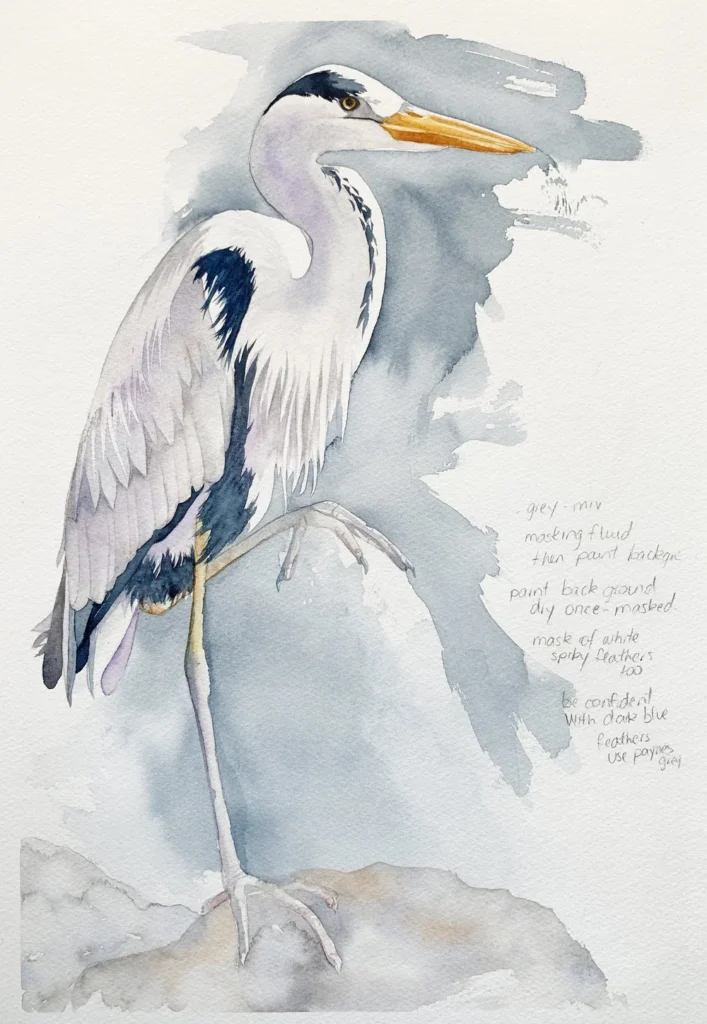
This image is a small colour study I completed before I painted a large watercolor painting of the same subject.
Before I start, I usually make a small thumbnail sketch or a simple color study. I often begin with a quick pencil drawing to work out the composition, then do a loose watercolor version to explore values and color choices. These early sketches don’t need to look finished, but they can make a huge difference.
Planning helps me spot problems early. I might realize the focal point needs to move, or that a color doesn’t work as well as I imagined. It’s much better to discover that on a small piece of paper than halfway through a large, time-consuming painting.
Think of this step as a practice run. Just like an actor rehearses before opening night, you’re testing the idea before committing to it at full size. With that preparation done, you can paint the final piece with more clarity, confidence, and freedom, because you already know where you’re going.
3. Work in Manageable Sections
One of the hardest parts of painting large is the size itself. The paper can feel overwhelming, and it’s tempting to try to cover everything at once. But here’s the good news: you don’t have to. In fact, working step by step often leads to better results.
When I paint large, I break the painting into smaller, manageable sections, especially for big washes or background areas. Instead of wetting the entire sheet, which can be stressful and difficult to control, I only wet the area I’m ready to paint. This lets me focus on one section at a time and control the wash before it dries or runs into areas I’m not ready to work on.
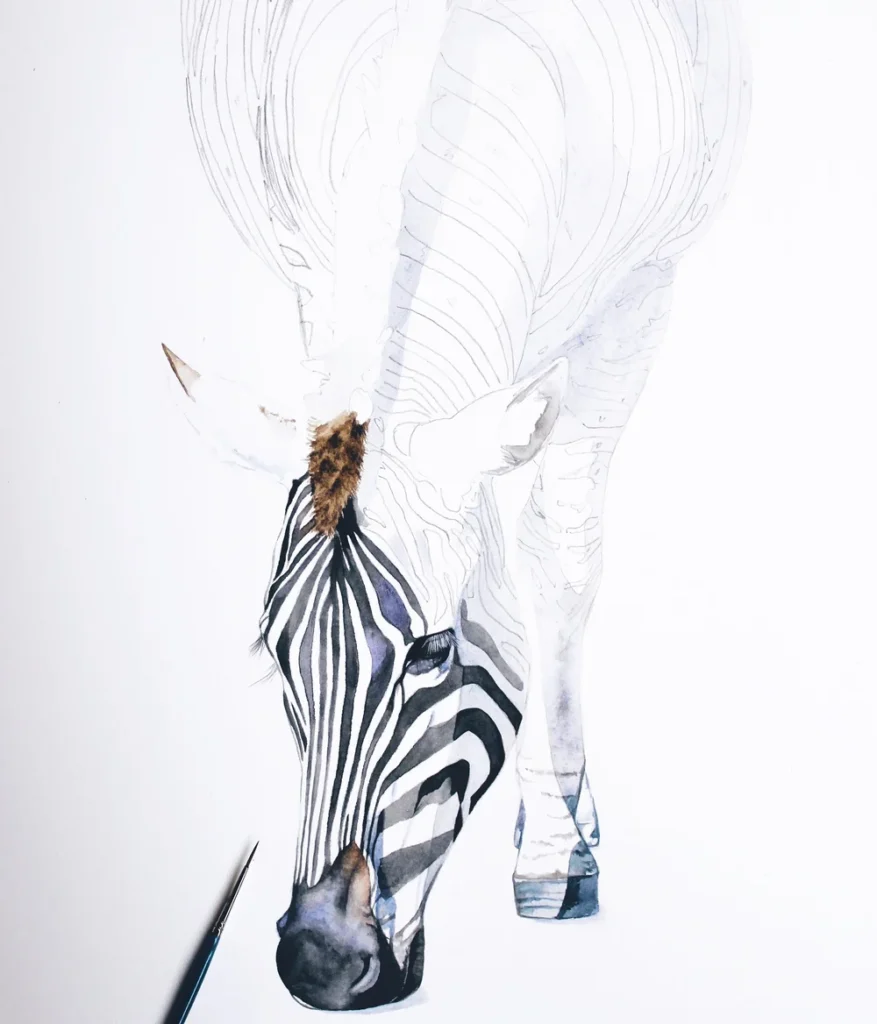
Work in manageable sections. Sometimes it helps to complete one area before moving on – it gives you the confidence to keep going.
To keep the edges between sections soft, I gently blend the edges with a damp brush. When I move on to the next area, the new paint blends smoothly into the previous section without leaving hard lines.
For large background washes, I often tilt the board slightly and let gravity help the paint flow evenly. This is especially useful for smooth color gradients. Use a large mop brush or a soft round brush with plenty of paint so you can cover the area confidently and quickly.
Pay close attention to drying time. Work from the top down so you don’t rest your hand on wet paint. If you’re in a warm room and the paper dries too fast, lightly mist the edges with a spray bottle or take a short break between sections.
Painting big doesn’t mean painting fast. Slow down, work in stages, and give each section the attention it needs. Watercolor rewards patience, and your painting will reflect that care.
4. Control Drying Time
This is one of the trickiest parts of painting large. Big areas of paper can dry too quickly or unevenly, especially in a warm or dry room. When that happens, you may get hard edges, streaky washes, or uneven blends. The good news is that a few simple habits can make a big difference.
Pre-wet with intention
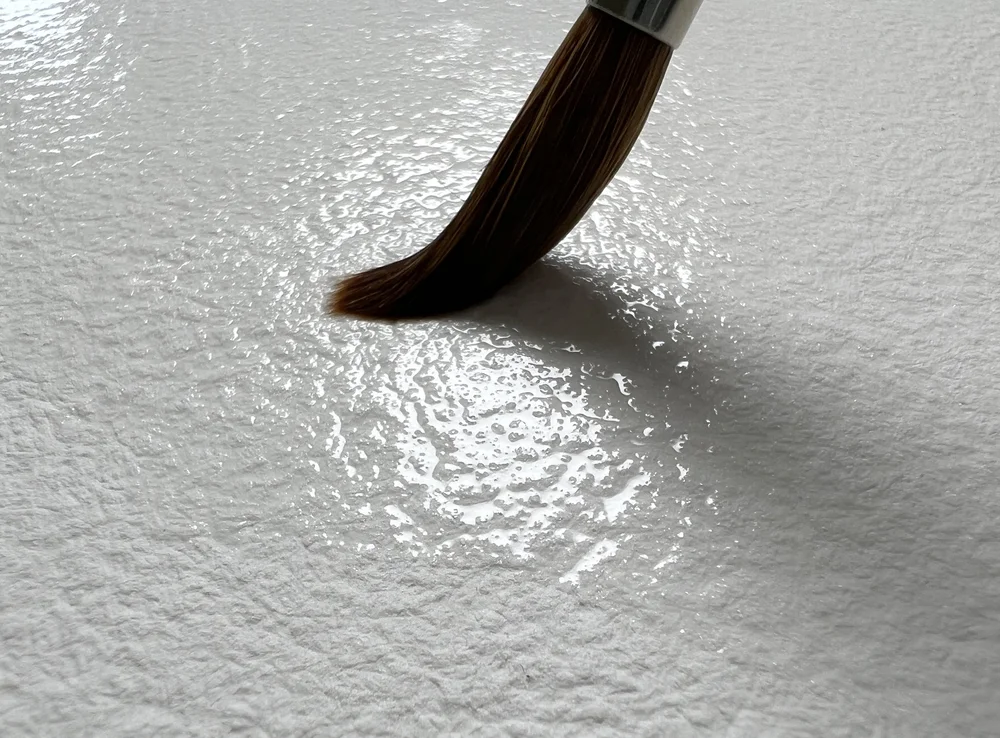
Mistakes are often made when the paper is either too wet or not wet enough. This is what the watercolor paper often looks like when I work wet on wet.
Before adding paint, I often pre-wet the area I’m about to work on, especially for backgrounds or large, flat washes. I use a large, soft brush, like a mop or hake brush, and apply clean water evenly. The goal is an even level of moisture across the whole area, with no puddles and no dry spots. Uneven dampness is usually what causes problems later.
After wetting the paper, give the water a moment to soak in and settle. When the surface has a gentle sheen—shiny but not dripping—it’s ready for paint. This is the ideal moment to work. At this stage, the pigment flows easily and blends smoothly, giving you soft, controlled results.
Keep a Spray Bottle Nearby
I always keep a fine-mist spray bottle on my table, even though I don’t use it very often.
It’s there as a backup in case a large wash starts drying too fast and I need a little extra time to soften an edge or smooth a transition. A light mist can give you those few extra seconds. That said, most of the time I prefer to let the area dry completely and then come back with another layer. That approach has worked well for me over the years.
If you do use a spray bottle, be gentle. A small amount of mist is enough. Too much water can create blooms or backruns, unless that’s the effect you’re aiming for.
Work in Layers
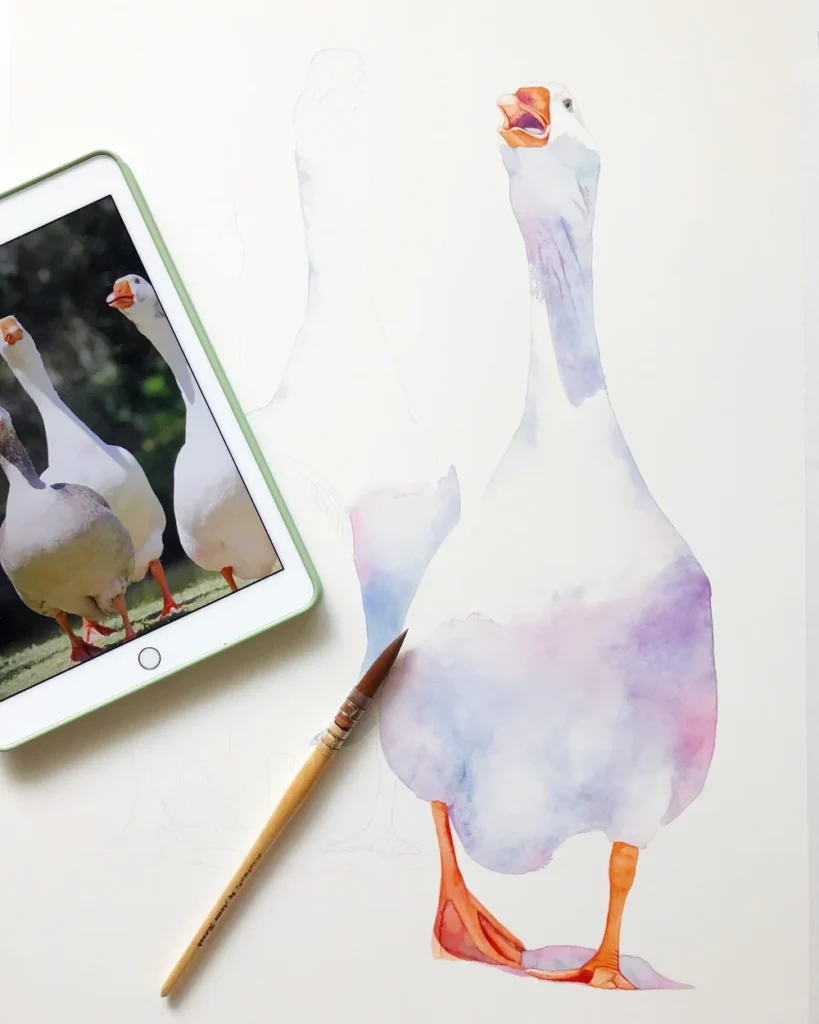
Another way to avoid drying problems is to work in stages instead of trying to do everything at once. With a large painting, it’s tempting to add all the details right away, but watercolor works best when you build it up slowly.
Begin with a light wash to block in your main shapes and values. Let this layer dry completely. Then add depth and detail by glazing—laying transparent washes on top of one another. This approach gives you more control and helps keep your colors clean, fresh, and not overworked.
Consider the Climate
Your environment plays a big role in how fast your paper dries. If you live in a very dry area, or you’re painting in summer, the paper may dry much faster than you expect. In this case, a small humidifier in your workspace can make a huge difference. Adding a bit of moisture to the air can slow drying time and make large washes easier to manage.
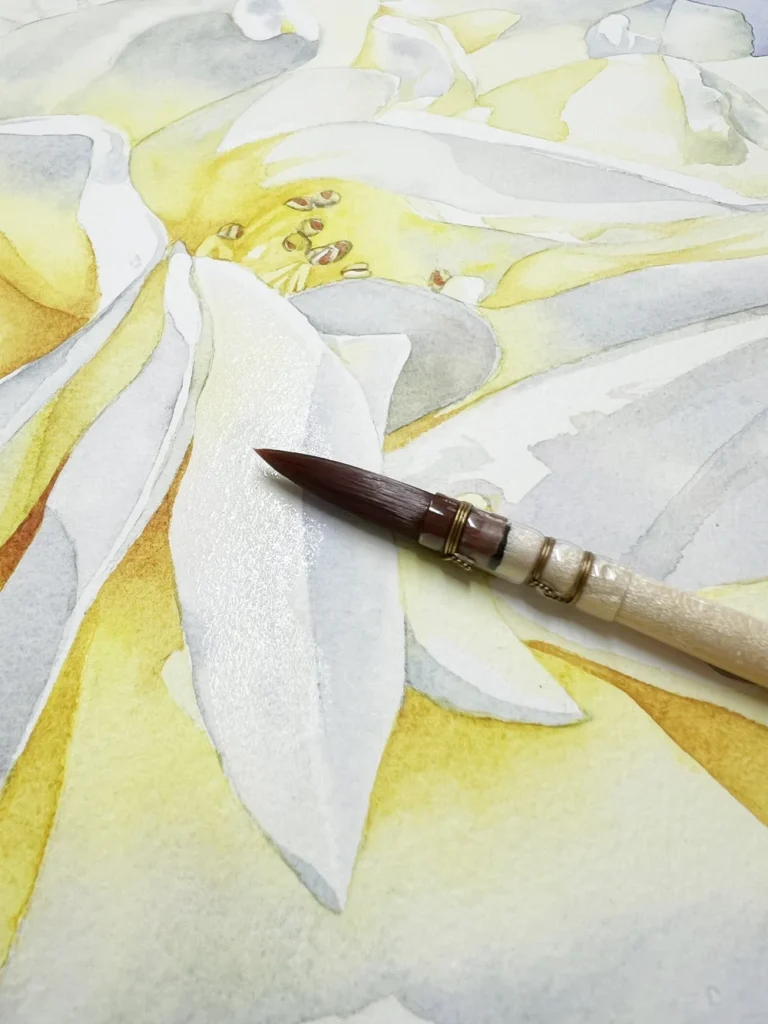
Watch the sheen on the watercolor paper.
Simple things can help too. Placing a damp towel nearby or painting in a closed room can help keep humidity in the air. Some artists also lightly mist the air around their workspace—but never directly onto the paper unless you’re doing it on purpose.
5. Step Back Often
When you’re working on a large painting, it’s easy to get lost in the details. You might find yourself leaning in close, carefully shaping one small area, completely focused on that single spot. While that kind of concentration is valuable, it can also make you lose sight of the whole painting.
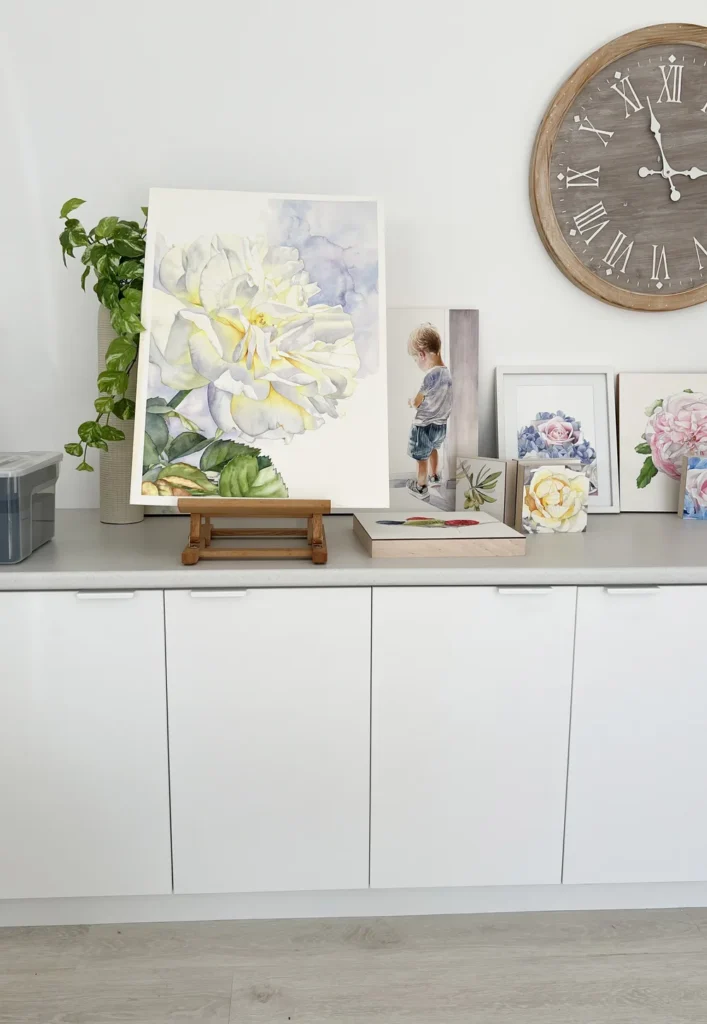
Standing back from my painting helps me answer questions like, ‘Do I need more colour?’
That’s why I make a point of stepping back regularly. I stand up, move across the room, and look at the painting from a distance. I’m not looking for tiny mistakes. I’m checking the overall balance. Does the composition feel right? Do the colors lead the eye the way I want them to? Are some areas too heavy, too flat, or too busy?
Something that looks perfect up close can feel very different from far away. A soft shadow might disappear, while a darker shape you barely noticed can suddenly feel too strong. Large paintings are meant to be seen from across a room, so it’s important to view them that way while you work.
Sometimes I place the painting upright on an easel or lean it against a wall. Seeing it vertically can reveal things you might miss when it’s flat on the table.
Another helpful trick is to take a photo of your painting and view it in black and white. This makes it easier to check your values and see if your light, mid-tone, and dark areas are working well together.
Stepping back, both physically and creatively, helps you make better decisions. It gives you a moment to pause, reset, and return with fresh eyes. It’s a simple habit, but it makes a big difference.
So don’t hesitate to step away from your desk now and then. Walk around, turn back, and really look at your work. More often than not, you’ll come back knowing exactly what to do next.
Final Thoughts
Painting on a larger scale can feel intimidating, but it’s also very rewarding. It’s like moving from a soft whisper to a strong, confident voice—bold, expressive, and deeply satisfying. Don’t worry if things don’t go perfectly at first. My early large paintings had plenty of challenges, but they taught me far more than working small ever did.
So go for it. Stretch your paper, mix plenty of paint, and give yourself permission to work big. You may surprise yourself with what you can achieve.
Happy painting,
Jennifer
